


Understanding the PTZ and Decree No. 2010-912 of August 3, 2010, regarding the attachment to the household of parents


In summary
| Section | Summary |
|---|---|
| The fundamental principles of the Zero Interest Rate Loan (PTZ) in 2025 | The PTZ is an interest-free loan intended for first-time buyers. It complements a traditional bank credit and finances part of the acquisition or construction, with ceilings that vary according to areas and income levels. |
| Impacts of Decree No. 2010-912 of August 3, 2010, on the tax affiliation of parents | Since 2010, only the applicant’s personal income is considered for PTZ eligibility, even when tax attachment to parents is declared, to facilitate young people’s access to the scheme. |
| Eligibility conditions for PTZ for young borrowers attached to parental tax household | The attachment must appear on the parents’ tax declaration. The income considered is solely personal, respecting resource ceilings, with the commitment to primary residence and supporting documents to be provided. |
| Essential documents and procedures for obtaining PTZ with fiscal attachment | Banks require the applicant and parents’ tax notices, income simulations, proof of non-ownership, and proof of fiscal attachment to validate the file. |
| Banks and financing organizations involved in PTZ: roles and specificities? | The Deposit Fund plays a central role, while banks (BNP, Crédit Agricole, Caisse d’Épargne, etc.) grant and manage the PTZ. Action Logement and the ANAH can supplement the financing. |
| Limits, deadlines, and issues related to obtaining PTZ under the 2010 decree | Complex procedures, long delays, and disparities between banks. Multiple supporting documents secure the scheme but slow down its approval, with a risk of rejection if the file is incomplete. |
| Comparison of PTZ with other aid schemes for property acquisition | Besides PTZ, there is Action Logement, the Social Access Loan (PAS), and aids from the ANAH. PTZ is interest-free and stackable but limited by resource ceilings and modest amounts. |
| FAQ: Key questions about PTZ and Decree No. 2010-912 related to the tax household | Simple answers regarding how PTZ works, the impact of the 2010 decree, banks that favor it, necessary documents, and average approval times. |
- The fundamental principles of the Zero Interest Rate Loan (PTZ) in 2025
- Impacts of Decree No. 2010-912 of August 3, 2010, on the tax affiliation of parents
- Eligibility conditions for PTZ for young borrowers attached to parental tax household
- Essential documents and procedures for obtaining PTZ with fiscal attachment
- Banks and financing organizations involved in PTZ: roles and specificities?
- Limits, deadlines, and issues related to obtaining PTZ under the 2010 decree
- Comparison of PTZ with other property acquisition aid schemes
- FAQ: Key questions about PTZ and Decree No. 2010-912 related to the tax household
The fundamental principles of the Zero Interest Rate Loan (PTZ) in 2025
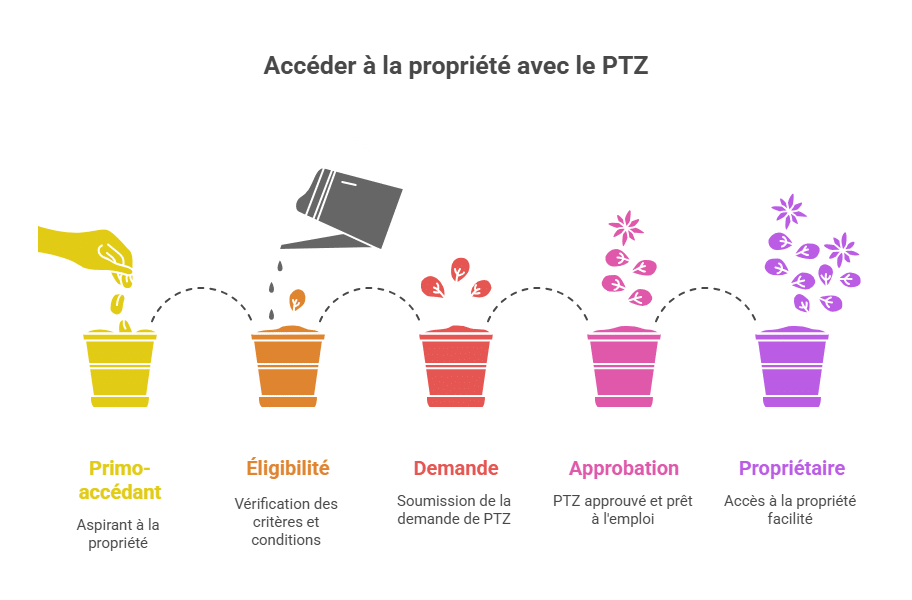
The Zero Interest Rate Loan (PTZ) is an essential financial aid to facilitate property ownership, especially aimed at first-time buyers. In 2025, its operation relies on it being a loan without interest or opening fees, distributed alongside a traditional bank credit. Its goal is to reduce the burden of real estate financing and to promote the construction or purchase of a primary residence.
This aid is conditioned on several criteria, such as the type of housing, geographic location, income levels, and of course, the commitment to occupy the property as a primary residence. The PTZ never finances the entire real estate operation but acts as a supplement to personal contributions or other more traditional loans.
In 2025, the PTZ offers several advantages for borrowers:
- No interest: you only repay the principal, significantly reducing the total cost of the mortgage.
- Deferred repayment period: depending on your income, you can benefit from a delay before beginning to repay the PTZ, which can last several years.
- Adapted amounts and ceilings: they vary according to geographic zone and household composition.
To effectively access this scheme, it is necessary to understand how the PTZ is calculated and applied to real estate transactions, which also requires knowing the financial and social eligibility conditions. This foundation is important before exploring how the Decree No. 2010-912 of August 3, 2010 modifies certain rules around fiscal attachment for young borrowers, a key point directly affecting considered resources.
| Main characteristics of PTZ | Description |
|---|---|
| Type of loan | Interest-free, no fees |
| Beneficiaries | First-time buyers and certain conditions |
| Amount | Covers part of acquisition or construction |
| Repayment duration | Flexible according to resource conditions |
| Eligible zones | Zones A, B, and C with different ceilings |
The process to access PTZ continues to evolve through agreements between banks and organizations like the Deposit Fund, which plays a central role in managing and financing this product. It is therefore advisable to compare with other aids, such as Action Logement or the National Housing Agency, to optimize financial arrangements.
Impacts of Decree No. 2010-912 of August 3, 2010, on the tax affiliation of parents
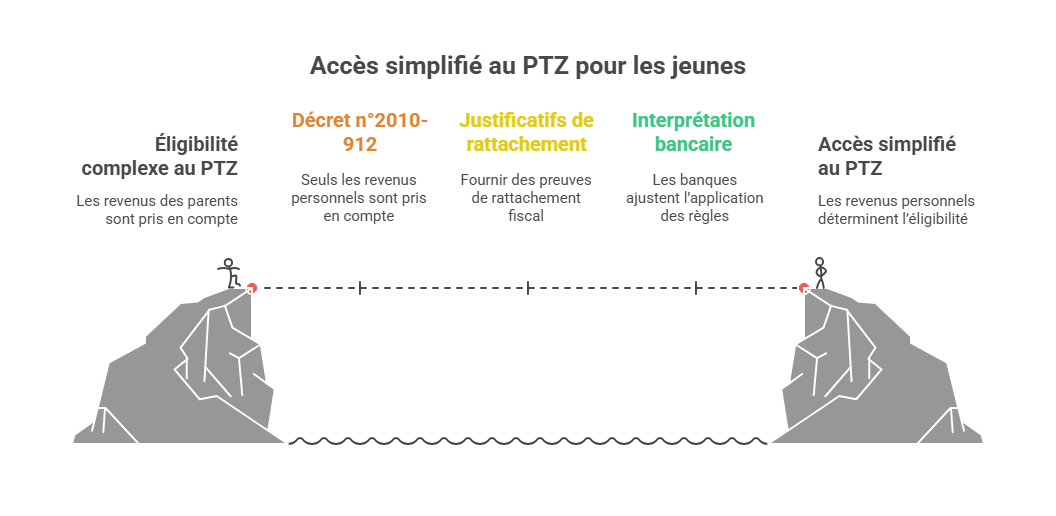
Adopted in 2010 and still in force in 2025, Decree No. 2010-912 of August 3, 2010 deeply changes the consideration of tax attachment to the parental household for benefiting from PTZ. This text specifies that, for loan offers issued since July 1, 2010, only the applicant’s personal resources should be considered when the applicant was attached to the parental tax household.
In other words, before this date, some organizations considered the full income of the parental household for eligibility calculations, which could disadvantage young people still fiscally attached but with little or no income of their own. The decree clarifies the situation by limiting verification to the individual resources of the applicant, provided they are tax-attached to the parent.
This reform aims to facilitate access to PTZ for young people who do not yet declare their own tax household, such as students or young employees starting their professional life. However, it also introduces additional constraints regarding supporting documents necessary to prove this attachment, sometimes complicating the reading of fiscal documents.
As highlighted by several banking actors in 2025, including BNP Paribas and Crédit Agricole, the interpretation of the rules related to this decree required adjustments. Some banking institutions like Caisse d’Épargne or La Banque Postale remain cautious on certain files, demonstrating the difficulty in unifying application.
It is important to understand that this decree directly impacts the calculation of the resource ceilings used for PTZ. For example, a young person tax-attached to the parents will have only their personal income considered, unlike a situation where they declare their own tax household. This can make the difference in meeting eligibility thresholds.
| Effective date | Main effect | Practical consequence |
|---|---|---|
| July 1, 2010 | Only the personal income of candidates tax-attached is considered | Better adaptation of PTZ eligibility to young borrowers’ situations |
| Since 2010 | Need to produce specific attachment supporting documents | More complex administrative procedures but increased security of the scheme |
This topic is widely discussed on specialized forums and expert sites such as MoneyVox and CommentCaMarche.fr, where users share their experiences. For more detailed information on the specific procedures, consulting official resources, including this particular exchange on MoneyVox, is a good starting point.
Eligibility conditions for PTZ for young borrowers attached to the parental tax household
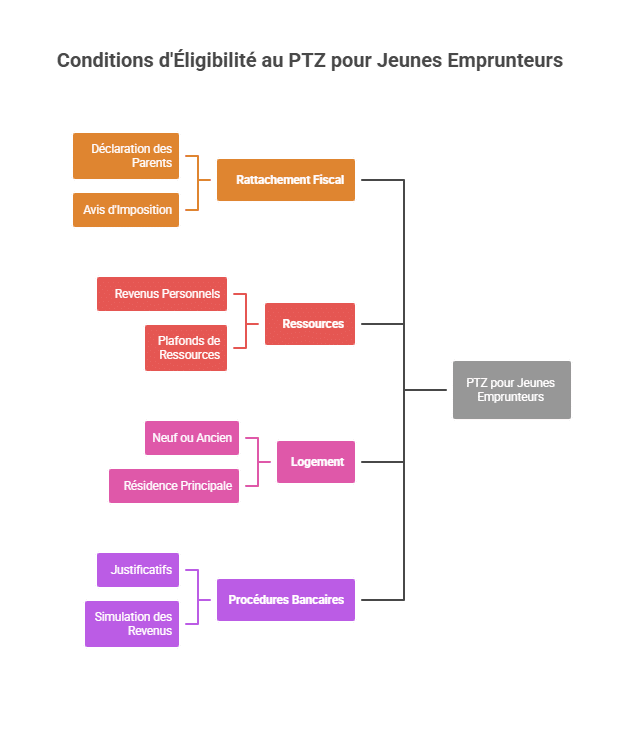
The attachment to the parental tax household poses specific conditions for accessing PTZ. For a young borrower who has not yet established their own tax household, eligibility primarily depends on:
- The confirmation of the fiscal attachment via the parents’ tax declaration where the young person appears.
- The resources considered: only their actual personal income, not aggregated with the family’s income.
- Respect for resource ceilings: specific to PTZ, which vary according to household composition and property location.
- The nature of the property: new or old with eligible renovations.
- The commitment to occupy the property as a primary residence within a specified timeframe.
It is necessary to pay particular attention to the supporting documents required by banks, notably:
- The latest personal tax notices
- The fiscal declarations of parents mentioning the attachment
- Certificates of non-ownership dating less than two years, such as rent receipts or sworn affidavits if the young person lived with their parents, sometimes including a cadastral excerpt to certify parental ownership.
These criteria might seem demanding, but their purpose is to make the process fairer and more precise, while limiting fraud. Each bank applies its own internal rules based on these guidelines, which explains different practices.
For instance, BNP Paribas and Crédit Agricole have adapted their procedures to secure and better integrate these criteria, as reflected in their internal documentation shared in branches. This approach distinguishes their position from that of Caisse d’Épargne, which remains more cautious regarding PTZ approval under such conditions, demonstrating that the choice of bank can influence the success of the application.
| Criterion | Specific requirement for attachment |
|---|---|
| Tax attachment | Appears on the parents’ declaration clearly indicating the attachment of the young applicant |
| Resources | Only personal income, verified for the current fiscal year |
| Housing | New or old with renovations on the primary residence |
| Bank procedures | Documented application with supporting documents (taxes, non-ownership, etc.) |
To better understand these conditions, it is recommended to consult a comprehensive guide like the one offered by Comment Ca Marche, which details all current rules and potential negotiation margins with banks.

Essential documents and procedures to obtain PTZ with fiscal attachment
Obtaining PTZ, especially when dealing with fiscal attachment to the parental household, requires careful preparation of official documents. Banks and financing organizations demand a series of specific documents to validate the application:
- The last two personal tax notices, to verify personal income.
- The last two tax notices and fiscal declarations of the parents, clearly indicating the applicant’s fiscal attachment.
- A income simulation for the young borrower covering the last two years, extracted from official tax sites, often requested to anticipate financial stability.
- Proof of non-ownership from the past two years, such as rent receipts or sworn affidavits if the young person lived with their parents, sometimes including a cadastral excerpt to certify parental ownership.
A real case in 2025 illustrates the difficulties and patience needed: a borrower took four and a half months between signing the sales agreement and receiving PTZ funds, after convincing several banks like BNP Paribas and Crédit Agricole with internal documents and clarifications provided by the broker CAFPI.
It should be noted that some banks, such as Caisse d’Épargne and La Banque Postale, remain more hesitant and often require additional explanations or supplementary documents. The extreme caution of institutions highlights the importance of a perfectly compliant and well-prepared file in advance.
| Document | Importance | Source or origin |
|---|---|---|
| Parents’ tax notice | Verifies tax attachment | Tax office or official website |
| Income simulation | Anticipates repayment capacity | Tax site (impots.gouv.fr) |
| Proof of non-ownership | Shows absence of recent real estate assets | Rent receipt, sworn statement, cadastral excerpt |
| Personal tax notice | Assesses personal income | Tax office |
For more practical advice on how to structure your file well, consulting dedicated resources on sites like MoneyVox or Service-Public.fr is recommended.
Banks and financing organizations involved in PTZ: roles and specificities?
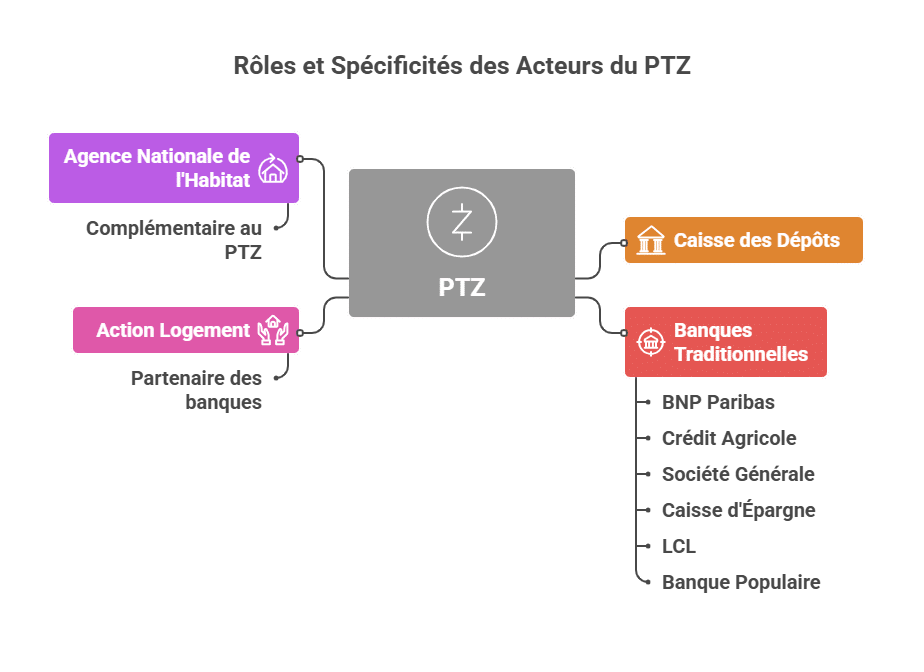
The PTZ is not distributed by a single actor but through a network of banks and public or semi-public institutions, each with its own specifics and conditions. Understanding the role of each will help you make the best choice when assembling your file in 2025.
- The Deposit Fund: a key player in financing, it guarantees and co-finances a large part of PTZs, coordinating the scheme nationwide.
- Traditional banks: BNP Paribas, Crédit Agricole, Société Générale, LCL, Banque Populaire, and Caisse d’Épargne. They analyze applications, grant the main bank loan and the PTZ, and monitor repayments.
- Action Logement: a partner in some cases, offering pathways to additional complementary aid for homeownership.
- National Agency for Housing (ANAH): although primarily focused on subsidy for improvement and energy renovation, it sometimes complements the financial package with PTZ.
Some banks are more receptive to files showing fiscal attachment of the young applicant, notably BNP Paribas and Crédit Agricole, which have implemented internal procedures to facilitate access.
Each institution applies its own timelines and internal criteria, which can raise questions for borrowers. For example, Caisse d’Épargne and La Banque Postale often remain more cautious and take longer to process. This point is crucial to consider, especially in the current context where PTZ requests are numerous at year-end.
| Bank / Organization | Role in PTZ | Notable specificities |
|---|---|---|
| BNP Paribas | Grants the PTZ and main loan | Flexible internal procedures for fiscal attachment |
| Crédit Agricole | Financing and advice | Internal documentation to secure young applicants’ files |
| Société Générale | Grants PTZ according to standard criteria | Less common in cases with fiscal attachment |
| Caisse d’Épargne | Slow and cautious distribution | More demanding with supporting documents |
| LCL | Access to standard PTZ | Intermediate processing time |
| Banque Populaire | Loan granted after thorough analysis | Personalized follow-up but strict requirements |
| Action Logement | Additional aid and accessory loans | Partner of banks |
| National Housing Agency | Support for renovation | Complementary to PTZ |
To make a better choice, it is advisable to evaluate each criterion precisely with the help of a specialized broker. Cafpi, for example, regularly produces specific documents and studies to guide borrowers in assembling their files, especially considering adaptations related to the August 3, 2010, decree.
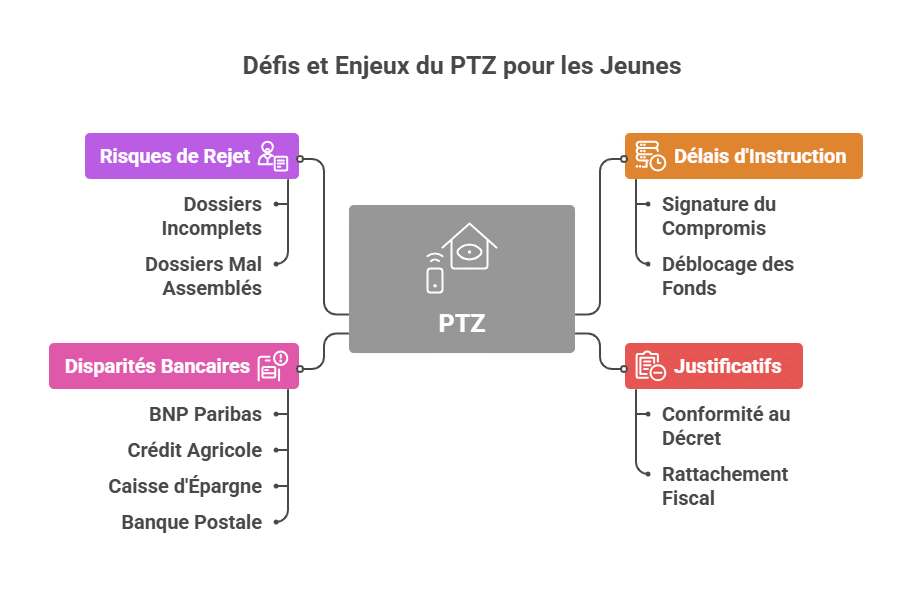
Limits, delays, and issues related to obtaining PTZ under the 2010 decree
Although PTZ is a powerful tool to facilitate property purchase, especially for young people tax-attached to their parents, some constraints remain, mainly related to the implementation of Decree No. 2010-912.
Banks are often hesitant to grant PTZ when the applicant is attached to the parental tax household. This caution leads to:
- Longer review times, sometimes several months between signing the agreement and funds release;
- More supporting documents required, increasing administrative complexity;
- Risks of misunderstanding and errors in assessing the resources considered;
- Disparities among banks, some being more flexible (BNP Paribas, Crédit Agricole), others more cautious (Caisse d’Épargne, La Banque Postale).
This situation sometimes forces borrowers to wait and be persistent. For example, a file processed at the end of 2024 required multiple exchanges with the broker and the submission of authentic copies to the tax center.
The stakes are twofold: on the one hand, ensuring proper application of the scheme to target genuinely needy individuals; on the other hand, preventing fraud or misuse through increased administrative rigor. Candidates must adopt a patient and methodical approach.
| Issues | Explanations |
|---|---|
| Long delays | Complex procedures delaying funds release |
| Multiple supporting documents | To ensure compliance with the fiscal attachment decree |
| Bank disparities | Uneven treatment of applications |
| Risk of rejection | Incomplete or poorly assembled applications facing strict requirements |
To better anticipate this environment, it can be useful to consult active discussions on specialized forums, for example via this link Comment Ca Marche, which provides details on deadlines and procedures to follow, as well as a view of current legislation.


Comparison of PTZ with other property acquisition aid schemes
Among property aid schemes, PTZ is often the main pillar, but other schemes can add or sometimes even replace PTZ depending on profiles:
- Action Logement: offers subsidized loans to finance personal contributions or related renovations;
- Social Access Loan (PAS): reserved for certain households under resource conditions;
- Local aids: subsidies or low-interest loans from local authorities;
- National Program by the National Housing Agency: mainly aimed at renovation and energy efficiency improvements.
PTZ has the advantage of being cumulative with these aids under certain conditions. Its particularity lies in its non-repayable nature (interest-free), which provides a real benefit over the overall loan duration.
Compared to other banking products, PTZ often offers better conditions for first-time buyers but requires case-by-case analysis, notably with a careful study of the borrower’s profile and project.
| Scheme | Objective | Advantages | Limitations |
|---|---|---|---|
| Interest-Free Loan (PTZ) | Facilitate sole residence purchase | Interest-free, stackable | Resource ceilings, limited amounts |
| Action Logement | Personal contribution and renovations | Direct aids, supplementary loan | Employer-related conditions |
| Social Access Loan (PAS) | Assist modest households | Lower rate, social guarantees | Resource restrictions |
| ANAH | Renovation and energy improvement | Significant grants | Not for new builds |
To deepen understanding of these schemes, it is useful to explore detailed analyses such as those shared on Aide BTS Assurance, where various SWOT studies expose their strengths and weaknesses regarding real estate.
FAQ: Key questions about PTZ and Decree No. 2010-912 concerning the tax household
A1: The PTZ is an interest-free loan designed to facilitate the purchase of a new or old home under conditions, repayable with deferred start depending on the situation.
A2: It ensures that only the applicant’s personal income, even when attached to the parental tax household, is considered, not the parents’ income.
A3: BNP Paribas and Crédit Agricole stand out for their procedure adaptations and better handling of such files.
A4: They must provide the parents’ tax notices, the declaration indicating attachment, their own tax notices, and proof of non-ownership.
A5: Timing can vary greatly, often several months, depending on the bank, file quality, and time of year.

Entraîne-toi avec nos Quiz de révision
Fini les lectures passives. Pour retenir les notions clés du BTS Assurance, teste-toi ! Inscris-toi pour recevoir 1 quiz par jour directement dans ta boîte mail.


