




Summary
| Section | Summary |
|---|---|
| Introduction | Case 40 concerns situations where a vehicle is found stationary or parked. The distinction between regular and irregular parking is essential to determine responsibility and legal consequences. |
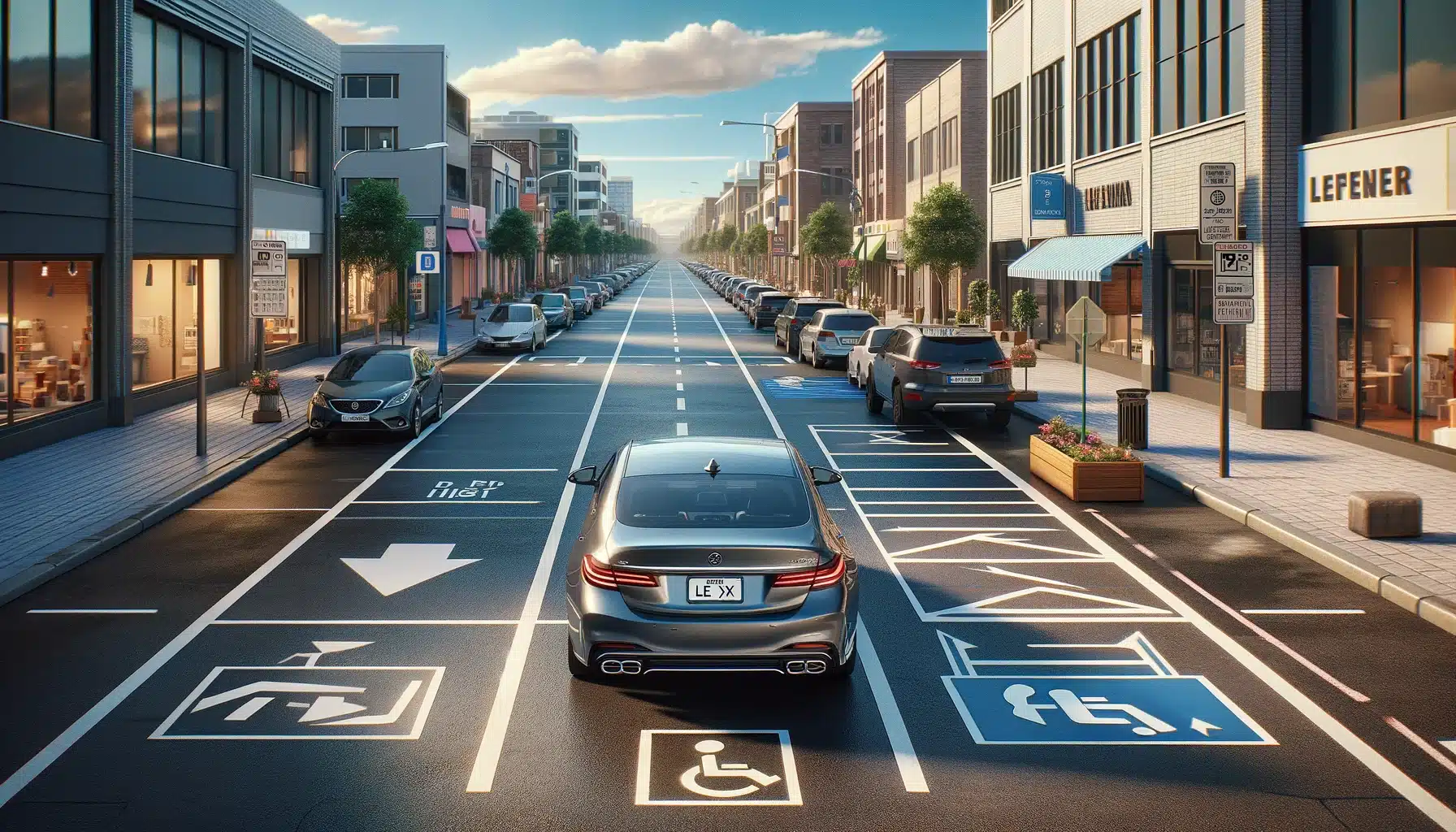
| Case 40: Regular Parking | X is parked in accordance with the rules (permitted parking spot, without obstructing traffic). In this case, X has not committed any fault, and if an accident occurs, Y is generally responsible. |
| Legal Implications (regular parking) | If Y hits X while X is correctly parked, responsibility generally falls on Y unless Y can prove that X’s parking contributed to the accident. |
| Case 40: Irregular Parking | X is parked in violation (sidewalk, restricted zone, blocked exit, dangerous turn). In this case, X’s liability may be engaged if the parking contributed to the accident. |
| Distribution of Responsibilities | Responsibility can be shared between X and Y, especially if Y could not reasonably avoid the obstacle created by X. |
| Prevention Advice | – For X: always check signage before parking. – For Y: exercise caution in densely parked areas and anticipate irregular parking behaviors. |
| Case Law | – Supreme Court Civil, 2nd Chamber, February 4, 1998: vehicle on sidewalk → shared responsibility. – Supreme Court Civil, 2nd Chamber, June 11, 2009: vehicle in a turn → co-responsibility. – Supreme Court Civil, 2nd Chamber, October 22, 2015: properly parked vehicle → sole responsibility of the moving driver. |
| Responsibility Table | – Regular X → Y responsible 100%. – Poorly parked X (on sidewalk) → shared 50/50. – X in a dangerous turn → reduced Y responsibility. – X without lights at night → co-responsibility. |
| FAQ | – Who is responsible if a vehicle hits a properly parked car? → Y. – And if the vehicle was poorly parked? → Shared 50/50. – Can my insurance refuse to compensate me? → Yes, in case of gross fault. – What to do if my car is damaged by a hit-and-run driver? → File a complaint + activate damage coverage or FGAO. |
| Conclusion | Case 40 emphasizes that respecting parking rules is crucial: it ensures safety and prevents legal disputes regarding responsibility and insurance. |
Case 40 examines situations where vehicle X is found parked or stopped, and the legal implications depending on whether the parking is regular or irregular. This distinction is vital for determining liability in incidents involving parked vehicles.

Case 40: X in Regular Parking
Case 40 addresses the nuances of regular parking, where X is parked in accordance with current regulations.
Regular Parking: Definition and Implications
- Regular parking: X is parked in a designated space or along the roadside, without exceeding legal limits and without obstructing traffic.
- No fault: In this configuration, if an incident involves X, responsibility will generally not be assigned to X unless clear signs of negligence are present (for example, parking in an area clearly not intended for that).
Legal Implications for Y
If Y collides with X while X is correctly parked:
- Y is generally responsible: Y will need to prove that X’s parking significantly contributed to the accident to exonerate or share responsibility.
Case 40: X in Irregular Parking
In the context of irregular parking, the implications for X and interactions with Y are notably different.
Irregular Parking: Definition and Consequences
- Irregular parking: X is parked in violation of local rules, for example, on a sidewalk, in a no-parking zone, or blocking a vehicle exit.
- Potential responsibility: X may be held liable if their parking directly contributed to an incident.
Distribution of Responsibilities
Responsibility may be shared between X and Y, especially if Y could not reasonably avoid the obstruction caused by X. In such cases, judicial decisions can vary greatly depending on the specific incident.
Prevention Tips
For drivers (X and Y)
- Respect signage: X should always verify parking signage to ensure not to park irregularly.
- Increased caution: Y should drive carefully in areas where vehicles are parked, anticipating the possibility of irregular behaviors or parking of other drivers.
Case Law: Concrete Examples
Case law clarifies how courts apply Case 40:
-
Supreme Court Civil, 2nd Chamber, February 4, 1998
A vehicle hit on a sidewalk. The Court decided on shared responsibility because parking was an infraction. -
Supreme Court Civil, 2nd Chamber, June 11, 2009
A vehicle in a reduced visibility turn was judged co-responsible for the accident. -
Supreme Court Civil, 2nd Chamber, October 22, 2015
A vehicle parked in an authorized zone was hit by another. The court confirmed that only the moving driver should bear responsibility.
➡️ These rulings show that the distinction between regular/irregular is not symbolic: it has a direct impact on compensation.
Responsibility Summary Table
| Situation | Responsibility | Concrete Example | Insurance Consequences |
|---|---|---|---|
| X in regular parking | Y responsible 100% | Collision with a parked car in a parking lot | Premium increase for Y, full compensation for X |
| X poorly parked on sidewalk | 50/50 sharing | X was blocking the lane, Y hit | Each insurer compensates their insured partially |
| X parked in a turn | Reduced responsibility for Y | Reduced visibility, X in infraction | X loses part of their compensation |
| X parked without lights at night | X co-responsible | Car not visible, Y hits | Partial denial or additional franchise for X |
FAQ
1. Who is responsible if a car hits a properly parked vehicle?
👉 It’s the moving driver, except in exceptional cases (no lighting, intentional obstacle).
2. And if the vehicle was poorly parked?
👉 Responsibility is often shared: 50/50 according to IRSA convention.
3. Can my insurance refuse to compensate me?
👉 Yes, if the parking was a gross fault (public danger, voluntary obstruction).
4. What to do if my parked car is damaged and the other driver flees?
👉 File a complaint and activate the all risks damage guarantee or the FGAO guarantee (Obligatory Insurance Guarantee Fund).


Conclusion
Case 40 highlights the importance of obeying parking rules, not only for safety of road users but also to prevent legal complications in case of an incident. Whether you are the driver of the parked vehicle (X) or the moving one (Y), a clear understanding of these rules is essential to navigate shared spaces efficiently and safely.
🚗 Assurance Auto — Articles liés

Entraîne-toi avec nos Quiz de révision
Fini les lectures passives. Pour retenir les notions clés du BTS Assurance, teste-toi ! Inscris-toi pour recevoir 1 quiz par jour directement dans ta boîte mail.


