




In summary
| Theme | Key points summary |
| 🇧🇪 🇫🇷 Identity | Unique hybrid model: Headquarters and marketing strategy in France, combined with expertise and manufacturing in Belgium. The legitimacy of “Belgian chocolate” with French creativity. |
| 💪 | Strengths Network & Product Range: More than 480 stores (franchises/company-owned), a diverse and accessible range. The |
| “Jeff Club” is a powerful tool for building customer loyalty and driving in-store traffic. | 📉 |
| Weaknesses Image Challenges & Management: | Potential disparity in quality between franchises and strong seasonality (Christmas/Easter). The sometimes overly “industrial” image struggles to convince purists compared to “bean-to-bar” artisans. 🌱Opportunities New Markets: Strong demand for |
| Organic/Fair Trade . Significant potential in the | B2B market (Companies/Works Councils) to secure off-season revenue. 🦁 |
| Threats Hostile Environment: | Fierce competition (Leonidas, supermarkets) and inflation |
which threatens purchasing power for “pleasure” purchases. Rising cost of raw materials (cocoa).
- 🚀
- Strategy
- Transformation:
- Theatricalizing points of sale to create an experience, increased digitalization (Click & Collect, Social Selling), and CSR commitment to modernize the brand.
- In the competitive world of European chocolate, few brands have managed to combine industrial production with the image of local craftsmanship as successfully as Jeff de Bruges. Since its creation in 1986, the brand has built an impressive network across France, becoming a key player in the “indulgence” shopping and corporate gifting markets. But how does this brand, at the crossroads of Belgian expertise and French marketing, manage to maintain its leadership in the face of aggressive competition and increasingly demanding consumers? This article offers an in-depth SWOT analysis of Jeff de Bruges’ current situation, deciphering its strengths, internal vulnerabilities, and the opportunities and threats that will shape its future. Table of Contents
- Current State of Jeff de Bruges: A Success Story in the Chocolate Market
- Jeff de Bruges’ Key Strengths in the Chocolate Industry
- Internal Weaknesses: Challenges for the Chocolatier
Analysis of Threats from Competition and Market Developments
Development Strategies Based on SWOT Analysis
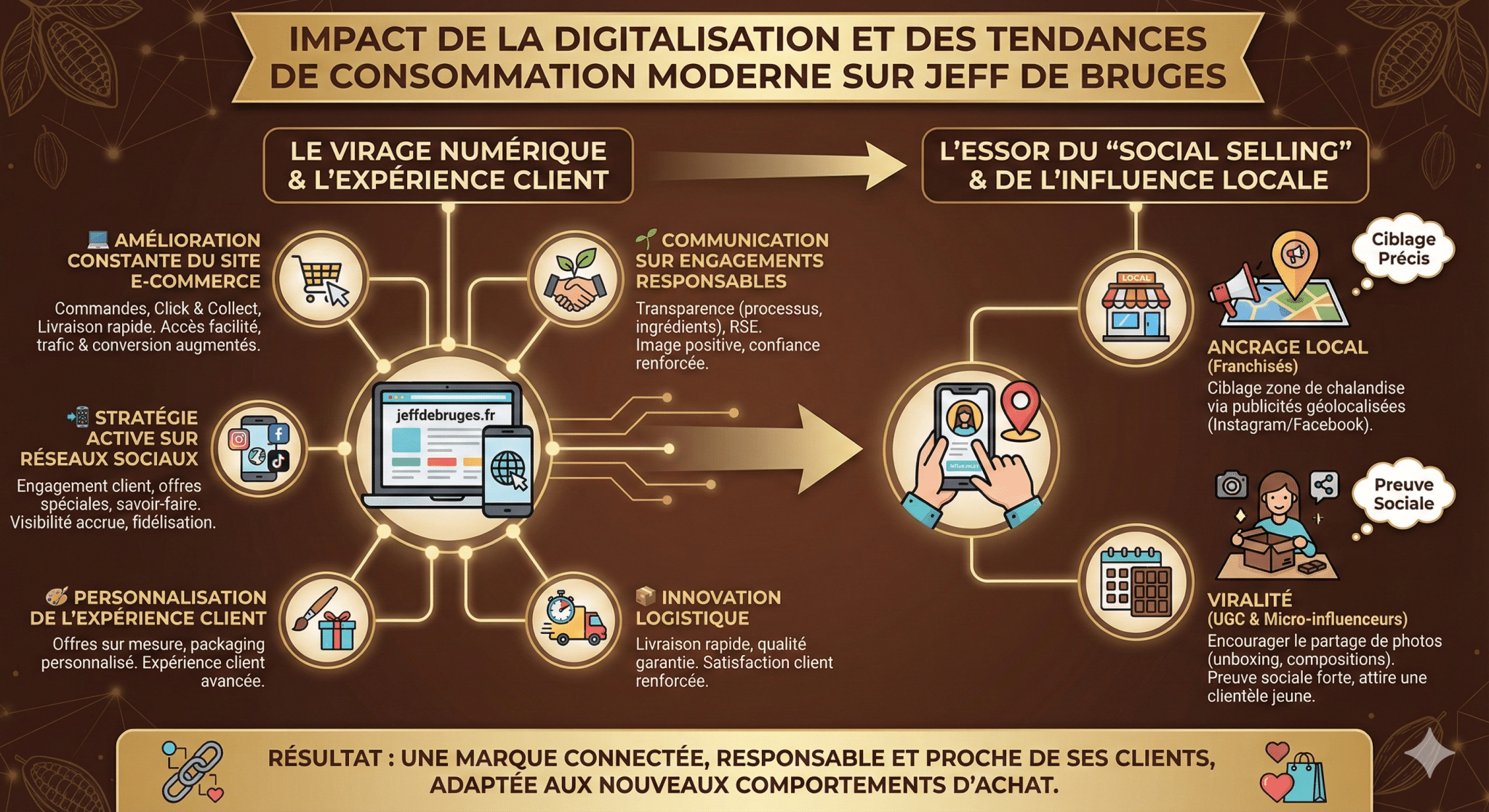
Impact of Digitalization and Modern Consumption Trends
FAQ: Key Questions on SWOT Analysis and Jeff de Bruges
Current State of Jeff de Bruges: A Success Story in the Chocolate Market
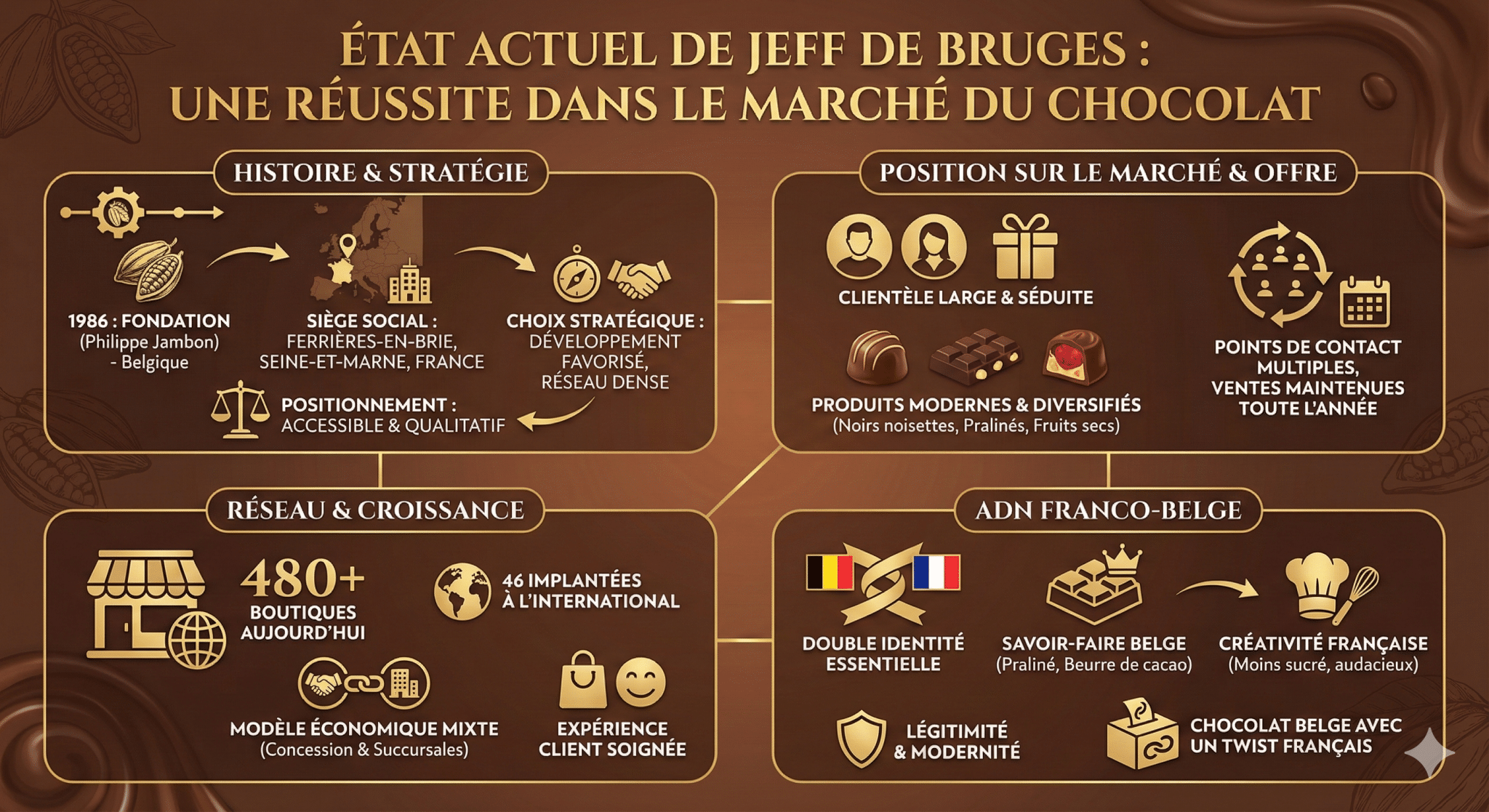
| Current State of Jeff de Bruges: A Success Story in the Chocolate Market | The chocolate landscape in France, and more broadly in Europe, is crucial to understanding Jeff de Bruges’ current position. Founded in 1986 by Philippe Jambon, this brand has established itself by relying on high-quality craftsmanship while innovating with a diverse product range. The company started in Belgium, but quickly established its headquarters in France, in Ferrières-en-Brie, Seine-et-Marne. This strategic geographical choice fostered its growth and facilitated the creation of a dense network of company-owned and franchised boutiques. | Within the chocolate market, Jeff de Bruges capitalizes on an accessible and high-quality brand image, with a positioning that appeals to a broad customer base. The company has successfully offered products tailored to modern expectations, whether through the diversity of its recipes – such as dark chocolates with hazelnuts, classic pralines, or subtle creations with dried fruits. This product approach, in addition to being rich in flavor, allows the brand to create multiple points of contact with its consumers. Given the highly competitive market, with well-established players like Leonidas and Réauté Chocolat, the company must constantly remain at the forefront of its marketing and sales strategy. This vigilance allows Jeff de Bruges to maintain its sales throughout the year, thus avoiding the typical seasonal peak often associated with the holidays. |
|---|---|---|
| Today, there are over 480 stores, 46 of which are located internationally. This network demonstrates the strength of the business model, which combines franchises and company-owned stores, along with meticulous attention to store layout and customer experience. In short, Jeff de Bruges is well-established in contemporary shopping habits, but must remain vigilant to continue growing in this sector where customer loyalty can quickly falter. | Key Points | |
| Description | Impact | Year of creation |
| 1986, by Philippe Jambon | Strong historical position | Headquarters |
| Ferrières-en-Brie, Seine-et-Marne | Strategic position for France | Number of stores |
| 480 (including 46 abroad) | Continuous expansion and diversification | Brand image |
High-quality and accessible
Enhanced customer appeal Product range Varied (puffed rice, hazelnuts, raisins, chocolate rocks, etc.) Suited to a broad customer base Franco-Belgian DNA as a core identity
The driving forces of Jeff de Bruges in the chocolate industry
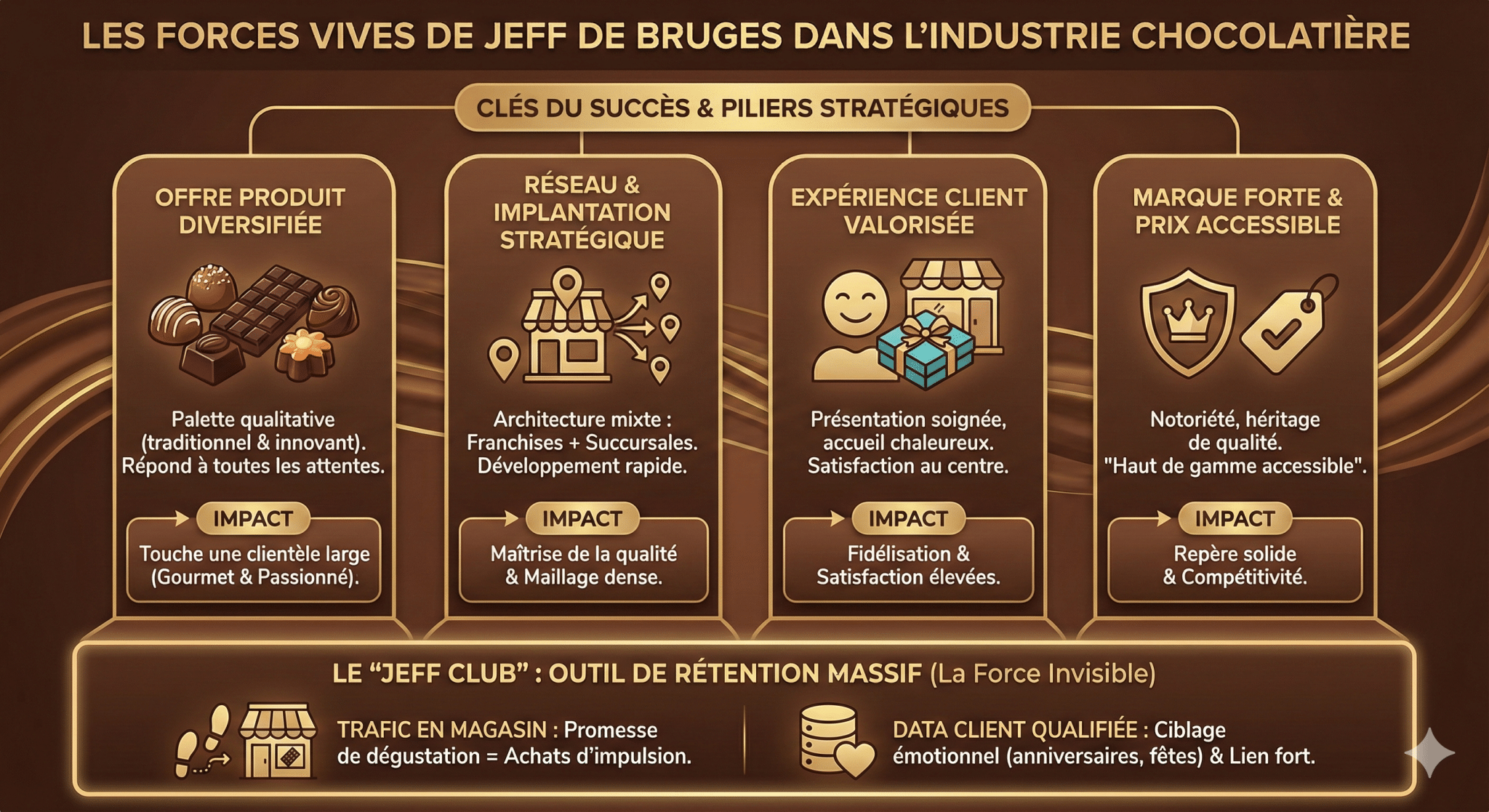
Understanding a company’s strengths is a bit like holding the key to its success. For Jeff de Bruges, the main strength undoubtedly lies in its product offering. This chocolate maker offers a A diverse and high-quality product range that effectively meets the expectations of various consumer categories. The diversification of chocolate flavors – ranging from the most traditional to the most innovative – is an asset that allows the brand to reach a broad clientele, from the occasional gourmet to the passionate enthusiast seeking new experiences.
Another major strength isthe strategic location of its stores
. By relying on a distribution structure combining franchises and company-owned stores, the brand maintains control over service quality while rapidly expanding its network. Each store is designed to enhance the customer experience, with particular attention paid to product presentation and a warm welcome.
- Furthermore, the reputation built around this heritage of quality and close customer relationships is a real strength in the competitive landscape. Jeff de Bruges’ pricing strategy, accessible without sacrificing quality, also contributes to customer loyalty. The company also maintains consistent communication, which makes the brand a solid benchmark in the premium chocolate sector at reasonable prices.
- 🌟 Wide range of products to suit all tastes
- 🏪 Dense network of franchised and company-owned stores
| 🤝 Customer relationship focused on experience and satisfaction | 🎯 Attractive pricing that strengthens loyalty | 📣 Consistent communication and recognized brand |
|---|---|---|
| Identified strengths | Strategic impact | Key elements |
| Varied and delicious product range | Broad customer appeal | Innovative recipes, quality chocolate |
| Refined in-store experience | Customer loyalty | Layout, ambiance, and customer service |
| National brand awareness | Visibility and recognition | Targeted advertising, positive image |
| Mixed sales model (franchise/company-owned) | Rapid and sustainable growth | Flexibility and quality control |
Balanced pricing policy
Competitiveness and accessibility
-
Reasonable prices, promotional offers The “Jeff Club”: a powerful retention tool
-
Beyond the products, an invisible but formidable strength of the brand is its loyalty program, the “Jeff Club.” Unlike simple points cards, this program offers free tastings with each visit and significant discounts. In-store traffic:

This program allows the company to build a qualified database to target offers (birthdays, holidays) and maintain a strong emotional connection with the brand.
Internal weaknesses: challenges for the chocolatier
Internal weaknesses: challenges for the chocolatier
- In any SWOT analysis, it is essential to uncover weaknesses, those blind spots that, if left unaddressed, can hinder growth. At Jeff de Bruges, several internal aspects deserve attention. First, the franchise-based business model can sometimes lead to inconsistencies in service quality and product presentation. Even if the brand insists on specific standards, the reality on the ground varies, which can affect customer perception. This disparity risks undermining consumer trust in the long term in a market where quality and experience are crucial.
- Another point to monitor is the relative seasonality of chocolate consumption. Despite Jeff de Bruges’ efforts to spread purchases throughout the year, certain peaks related to holidays such as Christmas, Valentine’s Day, and Easter remain very pronounced. This issue can complicate inventory management and lead to additional logistical costs.
- Finally, the growing prominence of direct competitors, particularly Leonidas, necessitates increased vigilance. In the event of declining performance or slow innovation, Jeff de Bruges risks losing market share, especially if the service fails to deliver the expected level of excellence. Attention must also be paid to the impact of regulatory and environmental changes, which may require costly adjustments.
- ⚠️ Risk of inconsistencies in franchise management
| 📉 Strong dependence on certain seasonal peaks | 👥 High competitive pressure | 🛠️ Necessary adaptation to environmental standards |
|---|---|---|
| 🔄 Constant need for product and service reinvention | Weaknesses | Possible consequences |
| Recommended actions | Disparity between franchises | Weakened brand image |
| Strengthening quality control, training | Seasonality of sales | Difficult cost and inventory management |
| Spread-out campaigns, product diversification | Aggressive competition | Possible customer loss |
| Innovation, strengthened loyalty | Need for regulatory adaptation | Additional costs |
Monitoring and proactive integration
Risk of product range becoming stale
Sales stagnation
Pas le temps de ficher tout le programme ?
Découvre l'E-book de révision avec 100% des cours de 1ère et 2ème année synthétisés. L'outil indispensable, créé par un diplômé, pour valider ton BTS sans stress.
Découvrir l'E-bookThis detailed analysis therefore allows us to set the groundwork for operational priorities for Jeff de Bruges, notably by integrating rigorous quality management and anticipation of Market fluctuations. To better understand the dynamics, it’s also important to consider the potential new opportunities that are emerging.
The “Artisan Chocolatier” image deficit
Although the quality is undeniable, Jeff de Bruges sometimes suffers from a perception of being a “standardized chain” among purists. Faced with the rise of local “bean-to-bar” chocolatiers who emphasize ultra-local and transparent production, Jeff de Bruges’ image can appear too industrial. This perception may hinder the acquisition of an ultra-premium clientele that prioritizes exclusivity and absolute “handmade” quality, a segment where the brand struggles to justify its added value compared to a neighborhood artisan.
- Promising Business Opportunities for Jeff de Bruges
- As part of a company’s strategy, identifying opportunities is crucial for exploring new avenues of development. The chocolate sector still offers significant potential, especially by capitalizing on evolving consumer behavior and current trends.
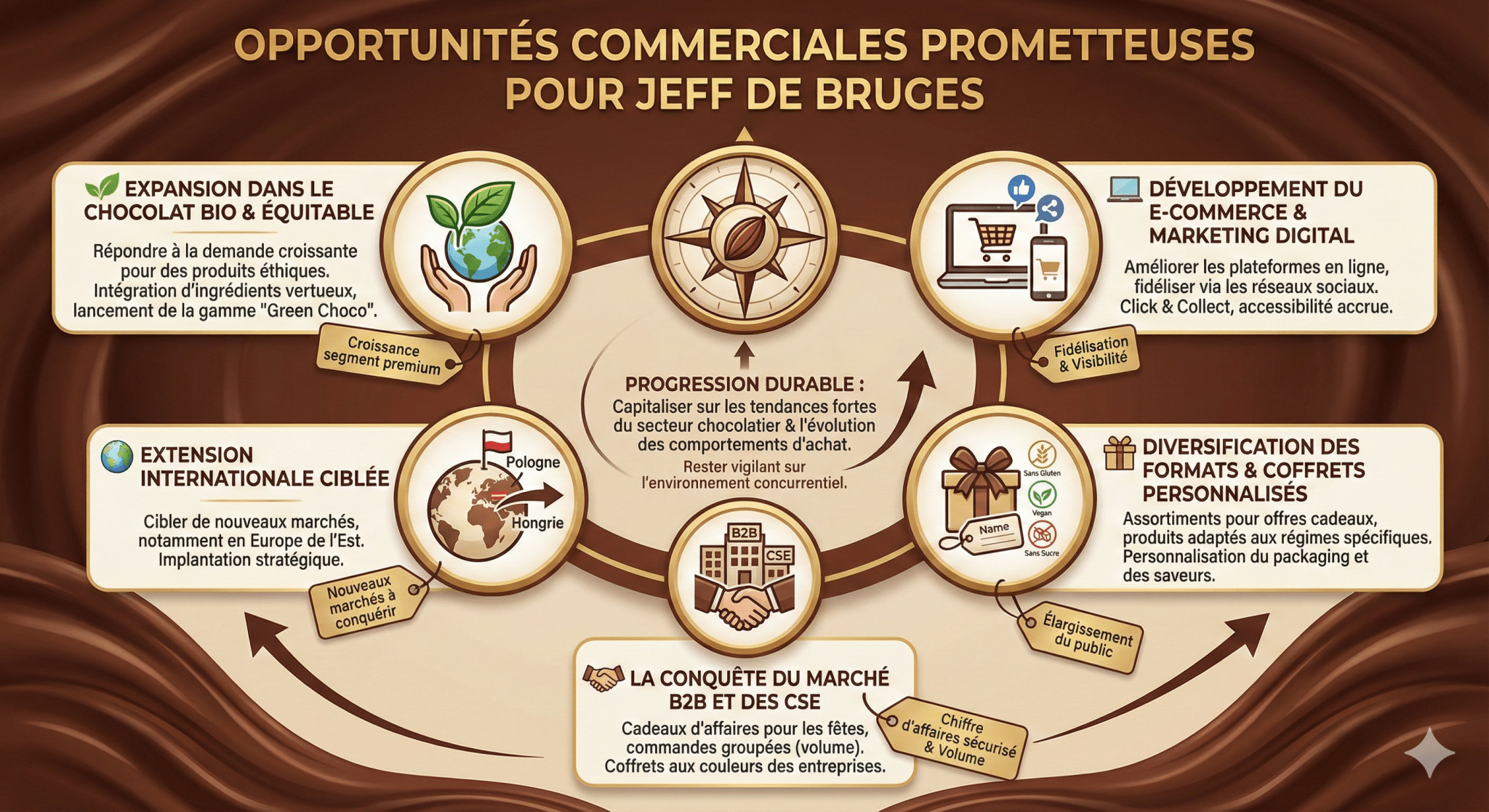
- One obvious avenue lies in the growing demand for organic, ethical, and responsible products. The rise of environmentally and socially conscious consumers is pushing chocolatiers to rethink their sourcing. Jeff de Bruges could capitalize on this trend by incorporating more fair trade or organic ingredients, making its collections a more ethical choice.
| Furthermore, the growth of digital technology is opening up significant opportunities. Improving online platforms, implementing more efficient e-commerce, and leveraging social media to build loyalty and attract a younger clientele are all key areas to explore. | Then comes the diversification of formats, with, for example, assortments adapted to personalized gift offers, or products designed to meet specific dietary needs (gluten-free, vegan, no added sugar). This type of initiative allows you to broaden your potential audience and stand out from the competition. | |
|---|---|---|
| 🌿 Expansion in organic and fair trade chocolate | 💻 Development of e-commerce and digital marketing | |
| 🎁 New formats and personalized gift boxes | 🥳 Collaboration with external events and brands | 🌍 Targeted international expansion, particularly in Eastern Europe |
| Opportunities | Growth potential | Concrete examples |
| Organic and fair trade products | Strong growth in the premium segment | Launch of the “Green Choco” range |
| Strengthened e-commerce | Increased accessibility and loyalty | Improved web platform, click & collect |
Personalized gift boxes
Attractive gift offers
Personalized packaging and flavors
-
Event partnerships Expanded visibility
-
Collaboration with festivals and artists International deployment

The intelligent use of these development areas will allow Jeff de Bruges to ensure sustainable growth, capitalizing on strong trends in the chocolate sector. The company will nevertheless need to keep a close eye on its environment to detect any potential threats.
Conquering the B2B market and Works Councils: A huge opportunity lies in strengthening the offering for businesses and Works Councils (CSEs). Chocolate remains the quintessential corporate gift for the holiday season. Volume:Group orders allow companies to secure significant revenue well before the peak shopping season.
Personalization:
Offering gift boxes in corporate colors or chocolate concierge services would allow Jeff de Bruges to become the preferred partner of the corporate world, a sector less volatile than retail.
- Analysis of Threats to Competition and Market Trends
- Analysis of Threats to Competition and Market Trends
- In any SWOT analysis, threats represent the adverse external factors that a company must address to avoid jeopardizing its long-term viability. For Jeff de Bruges, these threats are numerous and deserve close attention, as they can have a lasting impact on performance and market share.
- The first obvious threat is fierce competition from well-established players, such as Leonidas or other specialty brands offering similar product lines. These competitors can afford aggressive marketing campaigns, which can alienate some loyal customers. Furthermore, the volatility of raw material prices, particularly cocoa, remains a significant financial threat. International fluctuations can impact margins, especially if it is difficult to pass these increases on to the end consumer without losing competitiveness.
| In addition, regulatory requirements and the rise of environmental and social standards impose additional compliance costs. Moreover, the risk of market saturation in the chocolate sector could limit long-term growth potential. | Finally, another factor to monitor concerns changing consumer behavior. The preference for healthier, less sugary products, or those with guaranteed origins, requires rapid adaptation. Any inertia in this area could render the offering irrelevant. | |
|---|---|---|
| 🎯 Intense competition and aggressive promotional offers | 📉 Instability of cocoa and raw material prices | |
| ⚖️ Strict environmental and social standards | 📊 Potential saturation of the European chocolate market | 🍫 Rapidly evolving consumer expectations |
| Threats | Potential consequences | Mitigation measures |
| Aggressive competitors | Loss of market share | Product innovation, customer loyalty |
| Cocoa price fluctuations | Decline profitability | Contract management, supplier diversification |
Strengthened standards
Increased costs
Sustainable investment, legal anticipation
Saturated market
Geographic expansion, diversification
Changing behaviors
Loss of attractiveness
Consumer monitoring, offer adaptability
- Case study: Meeting the challenge of competition
- To remain competitive against Leonidas, which is increasing its promotions and events, Jeff de Bruges recently launched a campaign focused on product exclusivity, combined with an enhanced loyalty program. This hybrid approach aims to strengthen customer relationships and limit the risk of churn.
- The impact of inflation on “pleasure” purchases
- Chocolate, while appreciated, remains a non-essential purchase (“pleasure purchase”). In an inflationary economic context where household purchasing power is under pressure, the risk of budgetary trade-offs is real. Consumers could either turn to less expensive mass-market brands (Milka, Lindt in supermarkets) or drastically reduce the frequency of their purchases in specialty shops. This price sensitivity makes the brand vulnerable if it fails to maintain its image of “accessible luxury.”
| Development strategies based on SWOT analysis | Development strategies based on SWOT analysis | |
|---|---|---|
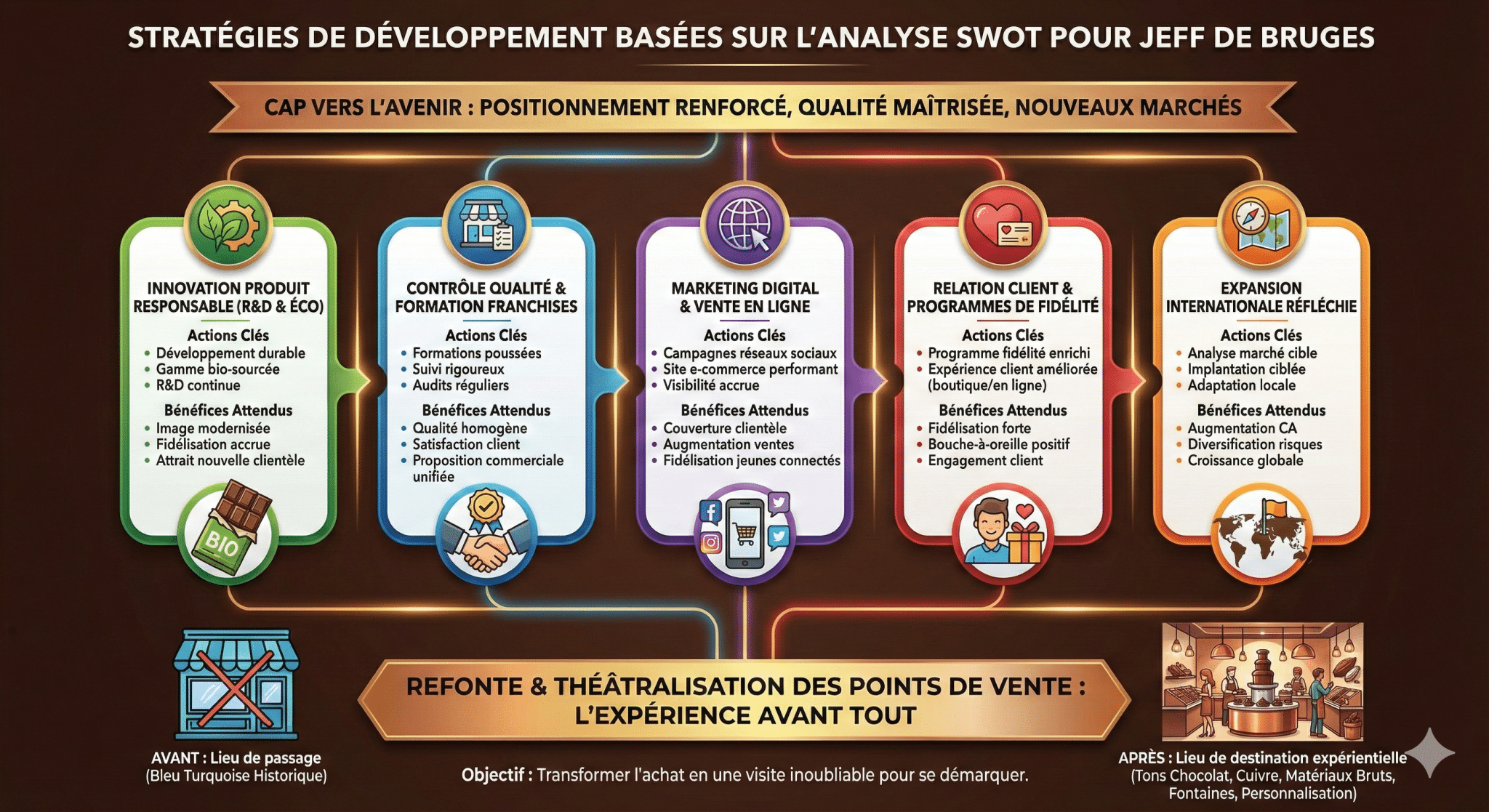
| After clearly identifying strengths, weaknesses, opportunities, and threats, implementing appropriate strategies is key to Jeff de Bruges remaining a leader in the chocolate industry. The strategy must be built around a strengthened positioning, mastery of quality, and the ability to seize new markets. | From a product perspective, the brand must continue investing in R&D to innovate while integrating an eco-responsible dimension. For example, developing a bio-sourced range capable of appealing to environmentally conscious customers. Furthermore, the continuous improvement of the customer experience, particularly in stores and online, will be crucial to maintaining strong appeal. | |
| From a management perspective, better support for franchisees with advanced training and rigorous quality control will help standardize the commercial offering. From a sales perspective, the rise of digital necessitates strengthening visibility on social media and e-commerce to attract and retain a younger, more connected clientele. 🚀 Capitalizing on responsible product innovation | 🏬 Strengthening quality control and franchise training | 🌐 Developing digital marketing and online sales |
| 🤝 Intensifying customer relationships and loyalty programs | 🌍 Thoughtful expansion into new international markets | Strategic objectives |
| Key actions | Expected benefits | Product innovation |
| Sustainable development, R&D | Modernized image, increased loyalty | Franchise control |
Training, regular audits
Consistent quality, customer satisfaction
Social media campaigns, high-performing website
Customer reach, increased sales
Customer relationships
Enhanced loyalty program
- Loyalty, positive word-of-mouth
- International expansion
- Market analysis, targeted location
- Increased revenue, risk diversification
- Redesign and Theatricalization of Points of Sale
| To stand out, the strategy must not only be product-focused, but also visual. The evolution of the stores’ architectural concept is crucial. Moving from the historic turquoise blue to more modern tones (chocolate, copper, raw materials) and integrating “theatrical” elements (chocolate fountains, tasting opportunities, live customization of chocolate bars) will transform a simple purchase into an experiential visit. The goal is to make the store a destination, not just a place to pass through. | Impact of Digitalization and Modern Consumer Trends on Jeff de Bruges | |
|---|---|---|
| The digital shift has become central in the food sector, and even more so in the chocolate industry, where emotions play a major role in the purchasing journey. Jeff de Bruges understands this well and is investing in digitalization to improve its business strategy and customer experience. The constantly evolving website now offers easy access to products, with options such as click & collect and fast delivery. This channel is becoming increasingly important, especially as consumers prioritize convenience and personalization. There is also a strong presence on social media, where dedicated content highlights special offers, new products, and artisanal expertise. | Furthermore, the trend towards responsible consumption requires the brand to be more transparent about its processes and ingredients. Sharing CSR commitments strengthens trust and improves the brand’s perceived image. | |
| 💻 Continuous improvement of the e-commerce website | 📲 Active social media strategy | |
| 🎨 Personalization of the customer experience | 🌱 Communication on responsible commitments | 📦 Logistics Innovation for Speed and Quality |
| Digital Elements | Features | Benefits for Jeff de Bruges |
| E-commerce Website | Orders, Click & Collect | Increased Traffic, Conversion |
Social Media
Customer Engagement, Product Promotion
-
Increased Visibility, Loyalty Personalization
-
Tailor-Made Offers, Packaging Advanced Customer Experience
Transparency, Communication
Positive Image, Trust Innovative LogisticsFast Delivery, Quality Enhanced Customer SatisfactionThe Rise of Social Selling and Local Influence
Digitalization doesn’t stop at the website. Jeff de Bruges has every reason to develop a Social Selling strategy by leveraging local or culinary micro-influencers.


Local Focus:
- Each franchisee could use social media to target their specific catchment area (geo-targeted ads on Instagram/Facebook).
- Virality:
Encouraging users to share photos of products (unboxing advent calendars, Easter creations) (UGC – User Generated Content) creates strong social proof and attracts a younger clientele, often difficult for traditional chocolatiers to reach.
https://www.youtube.com/watch?v=VXxGMVcnuPk- Towards an experiential and responsible renewal
In conclusion, Jeff de Bruges is not resting on its historical laurels. While the company benefits from solid brand recognition and an exceptional territorial network, it now finds itself at a strategic crossroads. To ensure its continued success, the brand must successfully navigate its dual transformation: - digitalization,
to attract a younger, more connected clientele, and
corporate social responsibility,
Entraîne-toi avec nos Quiz de révision
Fini les lectures passives. Pour retenir les notions clés du BTS Assurance, teste-toi ! Inscris-toi pour recevoir 1 quiz par jour directement dans ta boîte mail.

