


In summary
| 🌍 Section | 📖 Key Content |
|---|---|
| 🏛️ Political Analysis | Governments support sustainable tourism, invest in transport infrastructures and encourage innovation to make the sector more ecological and accessible. |
| 💶 Economic Analysis | After the health crisis, tourism is experiencing a 10% growth. Companies adopt dynamic pricing and tourist expenditures reach 71 billion euros in France. |
| 👥 Sociocultural Analysis | Travelers prefer authentic experiences, well-being stays and cultural immersion. Social media strongly influences their choices. |
| 🏡 Urban vs Rural Tourism | Rural tourism is gaining ground over urban tourism. Travelers seek peace, nature and ecotourism, favoring local regions. |
| 💻 Technological Analysis | Artificial intelligence, chatbots and digital platforms are revolutionizing bookings and personalization of stays. |
| 🤖 Tourism and AI | AI tools create custom itineraries, instantly translate languages, and enhance client relations through predictive data. |
| 🌱 Ecological Analysis | Regenerative tourism and reforestation initiatives are becoming priorities. Travelers demand more environmentally friendly practices. |
| ♻️ Sustainable and fair tourism | Tourism stakeholders commit to an ethical and local model, supporting communities and reducing their carbon footprint. |
| ⚖️ Legal Analysis | New laws regulate data protection, tariff transparency and hygiene standards to protect consumers. |
| 🚀 Competitive Analysis | Global competition drives innovation: virtual reality, immersive experiences, and emerging markets like Vietnam or Rwanda. |
| 💼 Digital Nomadism | The rise of remote work creates a new clientele of digital nomads seeking long stays and a balance between work and travel. |
| 📊 Perspectives 2030 | The UNWTO predicts 1.8 billion international arrivals by 2030, with strong growth in Asia and Africa, but with challenges related to over-tourism. |
| 💡 Conclusion | Tourism in 2025 relies on three pillars: technological innovation, environmental responsibility and authentic human experiences. The future will be connected and sustainable. |
This content explores the PESTEL analysis of the tourism sector in 2025, examining the issues and perspectives impacting this dynamic industry. Amid rapid transformations, we describe the main trends, challenges, and opportunities reshaping the tourism landscape.
Table of Contents
- Political analysis of the tourism sector in 2025
- Economic analysis of the tourism sector in 2025
- Sociocultural analysis of the tourism sector in 2025
- Technological analysis of the tourism sector in 2025
- Environmental analysis of the tourism sector in 2025
- Legal analysis of the tourism sector in 2025
- Impacts of the pandemic on tourism and sector adaptation
- Key trends and future outlook for tourism
Political analysis of the tourism sector in 2025
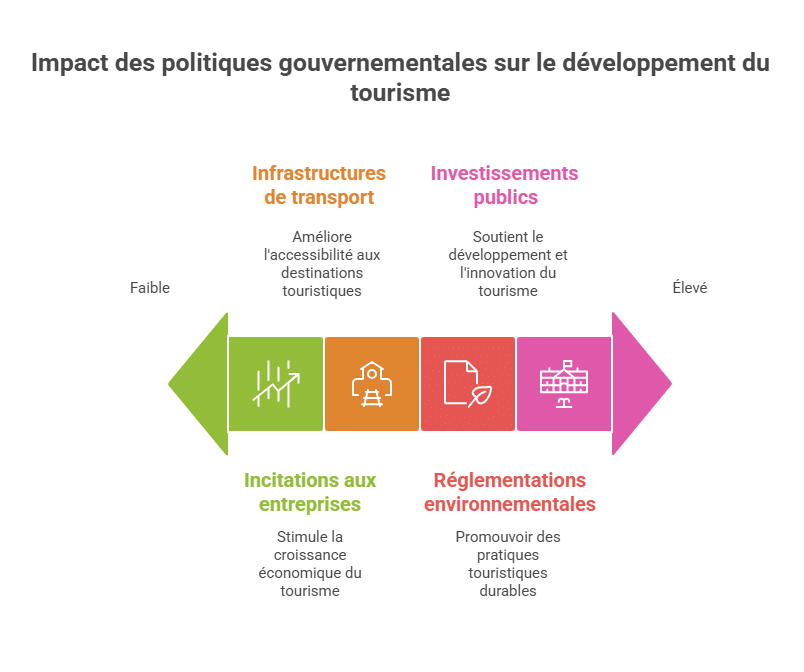
The political landscape plays a crucial role in the development of the tourism sector. In 2025, a set of government policies and regulations directly influence market trends. European governments, including France, continue to promote sustainable tourism in their political agendas, reinforcing their commitment to the environment and local communities.
Governments are also investing in infrastructures to support the sector. In 2024, billions of euros were allocated to modernize transport, especially to extend railway lines to facilitate access to tourist destinations. For example, the construction of new high-speed lines, such as between Bordeaux and Toulouse, demonstrates this effort to revitalize the sector.
- Increase in public investment in tourism 💰
- New regulations for sustainable tourism 🌱
- Government support for transport infrastructures 🚆
- Incentive policies for tourism businesses 📈
| Political Factors | Expected Impacts |
|---|---|
| Public investments in infrastructures | Improved accessibility to destinations |
| Environmental regulations | Promotion of sustainable practices |
| Support for technological innovation | Better adaptation to modern travelers’ needs |
Economic analysis of the tourism sector in 2025
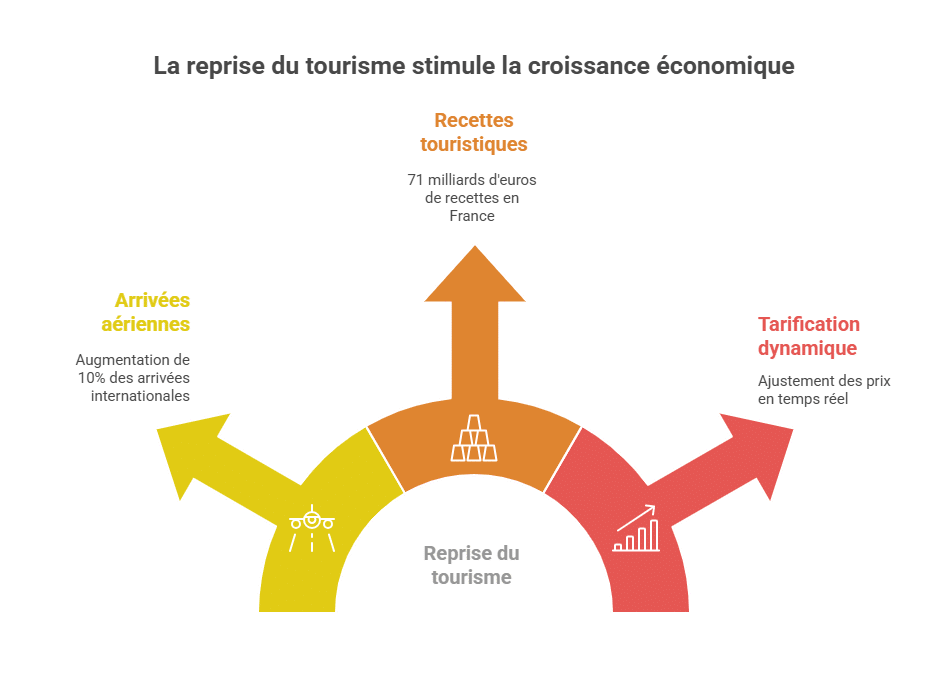
In the global economic context, the tourism sector finds itself at an important crossroads. In 2025, figures show an impressive post-pandemic recovery, with a forecasted 10% increase in international air arrivals, thus strengthening the sector’s economic momentum. Tourism revenues in France will reach approximately 71 billion euros, indicating promising prospects for industry stakeholders.
The rise in prices, though concerning, does not hinder the growth in tourist spending. Consumers are willing to invest more in their experiences, whether in hotels, restaurants, or leisure activities. This leads to a dynamic pricing model where tourism companies adjust their prices in real-time to maximize revenue. For example, giants like Airbnb and Booking.com already employ these strategies effectively.
- 10% increase in international air arrivals ✈️
- Forecasted revenue of 71 billion euros 💶
- Rising prices for tourist services 📈
- Adoption of dynamic pricing by companies 🏨
| Economic Indicators | Values (2025) |
|---|---|
| International arrivals | 100 million |
| Tourism revenues | 71 billion euros |
| Hotel occupancy rate | Forecasted increase of 7% |
Sociocultural analysis of the tourism sector in 2025
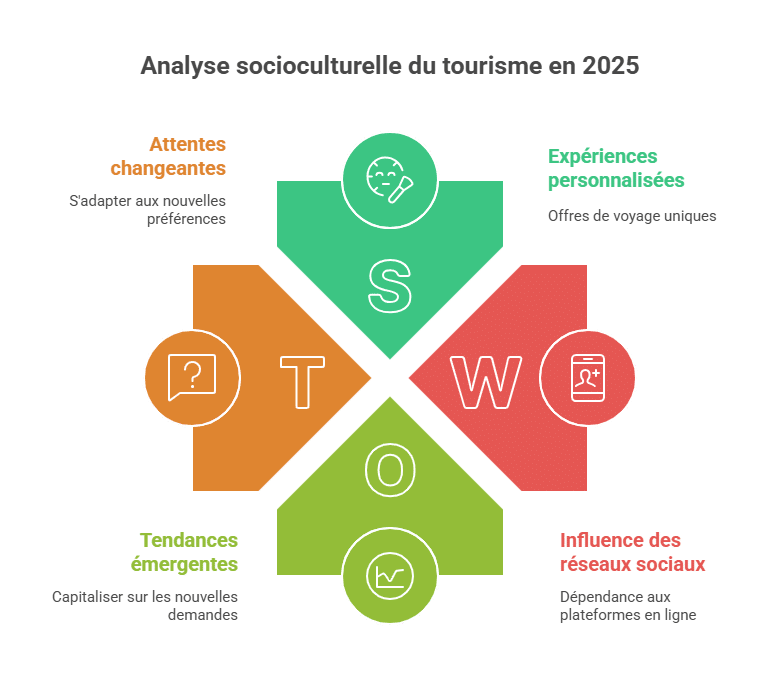
Sociocultural trends are also shaping the tourism sector in 2025. Travelers’ expectations are evolving, with increasing demand for authentic and personalized experiences. Travelers seek not only to visit sites of interest but also to immerse themselves in local culture. This is illustrated by the rise of wellness trips and mental health-focused stays, which are gaining growing interest.
Destinations like Vichy and Évian-les-Bains attract visitors with health and wellness offerings. At the same time, tailored culinary experiences become very popular, where visitors can collaborate with local chefs to create their own menus. Social media plays a key role in spreading these trends, with hashtags like #WellnessTravel 🌿 or #CulinaryExperiences 🍽️ gaining popularity.
- Increase in wellness-focused travel 🧘♂️
- Trends toward personalized culinary experiences 👩🍳
- Cultural immersion sought by travelers 🌍
- Influence of social media on destination choices 📲
| Sociocultural Trends | Examples |
|---|---|
| Wellness trips | Vichy, Évian-les-Bains |
| Tailored culinary experiences | Cooking classes with local chefs |
| Cultural immersion | Craft workshops, local festivals |
🏙️ Urban vs Rural Tourism: Rebalancing Flows
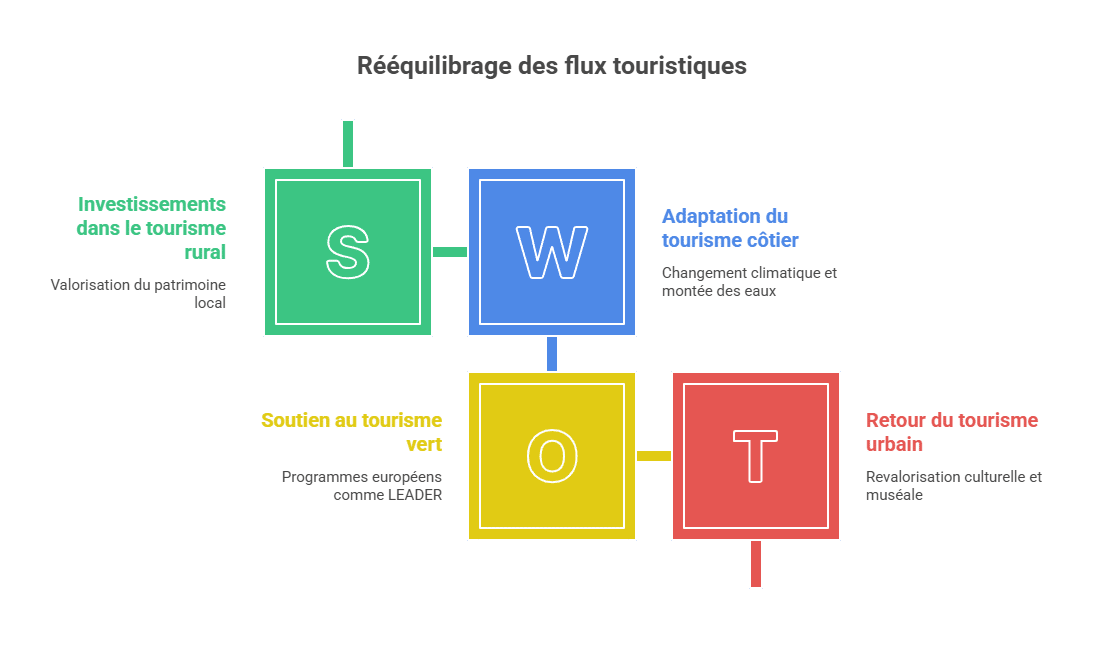
In 2025, global tourism is experiencing a rebalancing of flows.
After decades of concentration in major metropolises like Paris, London or Rome, travelers are turning toward rural and natural areas, seeking tranquility, pure air and authenticity.
Rural regions are investing in ecotourism, sustainable lodges and agricultural experiences, aimed at showcasing their local heritage.
European programs like LEADER support these initiatives by funding the promotion of green tourism and local training programs.
| Type of tourism | Observed Trends |
|---|---|
| Urban tourism | Cultural and museum revitalization, gradual return of international tourists |
| Rural tourism | Growth of eco-tourism, short circuits and crafts |
| Coastal tourism | Adapting to sea level rise and climate change |
This rebalancing helps to unclog major cities while stimulating local economies in less visited regions.
Technological analysis of the tourism sector in 2025
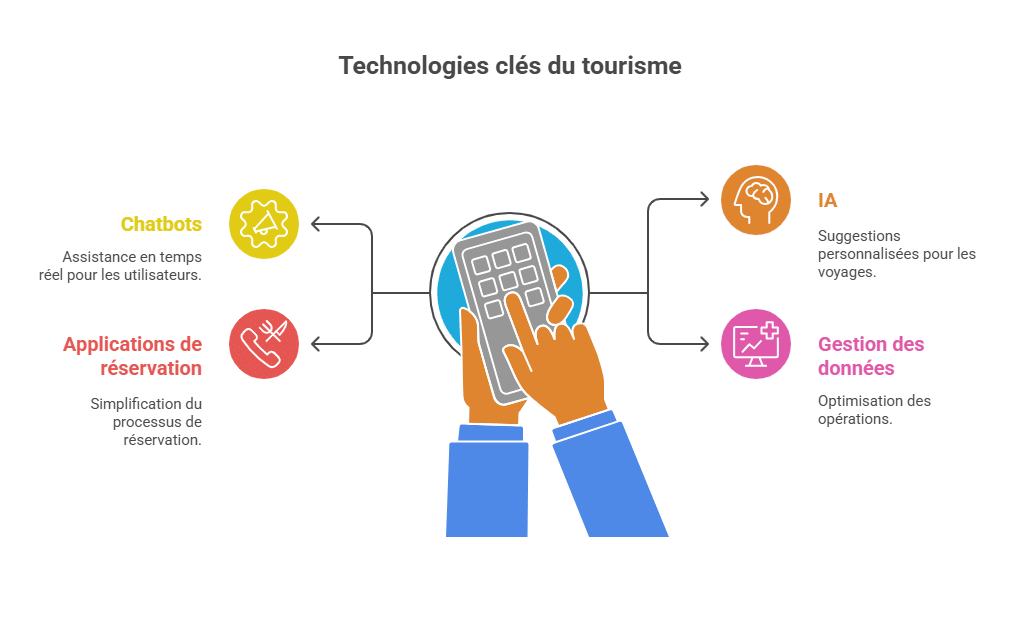
Technology is rapidly transforming the tourism sector, and 2025 is no exception. Artificial intelligence (AI) and chatbots are becoming essential tools for tourism companies, allowing for personalized traveler experiences. Around 60% of companies already use these tools to manage bookings and provide real-time information.
Platforms such as Expedia and Voyages SNCF also use AI to offer tailored recommendations based on individual preferences. This increased use of technology helps companies stay competitive and meet the rising expectations of modern travelers.
- Use of chatbots for customer service 🤖
- AI for personalized travel suggestions 🧠
- Digital platforms facilitating online booking 📱
- Data management technologies to optimize operations 💻
| Key Technologies | Description |
|---|---|
| Chatbots | Real-time assistance for users |
| AI | Personalized travel suggestions |
| Reservation apps | Simplification of the booking process |
🌍 Tourism and Artificial Intelligence: Toward an Ultra-Personalized Experience
Artificial intelligence (AI) is now at the heart of tourism transformation.
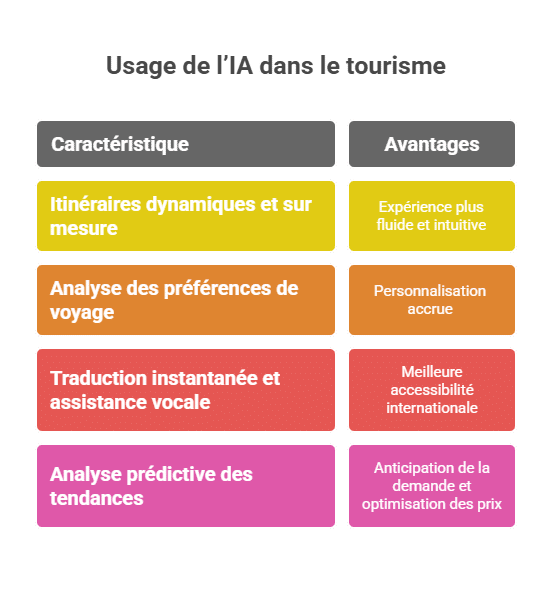
In 2025, platforms like Google Travel, Expedia and Booking leverage predictive algorithms capable of analyzing traveler preferences to propose tailor-made itineraries, local recommendations, and even real-time price alerts.
Voice assistants and smart chatbots facilitate bookings, while multilingual AI-based apps improve communication between travelers and providers.
However, this revolution raises issues related to data protection and algorithmic transparency.
| AI Usage in Tourism | Key Benefits |
|---|---|
| Dynamic and tailor-made itineraries | More fluid and intuitive experience |
| Preference analysis | Enhanced personalization |
| Instant translation and voice assistance | Improved international accessibility |
| Predictive trend analysis | Demand forecasting and price optimization |
By making travel smarter, AI redefines the relationship between travelers, destinations, and tourism businesses.
Ecological analysis of the tourism sector in 2025
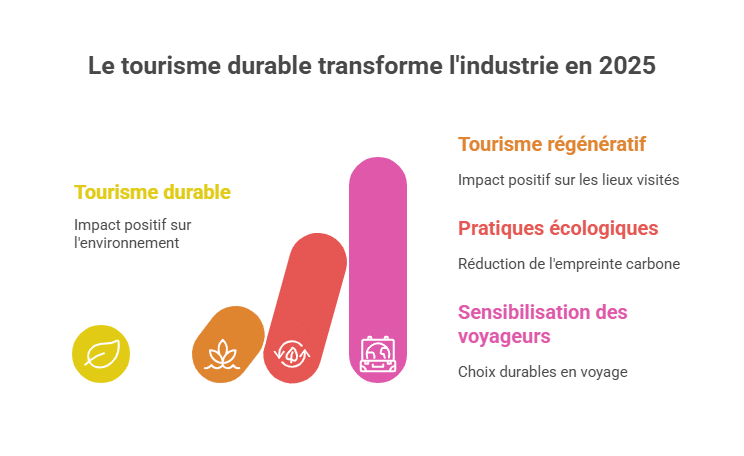
Sustainability is becoming a central challenge for the tourism sector. In 2025, companies take significant measures to reduce their environmental impact. The concept of “regenerative tourism,” aiming to have a positive impact on visited sites, is gaining popularity. Initiatives like reforestation projects and awareness programs are implemented by companies such as Accor Hotels and local organizations.
Travelers are increasingly aware of the importance of making sustainable choices. As a result, industry players integrate eco-friendly practices into their daily operations. For example, hotels and accommodation providers are beginning to adopt environmentally responsible practices to reduce their carbon footprint.
- Adoption of regenerative tourism practices 🌳
- Reforestation and species protection projects 🦜
- Eco-friendly practices in hospitality and catering 🏨
- Growing traveler awareness of sustainability 🌎
| Ecological Initiatives | Examples |
|---|---|
| Regenerative tours | Excursions with a positive impact on nature |
| Eco-hotels | Use of renewable energy sources |
| Traveler awareness programs | Educational programs on sustainability |
🌱 Sustainable and fair tourism: Moving toward collective responsibility
Sustainable tourism is no longer an option; it is a strategic necessity.
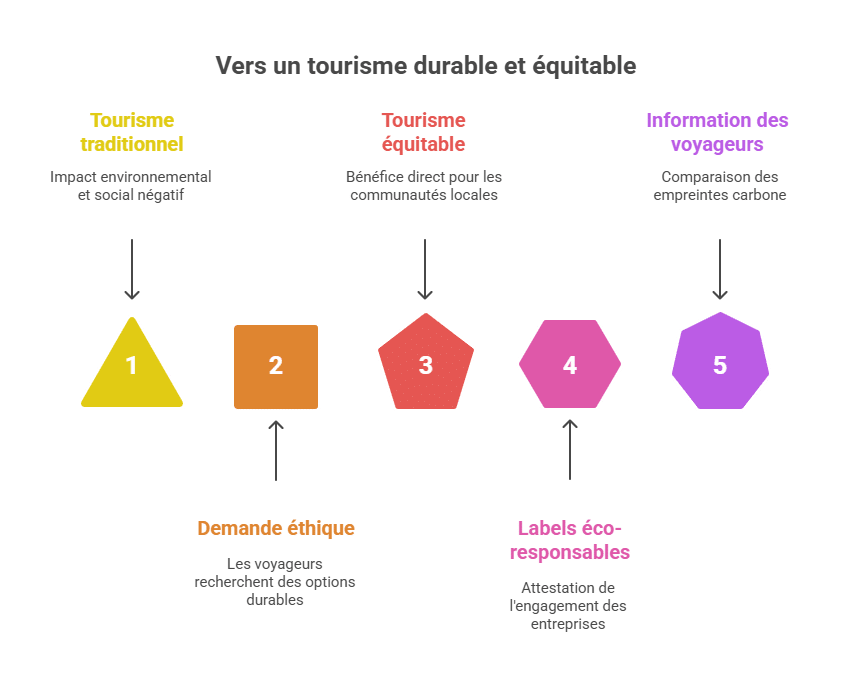
In 2025, travelers seek ethical and environmentally respectful stays, as well as socially responsible options.
The concept of fair tourism is gaining ground, placing at the center of the journey the direct benefit for local communities.
Eco-labels such as Travelife, Green Key or Biosphere Tourism help companies attest their commitment.
Meanwhile, travelers are better informed and compare their carbon footprints before choosing a destination.
| Pillar of sustainable tourism | Main Objective |
|---|---|
| Local economy | Support local producers and artisans |
| Environment | Reduce emissions and waste management |
| Social | Improve working conditions and inclusion |
| Governance | Transparency and ethical responsibility |
This future model promotes a more just, inclusive, and regenerative tourism, where each actor contributes to preserving the world heritage.
Legal analysis of the tourism sector in 2025
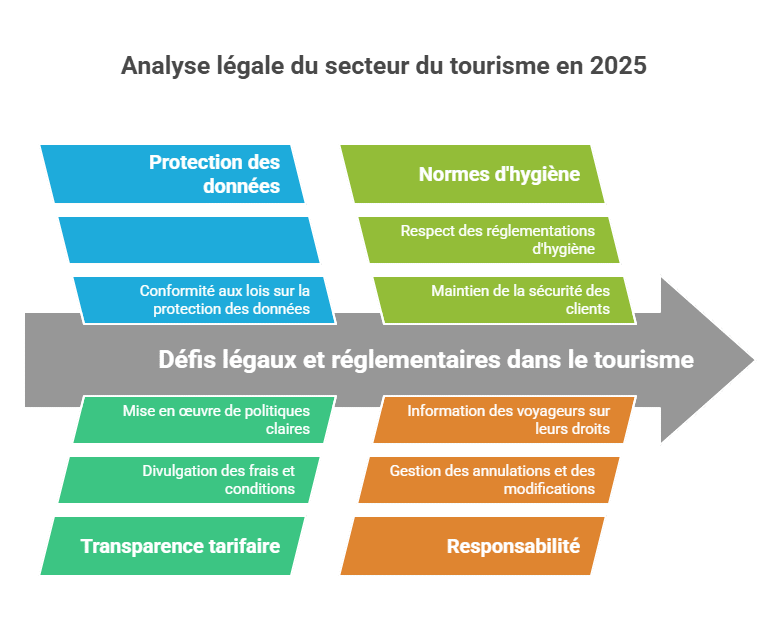
Legal and regulatory aspects strongly influence the tourism sector. Some laws are enacted to protect consumers, ensure fair commercial practices, and promote competitive diversity in the market. This includes regulations concerning data protection, traveler safety, and hygiene standards.
Companies now have to comply with strict rules regarding tariff transparency and liability in case of cancellations or modifications. This involves implementing clear and consistent policies to inform travelers of their rights.
- Traveler data protection laws 🛡️
- New transparency regulations 📝
- Rigorous hygiene standards for tourism establishments 🧼
- Increased liability in case of cancellations or changes 📅
| Legal Aspects | Implications for Businesses |
|---|---|
| Data protection | Necessity to protect personal information of clients |
| Tariff transparency | Obligation to inform about fees and conditions |
| Hygiene standards | Ensure safety and customer satisfaction |
🧭 Competitive analysis and innovations in tourism in 2025
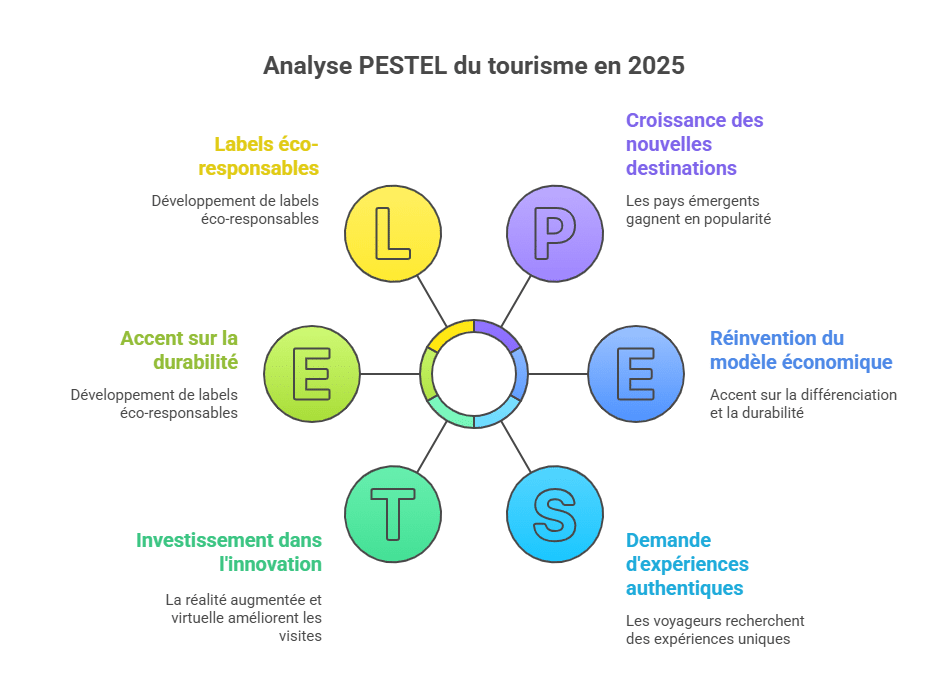
The tourism sector is experiencing increased global competition in 2025. Historic destinations — such as France, Spain, or Italy — are now facing rising contenders: Japan, Vietnam, Croatia, and Rwanda. These countries rely on aggressive digital marketing campaigns and differentiated experiences to attract visitors seeking authenticity.
Online platforms such as Airbnb Experiences or GetYourGuide play a strategic role in this transformation, allowing small local operators to compete with large groups.
Meanwhile, tourism companies are heavily investing in technological innovation, augmented reality, and virtual reality to offer immersive museum visits, natural sites, and historic monuments.
| Competitive Factors | Concrete Examples |
|---|---|
| Experiential tourism | Eco-responsible safaris, spiritual retreats, artisan circuits |
| Emerging new destinations | Croatia, Rwanda, Vietnam |
| Technological innovation | Virtual reality for immersive visits, AI for personalization |
| Brand positioning | Development of eco-friendly labels, identity storytelling |
This competition enhances overall quality and encourages the industry to reinvent its economic model around differentiation and sustainability.
Impacts of the pandemic on tourism and sector adaptation
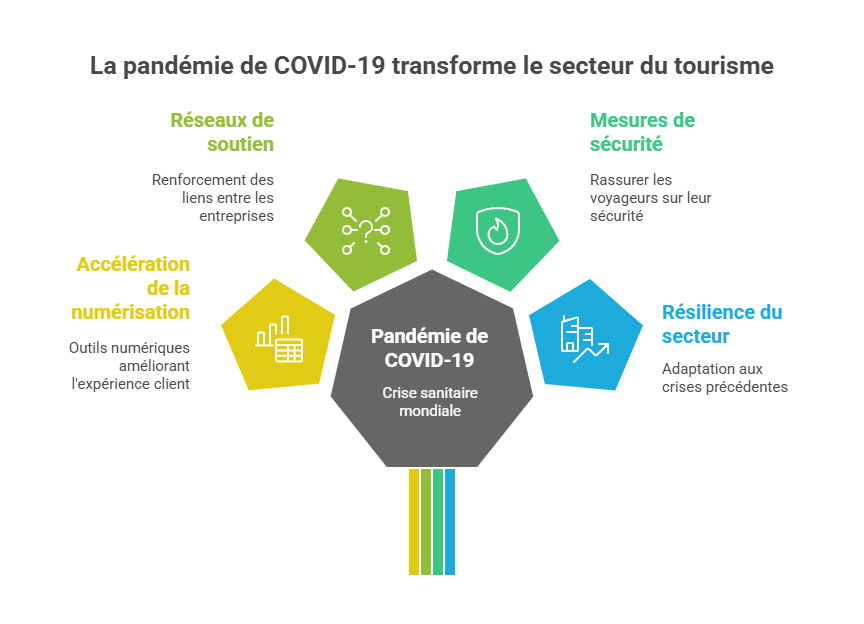
The COVID-19 pandemic has left a lasting mark on the tourism industry but has also acted as a catalyst for innovation and adaptation. In 2025, it is clear that tourism companies are implementing strategies to navigate a post-pandemic environment. Digitization has become prominent, facilitated by digital tools that enhance the customer experience. Moreover, the resilience of businesses is tested, leading to stronger support networks among sector actors.
Companies are adopting stricter safety measures, ensuring travelers feel comfortable and protected. This evolution demonstrates the sector’s ability to adapt to past crises and its willingness to turn challenges into opportunities.
- Acceleration of digitization in operations 🖥️
- Support networks among tourism companies 💪
- Enhanced safety measures to reassure travelers 🔒
- Resilience of the sector in face of past crises ⏳
| Pandemic impact | Sector adaptations |
|---|---|
| Drop in international arrivals | Promotions and special offers to attract customers |
| Changes in travel behaviors | Focus on local tourism and micro-adventures |
| Preferences for personalized experiences | Offering tailored itineraries and local workshops |
💼 Impact of remote work and digital nomadism
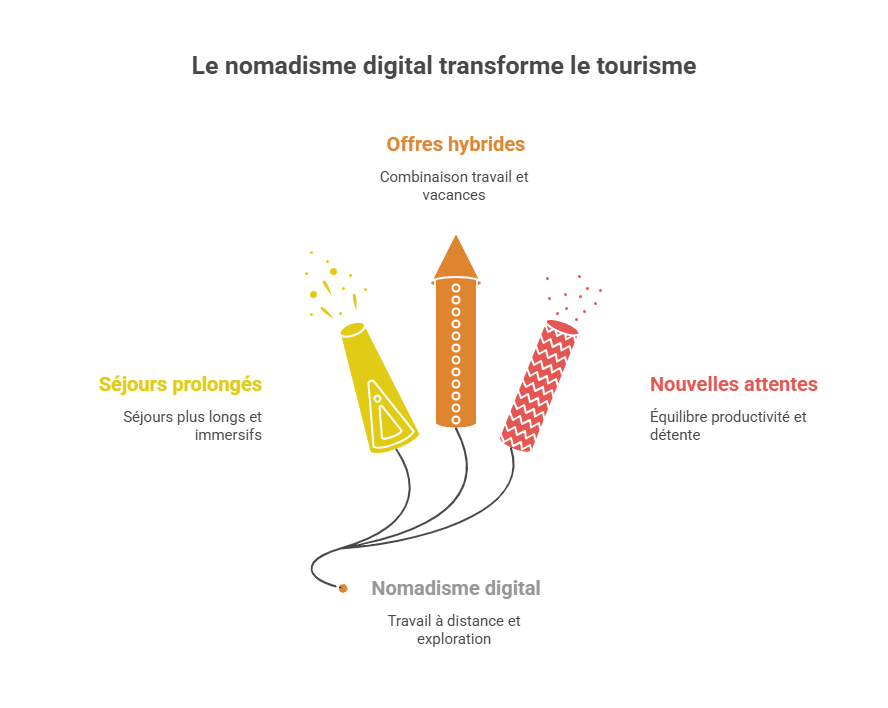
Since the health crisis, remote work has profoundly changed travel behaviors. In 2025, a new category of travelers has emerged: digital nomads. These professionals, often from the digital field, work remotely while exploring new destinations.
Cities like Lisbon, Bali, Chiang Mai and Montreal have become global hubs for hybrid work, offering high-speed infrastructure, co-working spaces, and long-stay programs.
Governments support this dynamic by simplifying “digital nomad” visas, providing a stable legal framework. For tourism stakeholders, this presents an opportunity for loyalty building through offers of extended stays and tailored services.
| Factors related to digital nomadism | Impacts on tourism |
|---|---|
| Enhanced digital infrastructure | Growth of long-term stays |
| Hybrid “workation” offers | Work + holiday combination |
| New customer expectations | Seeking balance between productivity and relaxation |
| Favorable public policies | Creation of visas for digital nomads |
Digital nomadism is redefining the tourism seasonality: travelers no longer move only for vacations but live at the rhythm of destinations all year round.
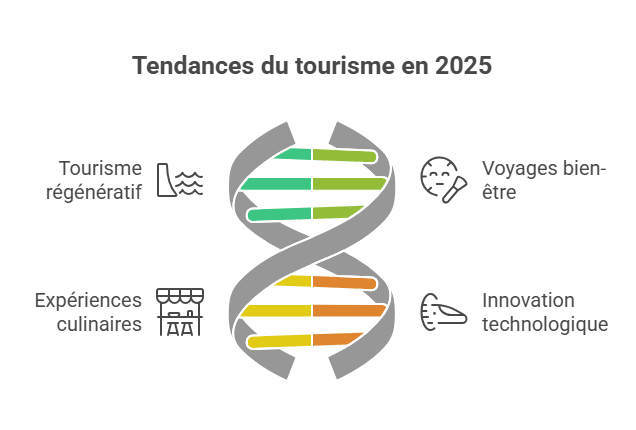
Key Trends and Future Perspectives for Tourism
By 2025, several key trends are emerging in the tourism sector, each with the potential to influence how companies adapt to changing traveler needs. Regenerative tourism, the rise of wellness travel, and the growth of personalized culinary experiences demonstrate a sector in full transformation.
Companies must continue innovating, integrating technological and ecological solutions to meet the expectations of modern consumers. In 2025, collaboration between sector stakeholders and local communities is essential to build sustainable and responsible tourism that benefits both economically and environmentally.
- Emergence of regenerative tourism 🌍
- Growing demand for wellness travel 💆♀️
- Growing personalized culinary experiences 👨🍳
- Anticipating industry evolutions through technological innovation 🚀
| Tourism Trends | Forecasts |
|---|---|
| Regenerative tourism | Positive impact on destinations and the environment |
| Wellness trips | Response to increasing mental health demand |
| Culinary experiences | Growing interest in authenticity and local culture |

📈 Global tourism economic outlook for 2030
Projections by the World Tourism Organization (UNWTO) forecast a full recovery of the sector by 2030, with nearly 1.8 billion international arrivals annually.
This growth will be driven by Asian markets (China, India, Indonesia) and African markets, whose middle classes are gradually gaining access to international tourism.
However, this expansion brings new challenges: managing over-tourism, conserving ecosystems, and ensuring equitable distribution of benefits.
Companies will need to balance profitability and environmental responsibility to remain competitive.
| Forecast | Details |
|---|---|
| International arrivals (2030) | 1.8 billion |
| Average annual growth | +3% |
| Growing markets | Asia, Africa, Middle East |
| Associated risks | Environmental pressure, rising costs, over-tourism |
The future of tourism relies on a long-term vision balancing economic development, innovation, and overall sustainability.
🧩 Conclusion: a sector in full transformation toward responsible and connected tourism
The tourism sector in 2025 is at a decisive turning point in its history. Between digital transformation, ecological challenges, and new societal expectations, this industry must reconcile growth, innovation, and responsibility.
Political factors now support sustainable initiatives, while the post-pandemic economic recovery restores confidence among market players. Traveler behaviors are evolving: they prioritize proximity, health, well-being, and authentic experiences over mass tourism.
Artificial intelligence and digital tools are transforming the way we travel, offering personalized experiences while raising ethical challenges around data protection. Simultaneously, the development of fair and regenerative tourism highlights a collective desire to preserve natural and cultural resources.
The tourism of the future thus rests on a dual requirement: innovate without distorting and grow without overexploiting. Companies, governments, and travelers share a common responsibility: to build a model where each movement contributes to a positive and sustainable impact.



FAQ
- What are the main trends in the tourism sector in 2025?
Main trends in 2025 include regenerative tourism, wellness travel, and personalized culinary experiences. - How has the pandemic influenced tourism?
The pandemic accelerated digitization, changed travel behaviors, and prompted companies to strengthen safety measures. - What is the impact of government policies on tourism?
Government policies promote public investments in infrastructure and support sustainable development. - Which technologies are transforming tourism?
Artificial intelligence and chatbots are key technologies that improve customer experience and booking management. - Why is sustainable tourism important in 2025?
Sustainable tourism aims to minimize environmental impact and promote balanced development, benefiting local communities.
📊 Voir aussi : notre hub centralisé de toutes les analyses SWOT & PESTEL (206 études) classées par secteur — Tech, Auto, Mode, Distribution, Finance.
Tu prépares le BTS Assurance ?
Cette analyse PESTEL fait partie des thèmes abordés dans les épreuves. Notre E-book de révision couvre l'intégralité du programme en fiches claires et synthétiques.
- 100 % du programme BTS Assurance
- Fiches 1ère et 2ème année
- Créé par un diplômé
- Téléchargement immédiat

Entraîne-toi avec nos Quiz de révision
Fini les lectures passives. Pour retenir les notions clés du BTS Assurance, teste-toi ! Inscris-toi pour recevoir 1 quiz par jour directement dans ta boîte mail.


