


In Summary
| Section 📌 | Key Points 📝 |
|---|---|
| Historical Background and Development | Founded in 1937 in Japan; world’s first automaker; presence in 170 countries; $213 billion revenue in 2013; 333,498 employees; market shares: 12.2% in North America and 4.3% in Europe. |
| SWOT Method | Strategic analysis to identify strengths, weaknesses, opportunities, and threats; a dynamic tool to be regularly updated in response to sector developments. |
| Strengths | Strong brand image; continuous technological innovations (hybrids, electric, connected); robust international supply chain; high customer loyalty. |
| Weaknesses | Dependence on suppliers; reputation issues related to safety; declining sales in certain competitive segments. |
| Opportunities | Development of eco-friendly vehicles (hybrids, electric, autonomous); expansion into emerging markets (Africa, Asia); technological innovations to enhance customer experience. |
| Threats | Increased competition (Volkswagen, Ford, Hyundai, Nissan, Honda); strict environmental regulations increasing costs; economic fluctuations and exchange rate volatility. |
| Strategic Recommendations | Invest more in eco-innovation; strengthen presence in emerging markets; diversify distribution channels; monitor and anticipate regulatory changes. |
| FAQ – Key Points | SWOT analysis helps refine strategy; strengths = brand image, innovation; weaknesses = supplier dependence, reputation; opportunities = sustainability and emerging markets; threats = competition and regulations. |
This text provides an in-depth analysis of the SWOT method at Toyota, exploring the key elements contributing to its global success. Various aspects — from strengths and weaknesses to opportunities and threats — will be examined to understand how the company navigates the current competitive landscape. The importance of this analysis for Toyota in a constantly evolving market is crucial, especially in facing challenges related to sustainability, technological innovations, and regulatory pressures.
Historical Context and Development of Toyota
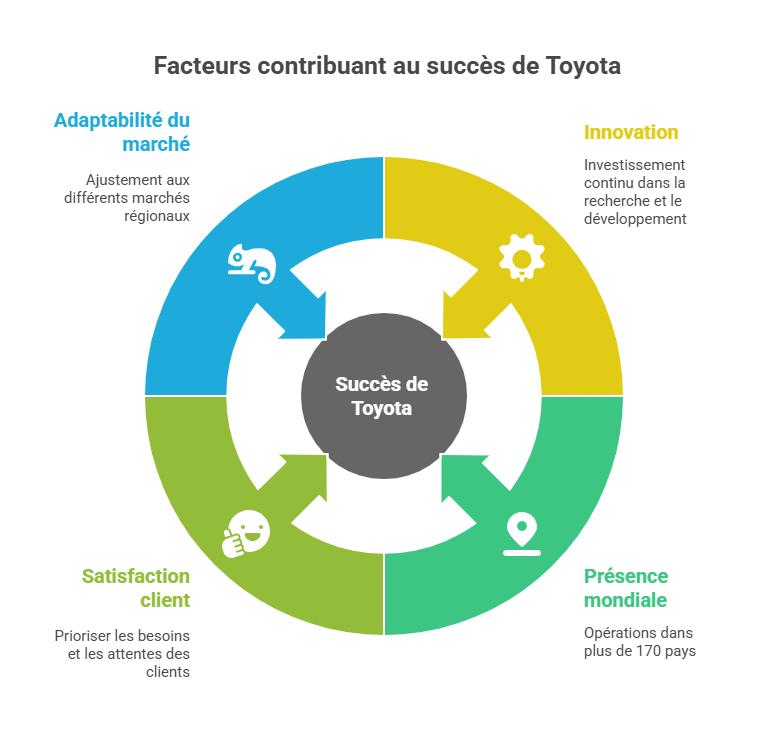
Founded in 1937 in Japan, Toyota has continually evolved to become the world’s leading automaker. Its business model emphasizes innovation, quality, and customer satisfaction. Globally, Toyota ranks among the top ten companies, present in over 170 countries. In 2013, its revenue was approximately $213 billion, demonstrating its extensive global footprint. Its workforce, numbering around 333,498 employees that same year, reflects the scale of its operations.

Toyota’s success also hinges on its ability to adapt across various markets. For example, in North America, Toyota’s market share was 12.2%, whereas in Europe, it stood at 4.3%. This wide geographical distribution allows Toyota to capitalize on diverse market segments, enhancing its competitive position.
The company’s research and development capabilities are crucial for its success. By investing heavily in innovation, Toyota can meet the evolving needs and expectations of customers. This focus on technological progress and customer satisfaction is a fundamental pillar of its strategy. However, with increasing challenges related to sustainability and environmental regulations, the need for ongoing SWOT analysis becomes even more vital for Toyota.
- 🚗 Continuous innovation and research
- 🌍 Expanding global presence
- 👥 Focus on customer satisfaction
Presentation of the SWOT Method
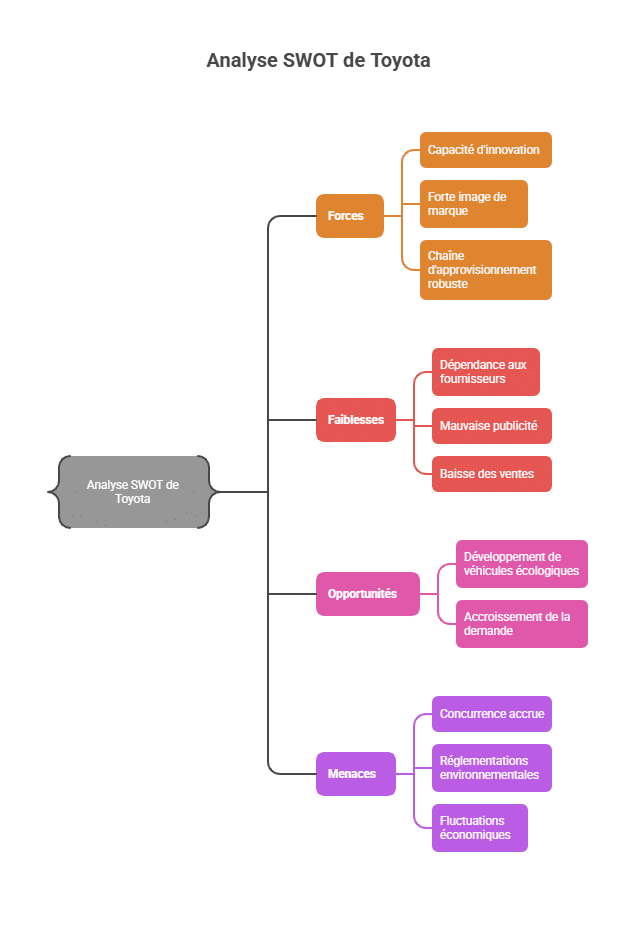
The SWOT method is a strategic analysis tool that assesses an organization’s strengths, weaknesses, opportunities, and threats. This approach provides companies with a comprehensive overview of their market position, facilitating decision-making and strategic planning. Applying this framework to Toyota reveals that the company possesses a strong set of assets but also faces significant challenges in the ever-evolving automotive sector.
It’s important to understand that the SWOT analysis is not merely an academic exercise. It is a living, dynamic method that should be regularly updated to reflect market conditions and internal changes within the company. For example, the rise of new transportation technologies, such as electric vehicles, disrupts sector dynamics, and Toyota must adapt quickly to stay competitive.
| SWOT Elements | Description |
|---|---|
| Strengths | Innovation capability, strong brand image, robust supply chain |
| Weaknesses | Dependence on suppliers, negative publicity, declining sales in certain segments |
| Opportunities | Development of eco-friendly vehicles, growth in emerging markets |
| Threats | Intensified competition, restrictive environmental regulations, economic fluctuations |

SWOT Analysis of Toyota: Strengths
Toyota’s strengths are well-established and merit particular attention in this analysis. One of the company’s primary assets is itsstrong brand image, which is synonymous with quality and innovation. With millions of vehicles sold annually, Toyota’s reputation plays a crucial role in its market position. Its customers are often loyal to Toyota products, facilitating customer retention and repeat sales.

Another key strength is the innovative capacity of Toyota. The company invests heavily in research and development, enabling it to introduce new vehicle models and technologies. This includes investments in environmentally friendly technologies, addressing growing concerns about vehicle impact on the climate.
- ✅ Strong brand image
- ✅ Constant technological innovations
- ✅ Efficient supply chain
Finally, Toyota’s robust supply chain is a major asset. With manufacturing plants worldwide, the company can source parts and materials more cost-effectively, contributing to its profit margins. By strategically mobilizing suppliers located in key regions, Toyota can optimize its production and enhance service quality with a balance of excellence and responsiveness.
SWOT Analysis of Toyota: Weaknesses
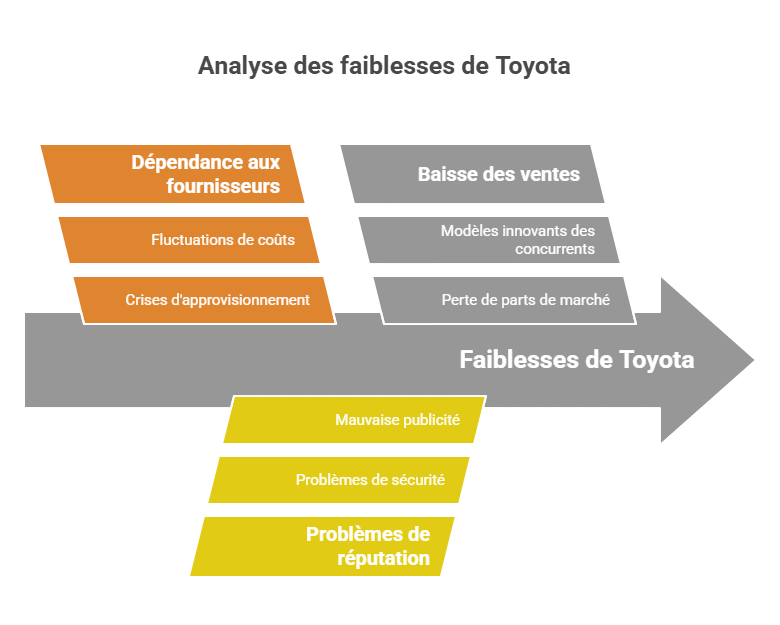
While Toyota undoubtedly has a wealth of assets, some weaknesses must also be acknowledged. The dependence on suppliers is one of these vulnerabilities. Relying on a network of suppliers for critical parts can pose problems, especially during supply crises or fluctuating costs.
Furthermore, Toyota has also faced reputation issues in the past, particularly regarding vehicle safety. Such incidents can damage the company’s reputation and influence its market performance, leading to a loss of customer confidence.
- 🚧 Dependence on suppliers
- 🚧 Reputation problems
- 🚧 Decline in sales in certain segments
An additional notable weakness is the decline in sales in highly competitive segments. Like other major brands such as Nissan and Honda, Toyota must constantly contend with rivals who introduce innovative and appealing models. This underscores the importance of ongoing SWOT analysis to identify limits and take appropriate actions.

SWOT Analysis of Toyota: Opportunities
The opportunities available to Toyota are broad and varied. With increasing focus on environmental concerns, innovation in eco-friendly vehicles offers a promising pathway for growth. Toyota has already invested in developing hybrid and electric cars, but it is essential to continue diversifying and aligning products with sustainability trends.

Moreover, the growth of emerging markets, notably in Africa and Asia, represents a significant opportunity. These regions show increasing demand for affordable and efficient vehicles, and Toyota can capitalize on this trend. Implementing targeted strategies for these markets could enhance financial results.
- 🌱 Development of eco-friendly vehicles
- 🌍 Expansion into emerging markets
- 🚀 Constant innovation
Finally, the surge in technological innovation offers Toyota the opportunity to stay at the forefront. By investing in intelligent technologies, Toyota can not only improve the customer experience but also position itself as a leader in autonomous and connected vehicles.
SWOT Analysis of Toyota: Threats
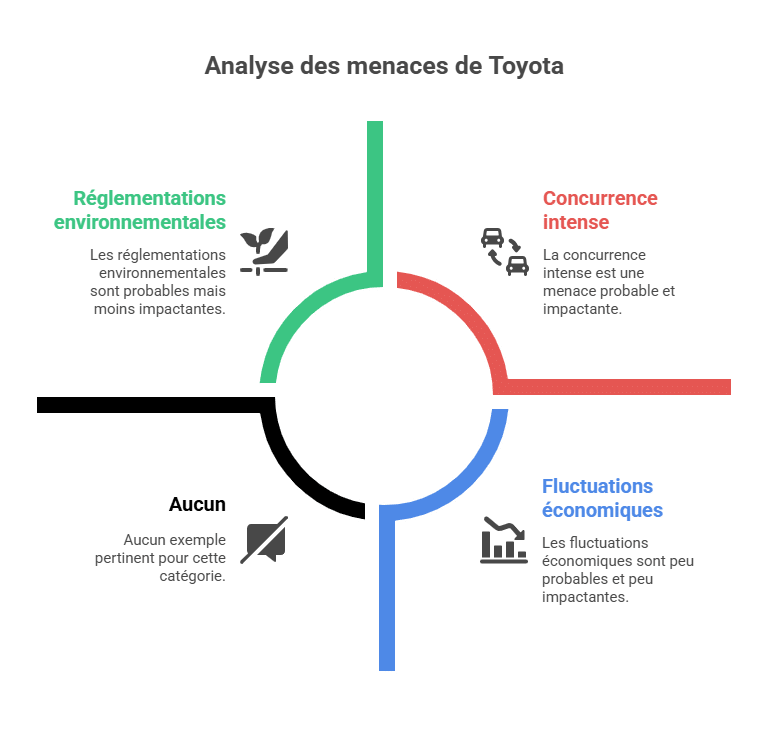
The threats facing Toyota must not be underestimated. One major concern is increased competition. Rivalries with other giants such as Volkswagen, Ford, and Hyundai pressure Toyota to innovate and reduce costs. Each manufacturer seeks to capture market share, making the struggle for dominance even more fierce.
Additionally, environmental regulations are becoming increasingly strict, forcing Toyota to comply with standards that can lead to high production costs. Non-compliance with these regulations can also result in severe financial penalties and trade restrictions.
- 🚨 Intense competition
- 🌿 Environmental regulations
- 📉 Economic fluctuations
Economic fluctuations also pose a constant threat. Financial crises or exchange rate variations can significantly impact Toyota’s performance. Therefore, ongoing attention to these risks is necessary for the company to react swiftly and effectively.
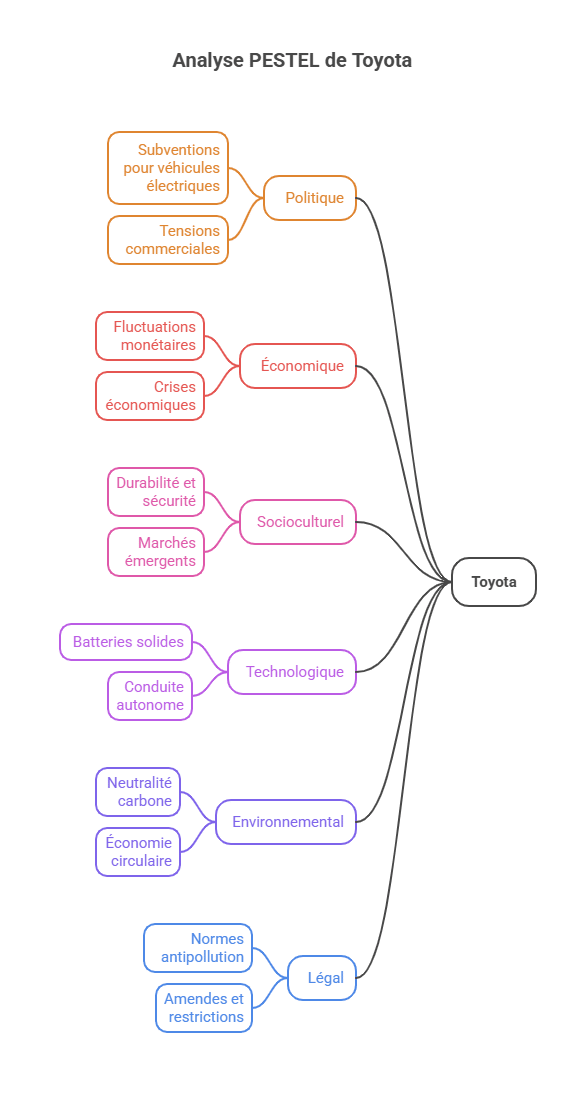
🔎 PESTEL Analysis of Toyota
The PESTEL approach analyzes the external environment in which Toyota operates. It highlights the pressures and opportunities that directly influence its strategy.
-
Political (P): Toyota is heavily influenced by government policies. Subsidies for electric vehicles in Europe and North America, as well as taxes on polluting vehicles, encourage the group to accelerate its transition to cleaner technologies. Simultaneously, trade tensions (e.g., US/China trade war) can impact its supply chains.
-
Economic (E): Currency fluctuations (yen, dollar, euro) directly affect international sales profitability. Oil price volatility also influences demand for hybrid and electric vehicles. Global economic crises, such as COVID-19, demonstrate the auto sector’s sensitivity to purchasing power declines.
-
Sociocultural (S): Consumer expectations are shifting towards greater sustainability and safety. In mature markets, customers seek connected and eco-friendly cars, while in emerging markets, the demand focuses on reliable, affordable models.
-
Technological (T): The rise of solid-state batteries, artificial intelligence, and autonomous driving opens new horizons. Toyota invests billions of dollars annually in R&D to remain competitive, including with its “smart cities” project.
-
Environmental (E): The push to reduce CO₂ emissions is strong. Toyota has committed to achieving carbon neutrality by 2050 and developing a circular economy, especially through battery recycling.
-
Legal (L): Anti-pollution standards (Euro 7 in Europe, CAFE in the US, China VI in Asia) require significant investments. Non-compliance can expose the company to hefty fines and trade restrictions.
👉 The PESTEL analysis indicates that Toyota must balance its industrial strengths with swift adaptation to regulatory, technological, and cultural shifts.

⚔️ Comparison with Main Competitors
Toyota operates in a market dominated by a few global giants and aggressive new entrants.
-
Volkswagen (VW): Volume leader, VW invests heavily in electric with its ID lineup. However, its reputation remains scarred by the Dieselgate scandal. Toyota benefits from a better reputation for reliability.
-
Tesla: The icon of electric vehicles. Tesla dominates innovation (connected cars, range, OTA software). But its production volume remains limited compared to Toyota. The advantage for Toyota: industrial capacity for mass production.
-
Honda: Very close to Toyota in reliability and hybrid innovation but less aggressive in electric development.
-
Hyundai-Kia: The South Korean group is experiencing rapid growth thanks to its EVs and value for money. Toyota must watch this highly competitive rival.
-
Ford: Leader in the US for pickups and SUVs, struggling in Europe but still strong in its home market.
👉 Toyota maintains a balanced positioning: a solid reputation, massive volumes, ongoing innovation. Its main threats are Tesla in innovation and Hyundai-Kia in price competitiveness.

🚗 Focus on Technological Innovation
Innovation is a core pillar for Toyota.
-
Hybrids: Toyota revolutionized the market with the Prius in 1997. Today, hybrids are a cornerstone of its strategy, with several million units sold.
-
Hydrogen: With the Mirai, Toyota pioneered fuel cell vehicles. Hydrogen remains promising but costly, limiting widespread adoption.
-
Electric: Toyota accelerates EV development with a goal of 30 models by 2030. Its major bet: solid-state batteries, promising fast charging and higher range.
-
Autonomous vehicles: With its “Guardian” project, Toyota is developing proactive safety AI to assist drivers. Unlike Tesla, Toyota favors a gradual approach.
-
Connectivity: Toyota vehicles incorporate connected systems with real-time assistance, software updates, and mobile app integration.
👉 Innovation is the key to competitiveness. Toyota aims to combine ecology, safety, and user experience.
🌍 Sustainability and CSR at Toyota
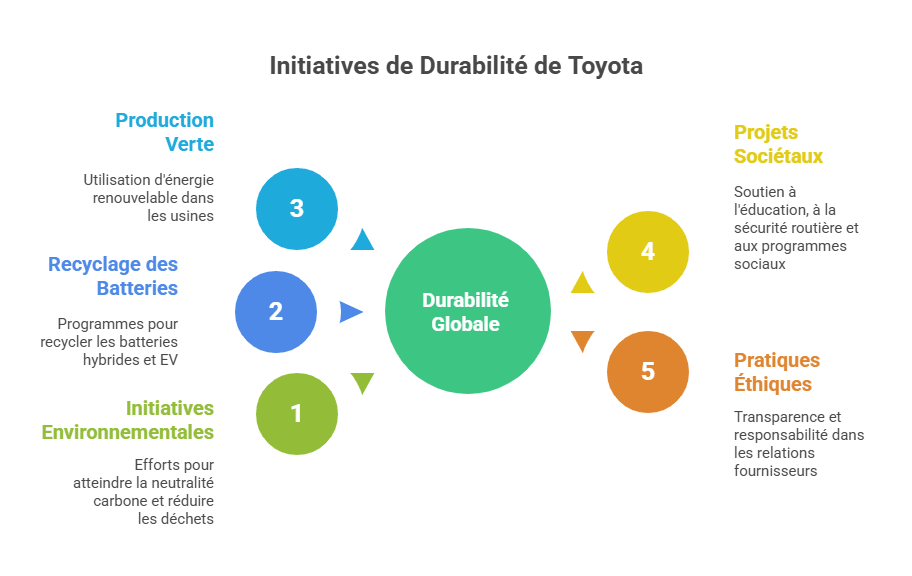
Toyota commits on multiple fronts to become a responsible actor:
-
Environment: Goal of carbon neutrality by 2050; increased use of recycled materials; reduction of plastic waste.
-
Recycling: Development of programs for recycling hybrid and EV batteries. Toyota invests in local supply chains to reduce logistical impact.
-
Green Production: Deployment of factories powered by renewable energy (solar, wind).
-
Societal: Support for educational projects, road safety, and social programs in emerging countries.
-
Ethics: Promoting transparency and responsibility in supplier relations.
👉 Toyota aims to be perceived not only as an automaker but as a global actor in sustainability.
📈 Study of Emerging Markets
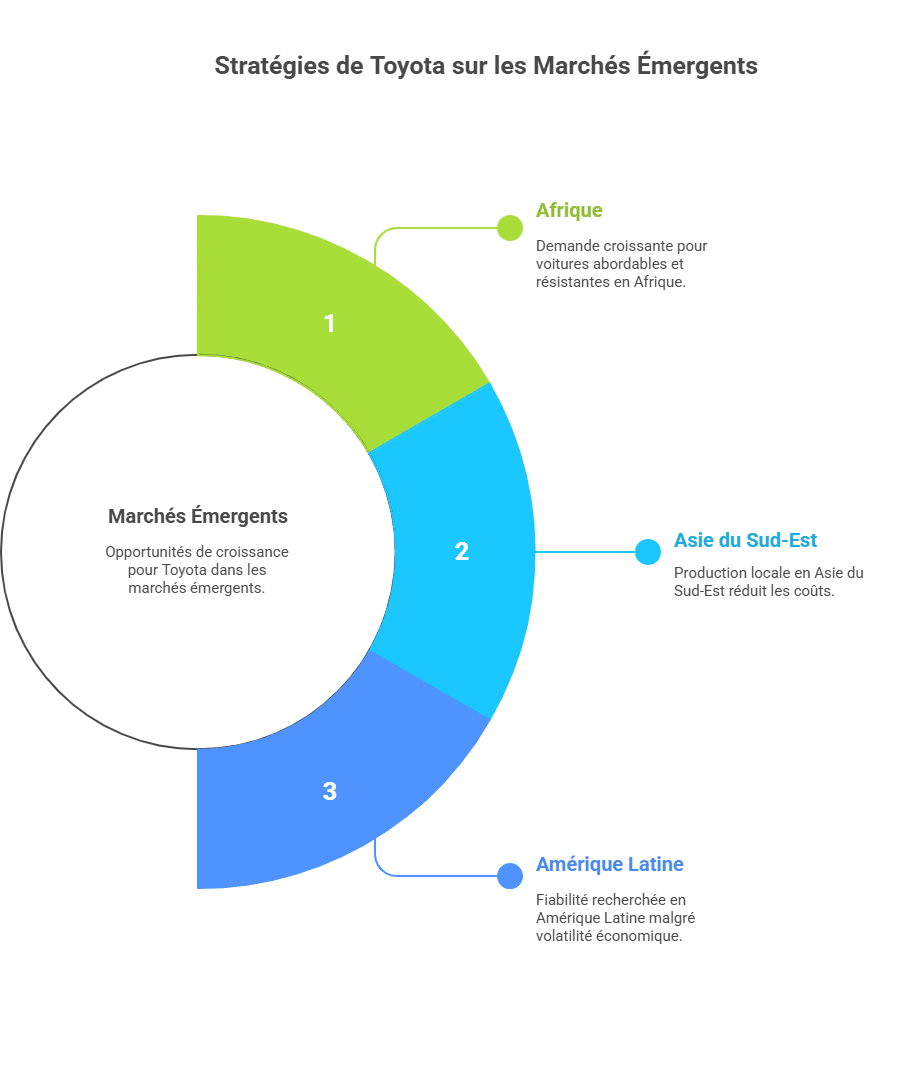
Emerging markets present a real opportunity for Toyota.
-
Africa: Demographic growth and urbanization create demand for affordable, durable cars. Toyota leads with its Hilux pickup, highly valued in rural areas.
-
Southeast Asia: Growing demand for compact and economical sedans. Toyota benefits from local production (Thailand, Indonesia) which helps reduce costs.
-
Latin America: Growing market despite economic volatility. Economical and rugged models attract customers looking for reliability.
👉 Emerging markets are essential to offset saturation in Western markets. Toyota must adapt its offering to local needs: durability, affordability, accessible after-sales services.
💰 Recent Financial Analysis
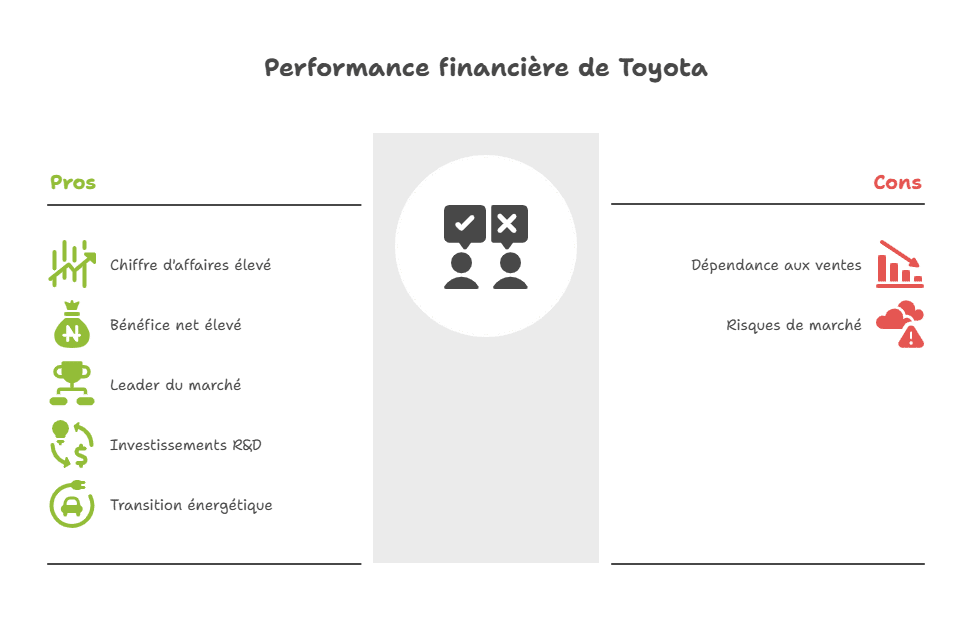
Toyota is financially solid:
-
2023 Revenue: approximately $275 billion, boosted by hybrid and SUV sales.
-
Net profit: around $20 billion, placing Toyota among the most profitable companies in the sector.
-
Market share: approximately 10% of the global automotive market, making it the leader ahead of Volkswagen.
-
R&D investments: nearly $10 billion annually, primarily focused on EVs, hydrogen, and autonomy.
👉 Toyota has the financial resources necessary to massively invest in the energy transition and secure its position as a global leader.
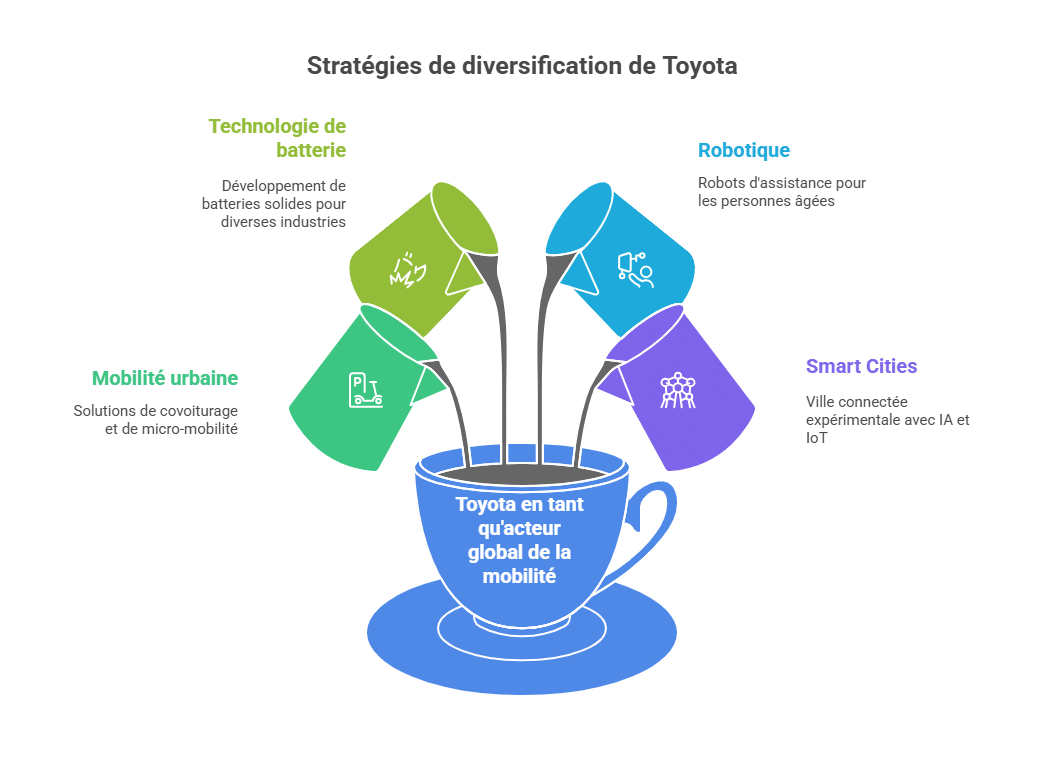
🔄 Diversification Strategies
Toyota broadens its scope beyond automobiles:
-
Urban Mobility: Car-sharing, ride-hailing, and micro-mobility solutions (scooters, mini electric cars).
-
Batteries: Development of solid batteries, with potential commercialization for other industries.
-
Robotics: Developing assistance robots for the elderly, a promising market in Japan.
-
Smart Cities: “Woven City” project, an experimental connected city at the foot of Mount Fuji, serving as a laboratory for testing AI, IoT, and sustainable mobility.
👉 These diversification efforts position Toyota as a global actor in mobility and technological innovation.
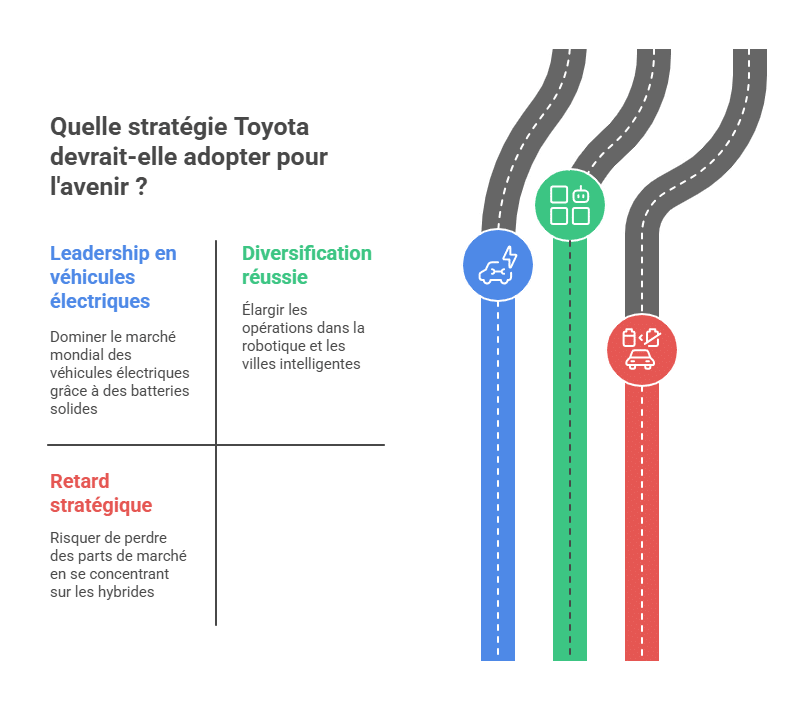
🚀 Future Perspectives
Three major scenarios are emerging for Toyota:
-
Leader in Electric Vehicles: If solid-state batteries meet their promises, Toyota could dominate the global electric vehicle market.
-
Successful Diversification: By expanding into robotics, smart cities, and urban mobility, Toyota can broaden its scope well beyond automobiles.
-
Strategic Delay: If Toyota delays moving away from hybrids towards full electric, it risks losing ground to Tesla, Hyundai, or Volkswagen.
👉 Toyota’s future depends on its ability to anticipate trends and accelerate its ecological and technological transition.
Conclusion and Strategic Recommendations
By analyzing Toyota through the SWOT framework, it is clear that the company has solid assets but must also recognize its weaknesses and threats. To continue growing, Toyota should:
- 📈 Continue investing in eco-innovation
- 🌍 Strengthen presence in emerging markets
- 🤝 Diversify distribution channels to mitigate risks
- 🔍 Proactively monitor and adapt to regulations
Implementing a strategy based on these recommendations will enable Toyota to leverage its strengths, address its weaknesses, seize opportunities, and protect itself against threats.



FAQ
1. What is SWOT analysis?
It is a strategic tool that assesses an organization’s strengths, weaknesses, opportunities, and threats.
2. What are Toyota’s main strengths?
Their strengths include a strong brand image, innovation capabilities, and an efficient supply chain.
3. What challenges must Toyota overcome?
Challenges include supplier dependence, increased competition, and environmental regulations.
4. Why is SWOT analysis important for Toyota?
It helps Toyota adjust its strategy according to changing market conditions and guides future decisions.
5. How can Toyota capitalize on its opportunities?
By investing in eco-technologies and strengthening its presence in emerging markets.
📊 Analyses SWOT similaires
📊 Voir aussi : notre hub centralisé de toutes les analyses SWOT & PESTEL (206 études) classées par secteur — Tech, Auto, Mode, Distribution, Finance.
Tu prépares le BTS Assurance ?
Cette analyse SWOT fait partie des thèmes abordés dans les épreuves. Notre E-book de révision couvre l'intégralité du programme en fiches claires et synthétiques.
- 100 % du programme BTS Assurance
- Fiches 1ère et 2ème année
- Créé par un diplômé
- Téléchargement immédiat

Entraîne-toi avec nos Quiz de révision
Fini les lectures passives. Pour retenir les notions clés du BTS Assurance, teste-toi ! Inscris-toi pour recevoir 1 quiz par jour directement dans ta boîte mail.


