


Deep Dive into Sephora’s SWOT Analysis: Strengths, Weaknesses, Opportunities, and Threats

- Sephora : a major player in the global cosmetics industry
- The key strengths of the Sephora group
- Weaknesses and limitations to overcome for Sephora
- Growth and innovation opportunities for Sephora
- External threats and competitive challenges in the cosmetics market
- Strategic impact of digitalization and e-commerce
- Competitive analysis: L’Oréal, Estée Lauder, Chanel and other giants
- Evolving perspectives and strategic recommendations for Sephora
Sephora, a key player in the international cosmetics market by 2025
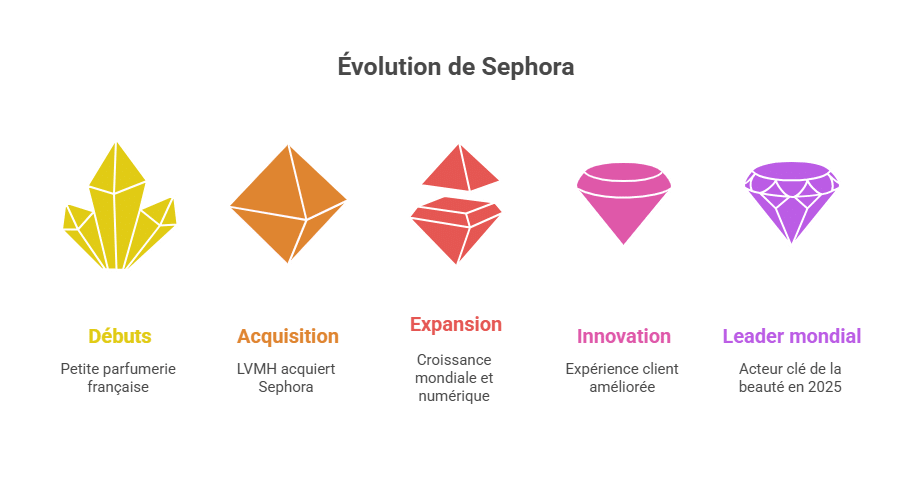
Since its beginnings in 1969 in France, Sephora has established itself as an essential reference in the world of beauty. The acquisition in 1997 by LMVH (Moët Hennessy Louis Vuitton), a heavyweight in luxury, marked a significant strategic turning point for the brand, opening new perspectives in terms of notoriety and expansion. LMVH, being at the helm of many prestigious brands, allowed Sephora to integrate into a rich global ecosystem and to strengthen its presence in the perfume and high-end cosmetics segments.
In a dynamic competitive landscape where giants like L’Oréal, Estée Lauder, Chanel, Dior, MAC Cosmetics, and NARS compete, Sephora stands out by its ability to combine a broad portfolio of brands and an innovative customer experience. The retailer continuously evolves by adapting to new expectations, whether through digital development or the gradual expansion of its distribution network. Today, with a presence in more than 30 countries and a worldwide network exceeding 1,000 stores, including a strong base in France, Sephora aims for sustained growth. Its global turnover approaches 9 billion euros, with an annual growth rate of around 12% recorded over several years, highlighting its vitality in the global beauty market.
👉 That is why it is crucial to delve into Sephora’s SWOT analysis in detail to better understand the strengths, weaknesses, opportunities, and threats shaping its current and future positioning. This strategic diagnosis will provide a comprehensive overview of success levers, as well as challenges to maintain a solid competitive advantage in the cosmetics sector.

Worldwide cosmetics market overview
The cosmetics and perfumery market is particularly dynamic and resilient to global economic crises. It generates billions of euros in revenue each year worldwide, with diverse segments ranging from accessible beauty to luxury cosmetics. In 2025, consumers demand greater transparency regarding ingredients, personalized care, and multi-channel accessibility—combining physical stores and digital platforms.
The demand for innovative, responsible, and committed brands prompts companies like Sephora to rethink their strategies. Competition is fierce, notably with historic players such as L’Oréal, Dior, Lancôme, and Guerlain, who continue to invest heavily in research and marketing, while niche brands like NARS or MAC Cosmetics have found their niche by capitalizing on creativity and proximity to urban and youth communities.
Thus, studying how Sephora fits into this context, leveraging its resources while facing a highly demanding external environment, is essential.
- Growing market despite global challenges
- Increasing environmental and ethical expectations
- The importance of digital and omnichannel strategies
- Diverse and segmented competition
| Company 🌟 | Positioning 📍 | Commercial Strategy 🎯 | Key Features 💡 |
|---|---|---|---|
| Sephora | Multi-brand, accessible luxury | Innovative customer experience, digital | More than 1000 stores in over 30 countries |
| L’Oréal | Mass-market to luxury | Large-scale production, intense R&D | Worldwide leader in volume and innovation |
| Chanel | Exclusive luxury | Strong brand image, exclusivity | Rigorous distribution management |
| Estée Lauder | Luxury and prestige | Targeted marketing, premium products | Presence across all premium segments |

Sephora’s strategic strengths in SWOT analysis
The years of experience and the support from LMVH are clearly significant assets for Sephora. The late 1990s marked a real turning point, with the subsequent rise on the international stage following the acquisition by LMVH. This change in status allowed Sephora to benefit from immediate recognition among customers associating cosmetics with luxury and quality.
Several key strengths define the group’s uniqueness today:
- 🌍 A strong international presence spanning multiple continents (Europe, Americas, Asia, Middle East) with over 1000 stores in more than 30 countries.
- 💻 An effective omnichannel strategy, seamlessly combining physical stores and online platforms to optimize customer relations and online sales.
- 🤝 A portfolio of prestigious brands, some linked to LMVH but also other signatures like MAC Cosmetics, NARS, and occasional collaborations with Dior or Chanel.
- 👩💼 Rigorous training policies for sales teams in global training centers, ensuring high-quality personalized service.
- 💳 A successful loyalty program that encourages repeat purchases and fosters customer loyalty to the brand.
This synergy between global presence, technological mastery, and commercial know-how places Sephora among the leaders in beauty product distribution.
| Strength ✨ | Detailed description 📝 | Impact on the company 📊 |
|---|---|---|
| Acquisition by LMVH | Association with a globally recognized luxury group | Enhancement of brand notoriety and access to prestigious brands |
| International network | Presence in over 30 countries with more than 1000 stores | Revenue expansion and a diversified customer base |
| Omnichannel approach | Integration of e-commerce with physical stores | Increased sales and improved customer satisfaction |
| Training and advice | Dedicated training centers and beauty experts | Improved customer relations, increased loyalty |
| Loyalty program | Reward system incentivizing regular customers | Stimulates consumption and creates long-term bonds |

Internal weaknesses revealed in Sephora’s SWOT analysis
Despite its many assets, Sephora is not without weaknesses. It would be too simplistic to see only the positive aspects. Some issues still hinder smooth development or make certain market segments difficult to conquer.
Among its vulnerabilities, notable points include:
- 👥 An imbalanced gender representation in sales areas, predominantly female, which sometimes gives the impression that men are not the direct target, even though the products offered are meant for all identities.
- 📉 A loyalty rate that could be improved, even though a loyalty program exists. Some regular customers mention that pressure to buy more expensive products can harm the customer relationship.
- 📱 Heavy competition on mobile applications and digital platforms. Although Sephora makes significant efforts, some challengers have succeeded in capturing the youth through ultra-personalized digital experiences.
- 🚶 Accessibility issues for click and collect, often limited by locations in city centers with difficult parking, thus hampering convenience for many consumers.
- 🔍 Sometimes blurred visibility on its positioning between accessible luxury and traditional high-end, which can create confusion among some consumers.
These weaknesses pose a major strategic challenge. Careful management and targeted adjustments could enable Sephora to capitalize even more on its strengths.
| Weakness ⚠️ | Description 📝 | Potential consequence 🚩 |
|---|---|---|
| Gendered representation | Stores perceived as “feminine,” difficulties attracting male clientele | Missed opportunities in a growing segment |
| Improvement needed in loyalty | Commercial pressure on higher-priced products, sometimes frustrating customers | Decreased customer loyalty and risk of losing customers to competitors |
| Intense digital competition | Mobile apps and personalized experiences challenge Sephora | Potential loss of market share among younger consumers |
| Click and collect accessibility | Locations are often inconvenient, parking issues | User friction and online sales decline |
| Ambiguous positioning | Between accessible luxury and traditional high-end | Customer confusion and brand inconsistency |


Main opportunities identified for Sephora in a changing environment
In the cosmetics sector, opportunities are real, especially for a company like Sephora which already has a significant international presence and a solid digital foundation. Current trends toward more ecology, personalization, and channel diversification open multiple avenues.
The opportunities include:
- 🌱 The shift toward more natural and responsible cosmetics, with ranges that are organic, vegan, or recyclable, responding to the growing needs of consumers sensitive to environmental issues.
- 👨👩👧👦 Diversification into the men’s market, still underexploited, with dedicated campaigns and spaces, encouraging broader openness.
- 🚀 The growth of online commerce and immersive technologies like augmented reality for virtual product try-ons—an experience Sephora can amplify to attract new digital targets.
- 🌍 Geographical expansion, particularly in emerging countries in Asia or Latin America, where the beauty market is developing rapidly.
- 🎨 Refreshing partnerships with premium brands like Dior, Lancôme, or Guerlain, as well as with innovative creators, to enrich its offer and regularly surprise consumers.
If exploited appropriately, these opportunities will offer Sephora prospects for long-term growth and innovation.
| Opportunity 💼 | Description 📝 | Strategic advantage ⭐ |
|---|---|---|
| Responsible cosmetics | Development of natural, eco-friendly products | Leveraging the trend and fostering long-term loyalty |
| Men’s market | Communication and products targeted at men | Expanding customer base and diversifying revenues |
| Digital and augmented reality | Technological innovations for immersive experience | Differentiation from competitors and appeal to youth |
| Global expansion | Entering new high-potential markets | Increasing market share and revenue |
| Strategic partnerships | Strengthening alliances with luxury brands | Refreshing the range and enhancing a prestigious image |

External threats and risks facing Sephora’s strategy
In the current context, several threats could slow Sephora’s progress. Intense competition, rapid changes in customer expectations, and economic instability are all factors to monitor closely.
This provides an overview of the main dangers:
- ⚔️ Increased competition, not only from other distributors like L’Oréal or Estée Lauder but also from specialized online players who can benefit from lower costs to offer attractive alternatives.
- 🛍️ The risk of exhaustion of the traditional physical model faced with the rise of digital and pure players who disrupt shopping habits.
- 🌐 Volatility in international markets, exposing the company to currency and regulatory fluctuations that can impact profitability.
- 🧴 Stricter regulatory requirements related to product safety or labeling, which require costly adaptations and pose sanctions risks in case of non-compliance.
- 🌿 Growing social pressure on environmental issues, which could penalize a brand if it does not meet sustainability and ethics expectations.
Faced with these threats, Sephora must remain agile and adaptable to preserve its leadership position.
| Threat ⚠️ | Nature of the threat 📝 | Potential impact on Sephora 📉 |
|---|---|---|
| Intense competition | Presence of powerful groups and digital startups | Loss of market share and pressure on prices |
| Shift toward digital | Possible decline in traditional store sales | Drop in physical revenues and high adaptation costs |
| Regulatory variability | Complex standards and controls across different countries | Legal risks and increased compliance costs |
| Environmental claims | Strong expectations regarding ecology and social responsibility | Reputational risks and decreased attractiveness |

Impact of digital and e-commerce on Sephora’s competitive strategy
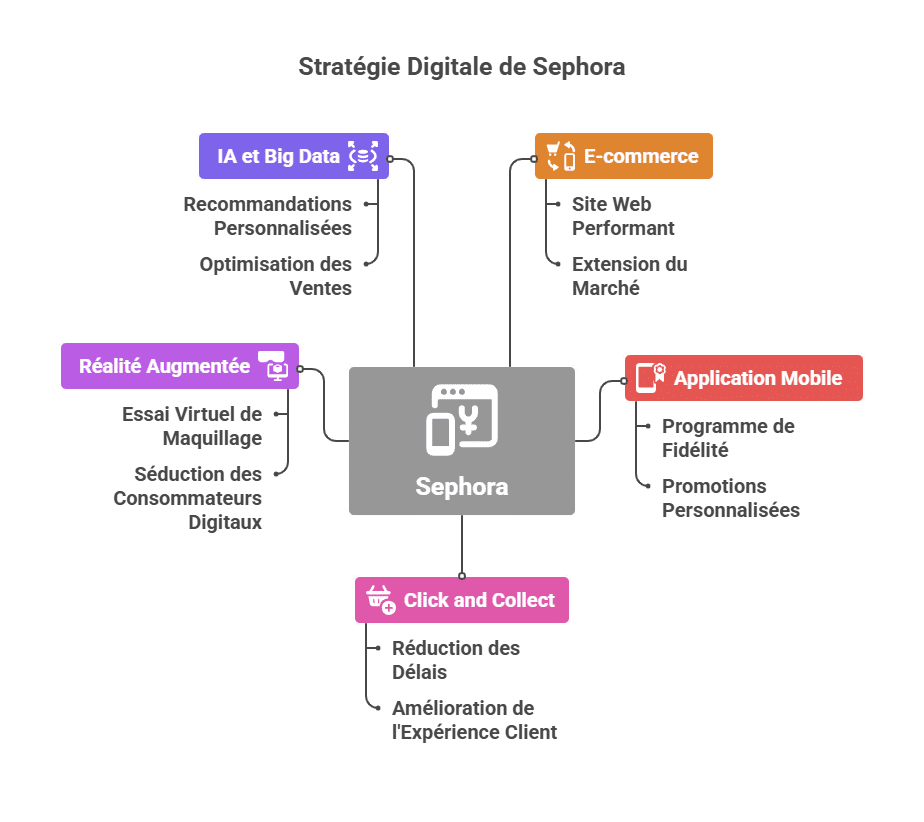
The integration of digital technologies into Sephora’s offerings has accelerated over several years, revolutionizing the way beauty products are distributed. The website, launched in 1999, has evolved into an essential platform.
The development of online services such as click and collect or rapid delivery meets the new expectations of increasingly busy and connected consumers. Technologies like augmented reality also allow virtual try-ons, a valuable innovation that particularly attracts younger generations.
Sephora also relies on personalization through big data and artificial intelligence to offer targeted recommendations, transforming the traditional shopping experience. This digital approach is a major asset against competitors who relentlessly invest in new technologies, especially L’Oréal, which develops its own advanced digital solutions.
In summary, here are the main digital elements on which Sephora relies:
- 🌐 High-performance, user-friendly e-commerce website
- 📲 Mobile app with exclusive features
- 🛒 Click and collect and flexible delivery options
- 🖥️ Augmented reality for virtual product try-ons
- 🤖 Personalization via AI based on customer data
These innovations must be supported by clear communication to combat the loyalty issues mentioned earlier. An engaging digital experience is now as essential as product quality itself.
| Digital Technology 🤖 | Main Functionality 📝 | Benefit for Sephora 🚀 |
|---|---|---|
| Global e-commerce | Online sales accessible worldwide | Market expansion and increased revenue |
| Mobile application | Loyalty programs and personalized promotions | Strengthening customer bonds and encouraging repeat purchases |
| Click and collect | Quick in-store pickup of online orders | Reduced delays and improved customer experience |
| Augmented reality | Virtual makeup and skincare try-ons | Attracting digital consumers and differentiation |
| AI and Big Data | Personalized recommendations based on profiles | Sales optimization and increased loyalty |
Sephora’s competition: L’Oréal, Estée Lauder, Chanel and others
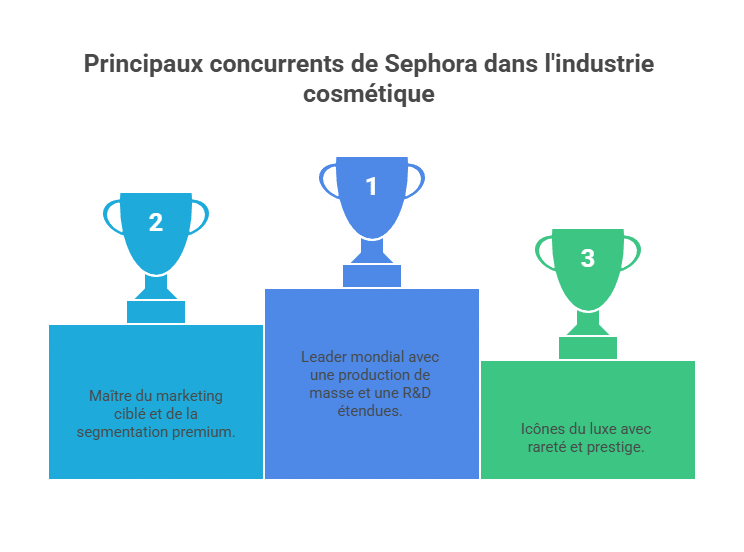
Within the cosmetics world, Sephora operates in a highly competitive arena. Major companies like L’Oréal and Estée Lauder dominate through their industrial capabilities and marketing power. Other prestigious brands such as Chanel, Dior, Lancôme, Guerlain, and Givenchy also play crucial roles, especially in the high-end and luxury segments.
Despite this intense competition, Sephora has built a distinct identity. Its multi-brand strategy and innovation policy in customer experience strengthen its appeal. However, each competitor offers specific strengths:
- 🚀 L’Oréal : Global leader with mass production, R&D, and international distribution mastery.
- 🎯 Estée Lauder : Strong in targeted marketing and premium segmentation.
- 🌟 Chanel and Dior : Icons of luxury, associated with rarity and prestige.
- 🎨 MAC Cosmetics and NARS : Reliable values in professional makeup, urban and confident clientele.
Sephora’s ability to serve as a meeting point for these legendary brands and consumers facilitates its role as an essential intermediary in the industry. This delicate balance is challenging to maintain, as each player constantly adjusts its strategies.
| Competitor 🎯 | Key Positioning | Differentiating Strategy |
|---|---|---|
| L’Oréal | Mass-market to luxury leader | Continuous innovation, R&D, multi-segment approach |
| Estée Lauder | Premium and prestige | Targeted marketing, influence, social media |
| Chanel / Dior | Exclusive luxury | Elitist image, controlled distribution |
| MAC Cosmetics / NARS | Professional / urban makeup | Creativity, loyal community |



Development axes to ensure Sephora remains competitive
Facing a hyper-competitive and constantly evolving environment, Sephora must stay agile. Strategic decisions around diversification, technological integration, and expanding into new markets will be key to strengthening its leadership.
Some concrete pathways worth highlighting include:
- 📱 Further develop the digital experience, especially with artificial intelligence for personalized beauty diagnostics and virtual concierge services.
- 🌏 Strengthen its presence in rapidly growing regions, such as Southeast Asia or Latin America, where demand for beauty products is booming.
- 🌿 Increase commitments to ecological and ethical issues, creating a more pronounced identity around organic and sustainable products.
- 👨🎤 Expand the customer base by actively communicating about gender and cultural diversity to reach a broader, more modern audience.
- 🤝 Lead innovative collaborations with fashion creators or digital influencers to capture younger and urban segments.
These axes should be part of a coherent overall strategy that balances innovation, adherence to the group’s traditional values, and constant market adaptation.
| Strategic field 🏆 | Proposed action 💡 | Expected objective 🎯 |
|---|---|---|
| Digital technology | Launch AI diagnostics and virtual beauty assistant | Enhance experience, increase loyalty |
| Geographical expansion | Invest in Southeast Asia and Latin America | Capture emerging market growth |
| Environmental commitment | Organic certifications and sustainability campaigns | Strengthen responsible image, appeal to eco-conscious consumers |
| Diversify clientele | Actively target men and diverse communities in marketing | Broaden customer base and increase sales |
| Innovative collaborations | Partner with influencers and fashion creators | Create buzz and rejuvenate customer base |

FAQ on Sephora’s SWOT analysis: strengths, weaknesses, opportunities, and threats
What is Sephora’s main strength?
The relationship with LMVH and its strong international presence are the major pillars.
What are the challenges related to Sephora’s positioning?
The positioning between accessible luxury and high-end can confuse some consumers.
How can Sephora better exploit the men’s market?
By creating dedicated spaces, targeted advertising campaigns, and diversifying its offer.
Which digital technologies are key for Sephora?
Augmented reality, AI for personalization, and improved click and collect remain crucial.
What threats impact the cosmetics sector in general?
Increased competition, regulatory pressure, and ecological requirements are among the most critical.
To deepen your analysis, do not hesitate to consult reliable sources such as this study or the comprehensive analysis dedicated to Sephora. They offer essential complementary perspectives.
📊 Analyses SWOT similaires
📊 Voir aussi : notre hub centralisé de toutes les analyses SWOT & PESTEL (206 études) classées par secteur — Tech, Auto, Mode, Distribution, Finance.
Tu prépares le BTS Assurance ?
Cette analyse SWOT fait partie des thèmes abordés dans les épreuves. Notre E-book de révision couvre l'intégralité du programme en fiches claires et synthétiques.
- 100 % du programme BTS Assurance
- Fiches 1ère et 2ème année
- Créé par un diplômé
- Téléchargement immédiat

Entraîne-toi avec nos Quiz de révision
Fini les lectures passives. Pour retenir les notions clés du BTS Assurance, teste-toi ! Inscris-toi pour recevoir 1 quiz par jour directement dans ta boîte mail.


