


Understanding Donation: Complete Guide to Passing on Your Heritage – BTS Insurance Course


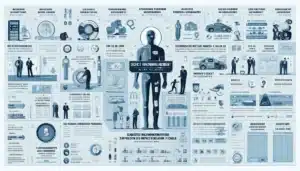

Summary
| 📜 Section | Description |
|---|---|
| 🔍 What is a Donation? | A donation is a voluntary and irrevocable transfer of a property or sum of money from one person to another. This procedure must adhere to certain rules to be valid and can take different forms depending on the assets involved. |
| 🔄 The Different Types of Donation | Various types of donations exist, each with its specific features and advantages, such as Donation Between Living Persons, Donation-Sharing, Manual Donation, Donation with Usufruct Reserve, and Donation Between Spouses. Each type adapts to different patrimonial situations and allows for estate planning, preserving family harmony, or continuing to benefit from the assets while reducing the taxable base of the estate. |
| 💸 Tax Benefits of Donation | Donations offer several tax advantages such as allowances and reductions in donation rights that minimize transmission costs of assets. Parents can give up to €100,000 to each child every 15 years without donation rights. Additionally, allowances can be combined with other exemptions, making asset transmission even more advantageous. |
| 📑 Conditions for Making a Donation | For a donation to be valid, the donor must be legally capable, and the donation must be accepted by the beneficiary. A notarial act is often necessary to validate the donation, providing legal security. Private agreements are possible for manual donations but still must comply with capacity and acceptance conditions. In case of conflict or specific need, the donation can be revoked under strict conditions. |
| 🎁 What Can You Donate? | You can donate money, movable property like cars and jewelry, real estate, and securities. Specific allowances apply depending on the relationship, facilitating the transfer of significant amounts without heavy taxation. Allowances are renewable and can be combined with other exemptions to optimize patrimonial transfer. |
| 📝 Declaration Procedures | The donation must be declared to the tax authorities, even if it is not taxed. The declaration can be done online via the Personal Space for donations of money, shares, bonds, and art objects, or via form (form 2735) for a more traditional approach. Each declaration method ensures legal compliance and transparency of the transaction. |
A donation is a legal act that enables transfer of part of one’s assets during their lifetime to another person. It offers numerous fiscal and legal advantages while allowing to favor heirs or third parties.
What is a Donation?
A donation is a voluntary and irrevocable transfer of property or money from one person to another. This procedure must respect certain rules to be valid and can take different forms depending on the assets involved.
The Different Types of Donation
There are several types of donations, each with its specificities and benefits. Here are the main types of donation:
Donation Between Living Persons
A donation between living persons is the act where a person transfers property while alive to another individual. This donation must be authenticated by a notary to be valid. It allows for immediate transfer of ownership of a property, whether movable or real estate, to a chosen individual. The notary guarantees the validity of the act, ensuring all legal formalities are met. Donation between living persons is often used to anticipate inheritance and avoid conflicts among heirs.
Donation-Sharing
Donation-sharing allows one to divide their assets among heirs during their lifetime, preventing inheritance conflicts. It also requires a notary. This form of donation helps to preserve family harmony by equitably distributing assets among beneficiaries. Moreover, it offers the advantage of fixing asset values at the time of donation, which can prevent future litigation over asset division. Donation-sharing is especially useful for managing large or complex patrimonies, such as family businesses or real estate holdings.
Manual Donation
Manual donation concerns tangible assets such as cash, jewelry, or artworks. This donation is simpler and doesn’t necessarily require a notary. It is performed hand-to-hand, without special formalities, making it very practical for minor-value gifts or occasional presents. However, it is recommended to declare these donations for tax purposes to avoid future fiscal issues. Manual donations are often used for family gifts or temporary financial aid.
Donation with Usufruct Reserve
Another common form is donation with usufruct reserve, where the donor retains the right to use the given property or collect its income, while the recipient becomes the owner. This allows the donor to continue benefiting from the asset while decreasing the taxable base of their estate. At the end of the usufruct, the recipient recovers full ownership without extra costs. This form is often used for real estate or investment portfolios, enabling smooth transfer and effective estate planning.
Donation Between Spouses
Donation between spouses, also known as donation at the last survivor, is a mechanism allowing the rights of the surviving spouse over the family estate to be increased. This type of donation is often included in marriage contracts or wills. It allows the spouse to choose among several successoral options, maximizing their protection and financial security after the partner’s death. This form of donation is particularly useful to ensure the maintenance of the surviving spouse’s standard of living and to prevent family conflicts during estate settlement.
Tax Advantages of Donation
Donation offers several tax benefits, notably allowances and reduction in donation rights. These advantages help minimize the costs associated with transferring assets.
Allowances
Each parent can give up to a certain amount to each of their children every fifteen years without paying donation rights. These allowances are renewable and allow for optimized transfer of part of the estate. Currently, each parent can give up to €100,000 to each child every 15 years without incurring tax. A couple can thus transfer €200,000 to each child tax-free. Moreover, this allowance can be combined with other exemptions, such as those for grandchildren or disabled persons.
Applicable Allowances on Donations
| Recipient | Allowance Amount | Frequency | Conditions |
|---|---|---|---|
| Children | €100,000 per parent (€200,000 per couple) | Every 15 years | Applicable even in multiple installments. |
| Grandchildren | €31,865 | Every 15 years | Same conditions as for children. |
| Great-Grandchildren | €5,310 | Every 15 years | Same conditions as for children and grandchildren. |
| Disabled Persons | €159,325 | Cumulative with other allowances | Must meet disability conditions. |
Donation Rights Reductions
Depending on the donor‘s age and the assets being given, reductions in donation rights are available. For example, donations made before 70 years benefit from an additional reduction. Specifically, reductions can reach up to 50% of the rights for full ownership donations made by donors under 70 years, and 30% for those aged between 70 and 80. These reductions encourage donors to plan their estate transfer, helping optimize their tax management.
Exemption for Family Donations of Cash
There is also a specific exemption for familial cash gifts. Grandparents can give up to €31,865 to each grandchild every 15 years, under certain conditions. To qualify for this exemption, the donor must be under 80 years old, and the beneficiary must be adult or emancipated at the time of donation. This exemption facilitates intergenerational transfer of wealth in a more flexible and advantageous manner.
Allowances and Reductions Cumulative
Allowances and reductions can be cumulated, enabling even more advantageous estate transfers. For example, a donor can combine the €100,000 allowance for a child with the specific exemption of €31,865 for a grandchild, allowing significant sums to be transferred without heavy taxes. Additionally, donations between spouses or PACS partners benefit from a specific allowance of €80,724, facilitating patrimonial transfers within the couple.
Example of Cumulative Allowances
| Donor | Recipient | Type of Donation | Allowance | Total Cumulative |
|---|---|---|---|---|
| Parent | Child | Standard donation | €100,000 | €200,000 (per couple) |
| Grandparent | Grandchild | Manual gift | €31,865 | €127,460 (4 grandparents) |
| Person with Disability | Child | Donation | €159,325 | Cumulable with other allowances |
| Grandparent | Grandchild | Cash gift | €31,865 | €63,730 (with manual gift) |
Conditions for Making a Donation
For a donation to be valid, certain conditions must be met. First, the donor must be legally capable, meaning having full mental capacity and being of legal age. Then, the donation must be accepted by the recipient.
Donor’s Capacity
The donor must be sound of mind and fully capable of their means to make a donation. If the donor is under guardianship or tutelle, the approval of the guardianship judge is necessary. This condition ensures the donor is aware of their actions and acts voluntarily and knowingly. In case of doubt about the donor’s capacity, a medical assessment can be requested to confirm their mental state.
Acceptance by the Recipient
For the donation to be valid, it must be accepted by the recipient. This acceptance can be formalized through a notarial act or a private agreement depending on the case. The recipient must be informed of the donation and express their agreement clearly and unambiguously. Once accepted, the donation becomes irrevocable, except in exceptional cases such as the recipient’s ingratitude or non-compliance with conditions stipulated in the deed.
The Notarial Act
Most donations require a notarial act to be valid. The notary plays a crucial role in verifying the donor’s capacity, advising on legal and tax implications, and ensuring the act complies with all legal rules. The notarial act provides an additional legal security, protecting both parties’ interests.
Private Agreement
In some cases, a donation can be made under private agreement, meaning without a notary. This form is often used for manual donations or for assets of lesser value. Despite its simplified form, the private agreement must respect the same capacity and acceptance conditions as notarial donations. It also must be declared to the tax authorities to avoid future issues.
Revocation of Donation
Although donations are generally irrevocable, they can be revoked under certain circumstances. Revocation may be requested in cases of ingratitude by the recipient, non-compliance with charges imposed by the donor, or if the donor has had a child after the donation. The revocation process often requires a judicial decision, and consulting a lawyer is recommended to undertake this process.
What Can You Give to Your Children and Grandchildren?
You can give money, as well as property like cars, jewelry, real estate (houses, land), and securities (stocks, partnership shares). These gifts allow for early transfer of part of your estate and provide financial support to your loved ones.
Applicable Allowances
Each parent can thus give up to €100,000 per child without incurring donation rights. A couple can thus transfer €200,000 to each of their children tax-free. This allowance of €100,000 can be applied in a single payment or multiple payments over fifteen years. Under similar conditions, gifts to grandchildren benefit from an allowance of €31,865, and to great-grandchildren, €5,310.
Cumulative Allowances
These allowances can combine: a child can receive €200,000 (100,000 x 2) from their parents and €127,460 (31,865 x 4) from their four grandparents every 15 years without paying donation fees. These allowances can also be combined with the specific allowance for disabled persons (€159,325) and the exemption for family cash gifts (up to €31,865 with restrictive conditions) provided under article 790 G of the CGI.
Example
A major granddaughter can receive from her grandfather under 80 years a sum of €63,730 exempt from rights:
- €31,865 under the family cash gift exemption
- €31,865 below which the manual gift is not taxed.
The amount after allowance is taxed according to the progressive scale applied to direct line donations.
Declaration Procedures
Mandatory Declaration
The donation must be declared to the tax authorities even if it is not taxed. This declaration formalizes the transfer of assets and complies with legal obligations regarding taxation.
Online Declaration
Your children and grandchildren can submit their donation online by logging into their Personal Space. After authenticating, they should click on the Declare tab > Declare a donation or a share transfer > Access. This method is convenient and saves time by avoiding travel. Online declaration is secure and facilitates the tracking of fiscal procedures.
Declaration via Form
Alternatively, they may submit, at their respective registries office, a filled-out form 2735 in duplicate. Form 2735 is downloadable from the tax authority website. This approach is ideal for those preferring a more traditional method or without internet access. You can find contact details of the relevant office from the home page under Contact and Appointments > Individual > Management of your assets (donation, inheritance, share transfer, land declarations) > Registration of an act or declaration > A declaration of donation, inheritance, life insurance, share transfer.
Donation Declaration Procedures
| Type of Declaration | Description | Procedure | Advantages |
|---|---|---|---|
| Mandatory Declaration | All donations must be declared, even if not taxed. | Inform the tax authorities about the donation. | Legal compliance, transparency. |
| Online Declaration | Declaration via the personal online space. | Log into the personal space, tab “Declare”, follow instructions. | Speed, ease, online tracking. |
| Form Declaration | Declaration via submitted printed form. | Download form 2735, fill it out, and submit in duplicate. | Traditional approach, useful without internet access. |
Conclusion
Donations are a valuable tool for managing your estate and planning your inheritance. They offer numerous tax benefits and enable you to pass on assets in an optimized manner. However, understanding the rules and implications is essential to make the most of them.


For Further Information

Entraîne-toi avec nos Quiz de révision
Fini les lectures passives. Pour retenir les notions clés du BTS Assurance, teste-toi ! Inscris-toi pour recevoir 1 quiz par jour directement dans ta boîte mail.


