


Key Points to Remember: L5-S1 Discopathy, often age-related, can be recognized as disabled (categories 1-2) through CPAM, with a rate between 20% and 60%. The RQTH, obtained at MDPH, allows for AGEFIPH accommodations. In cases of disability, retraining via CPF or Cap Emploi remains a viable solution to maintain employment.
Are you suffering from L5-S1 discopathy and your pain limits your ability to work? This practical guide breaks down the procedures, rights, and professional adjustments you are entitled to. Discover the key steps to obtain a disability pension (30% or 50% of salary depending on severity), the eligibility criteria for RQTH for adjustments such as ergonomic seats or sit-stand desks, and concrete solutions to adapt your workstation or consider career reconversion. Also benefit from funding opportunities like AGEFIPH or FIPHFP for modifications, or explore programs like CPF for new training compatible with your limitations.
- Understanding L5-S1 Discopathy: pathology and its impact on work
- Recognition of disability by Social Security (CPAM)
- Recognition of disability through MDPH (RQTH)
- Combining rights and financial aids: how to navigate?
- Adjustments and maintaining employment: practical solutions
- Can L5-S1 discopathy be recognized as an occupational disease?
- When work is no longer possible: professional retraining


Understanding L5-S1 Discopathy: pathology and its impact on work
What is L5-S1 Discopathy?
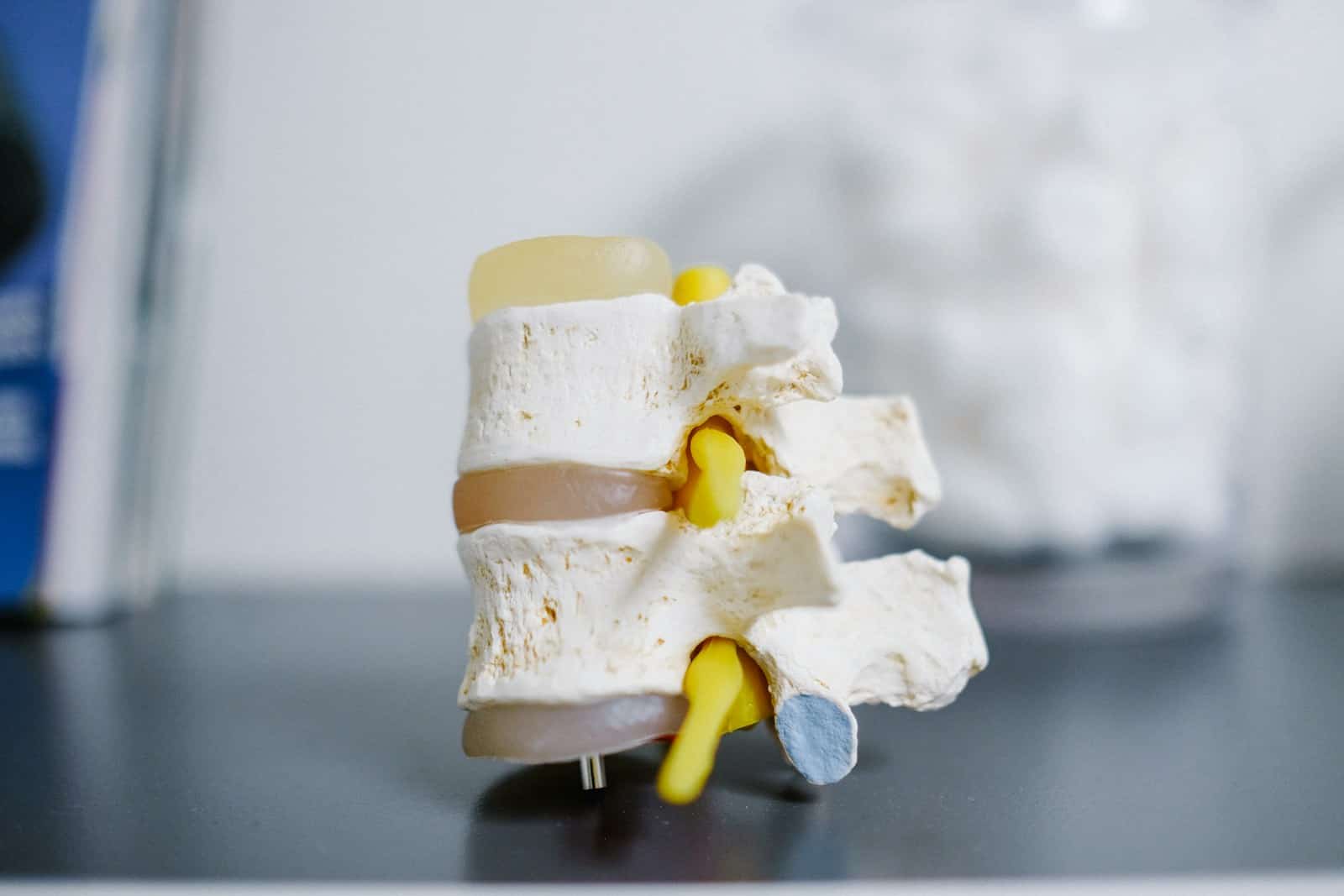
L5-S1 discopathy corresponds to wear of the intervertebral disc located between the fifth lumbar vertebra (L5) and the first sacral vertebra (S1). This area bears considerable pressure, speeding up its degeneration, especially in people over 40 or those exposed to repeated stresses (lifting loads, sedentary lifestyle, poor posture). Symptoms include chronic lower back pain, joint stiffness, and in some cases, sciatica caused by nerve compression. This degenerative condition is often irreversible, but treatments can slow its progression.
How does this pathology affect work capacity?
L5-S1 discopathy limits the ability to maintain prolonged sitting, essential for office jobs such as secretary or software developer. Intense pain makes physical tasks like lifting heavy loads or twisting movements difficult, which can be challenging for workers or delivery personnel. Even sedentary activities become problematic after several hours, with possible pain radiation to the buttock and leg (sciatalgia). Associated fatigue impairs concentration, reducing productivity. These limitations often justify workplace adaptations (ergonomic chair, regular breaks) or retraining toward less demanding roles, such as home care or administrative work. Affected workers can access devices like RQTH to facilitate this transition.
Recognition of disability via MDPH (RQTH)
Why apply for Recognition of the Status of Disabled Worker (RQTH)?
RQTH is not a financial benefit but a status that grants professional rights. It allows for workplace accommodations funded by AGEFIPH (private sector) or FIPHFP, such as ergonomic chairs or adjustable desks. It also provides access to support through Cap Emploi to maintain or find suitable employment considering physical constraints. This status also enables access to reserved positions in the public sector.
Compatible with a category 1 disability pension (30% of reference income), RQTH facilitates schedule adjustments (e.g., posture breaks), telecommuting, or part-time therapy. It guarantees medical follow-up and tailored training. Under certain conditions, it also allows early retirement from age 55 without age-related penalty.
Application process at the Departmental House for Disabled Persons (MDPH)
To obtain RQTH, a file must be submitted to the MDPH. This file includes:
- Form Cerfa n°1569201 (application for recognition)
- A medical certificate (Cerfa n°1569501) completed by the doctor, detailing functional sequelae
- Recent medical documentation (MRIs, assessments, prescriptions)
- A detailed life project describing daily limitations (e.g., inability to sit more than 20 minutes, restricted mobility)
Processing times range from 3 to 8 months. In case of refusal, an RAPO (appeal) is possible within two months. The RQTH is renewable: it is advisable to submit the request 6 months before expiry to avoid loss of rights.
Combining rights and financial aids: how to navigate?
Understanding how to combine financial aids related to disability improves security for those with L5-S1 discopathy. Here are rules to avoid costly mistakes.
Pension and work: is it compatible?
The disability pension in category 1 allows part-time work or working in an adapted role. In category 2, work is theoretically prohibited, unless an exemption approved by the medical examiner. The comparison threshold determines the combined benefits: if your professional income exceeds this threshold (based on your pre-disability salary), your pension is halved for the excess. For example, with a threshold of €30,000 and a pension of €10,000, you cannot earn more than €20,000 in salary to maintain full benefits.
Combining RQTH, disability pension, and AAH
RQTH is a status, the pension is income, and AAH is an additional benefit. AAH can be paid if your pension is below its ceiling (€1,033.32 in 2025). Conditions include a disability rate of at least 80%, or between 50% and 79% with employment restrictions. Note: the income of your partner is now less taken into account (deconjugalization since 2023). If AAH is refused, an administrative appeal via the MDPH is possible.
The role of insurance in financial protection
Prevision contract complements public aids by paying additional compensation. In case of disability, these contracts provide enhanced financial security, especially for high-risk occupations. Regular medical follow-up remains essential to justify health status changes and adapt benefits accordingly.
Pas le temps de ficher tout le programme ?
Découvre l'E-book de révision avec 100% des cours de 1ère et 2ème année synthétisés. L'outil indispensable, créé par un diplômé, pour valider ton BTS sans stress.
Découvrir l'E-bookAdjustments and maintaining employment: practical solutions
Adjusting your workstation: ergonomic modifications
To reduce pressure on the L5-S1 disc, several ergonomic adjustments are recommended:
- Ergonomic chair with adjustable lumbar support and armrests. These chairs, sometimes certified according to ISO standards, distribute pressure on vertebrae.
- Height-adjustable desk to alternate sitting and standing positions and limit tension. This alternation prevents exacerbation of sciatica related to discopathy.
- Footrest for proper posture: elevating the legs slightly reduces muscular tension and improves blood circulation.
- Lifting tools (carts, slings) to avoid lifting more than 5 kg. This threshold, set by INRS, prevents acute low back pain.
- Lumbar cushion with memory foam for additional support, usable at the desk or during business travel.
Adjusting organization: part-time work and telecommuting
Therapeutic part-time work allows you to work at 50% capacity and receive 50% of your salary + daily allowances (around 60% of gross). This scheme, extendable up to a year for chronic conditions, requires a favorable medical opinion and employer agreement.
Telecommuting offers more flexibility to adapt the work environment. Regular posture breaks (every 45 minutes) and personalized arrangements (temperature, lighting) are then possible. These modifications facilitate continued employment while reducing fatigue related to discopathy.
Who funds these adaptations?
The funding depends on the sector. In companies, AGEFIPH covers 50 to 100% of costs for tailored equipment (e.g., adapted chair, motorized desk). In the public sector, FIPHFP reimburses modifications after medical validation.
These aids aim to compensate for disabilities without additional burden on the employer. For example, AGEFIPH can cover the difference between a standard seat (€150) and an ergonomic model (up to €1,200). Associated services, such as free ergonomic audits via Cap Emploi, also help optimize workstation adjustments. These programs facilitate adaptations while ensuring workplace well-being.
Can L5-S1 discopathy be recognized as an occupational disease?
Conditions of Table No. 98 for occupational diseases
Recognition of L5-S1 discopathy as an occupational disease falls under Table No. 98 if specific criteria are met.
This table concerns chronic lumbar spine conditions caused by manual handling of heavy loads. The three conditions to satisfy are:
- Exposure to manual handling of heavy loads for at least 5 years
- The presence of sciatica from herniated disc L5-S1 with objective neurological involvement
- Declaration made within 6 months after the end of exposure to the risk
These criteria mainly apply to building, freight, moving, medical care jobs involving handling people or similar activities.
The supplementary procedure outside the table
If the criteria of Table No. 98 are not met, recognition remains possible via the Regional Committee for Recognition of Occupational Diseases (CRRMP).
This outside-table process requires demonstrating a direct and essential link between the discopathy and specific working conditions. It requires a complete medical file including:
- A detailed medical certificate
- Recent imaging tests (MRIs)
- Work history over several years
- Specialist reports (rheumatologist, neurosurgeon)
- Follow-up treatments and their efficacy or inadequacy
The procedure is more complex than the one for Table No. 98 but offers similar recognition benefits.
When work is no longer possible: professional retraining
A disabling L5-S1 discopathy does not necessarily block future career prospects. Several schemes exist to fund retraining or tailored support.
What schemes to finance a new career?
The Personal Training Account (CPF) remains accessible even during sick leave, with an increased contribution of €800/year. RQTH holders benefit from support by AGEFIPH, covering up to €5,250 for technical aids or €4,200 for human assistance. Professional rehabilitation contracts offer paid training, covered by CPAM and the employer, with salaries adapted to the new qualification.
Getting support from the right contacts
Cap Emploi guides toward careers compatible with physical constraints, tailoring training or projects. In cases of chronic manual handling or prolonged standing in the former role, options like telecommuting or digital occupations (freelance, developer, advisor) are preferred. RQTH also allows for accommodations funded by FIPHFP (public sector) or AGEFIPH (private sector). Although limiting, discopathy L5-S1 does not prohibit a successful retraining with appropriate schemes. Persisting in seeking a suitable project remains key.
Discopathy L5-S1, although a source of professional challenges, does not preclude an active life. Thanks to disability procedures, ergonomic adjustments, RQTH, and retraining opportunities, many paths remain accessible. Inform yourself, build solid dossiers, and seek aids: solutions exist to continue developing your professional future despite the pathology.

FAQ
Can I obtain recognition of disability for degenerative disc disease?
Yes, disability recognition is possible if degenerative disc disease causes significant reduction in your ability to work. Social Security evaluates your medical file (MRI, specialist opinions) and your work history. A medical examiner determines if you qualify for category 1st or 2nd disability, with rates ranging from 20% to 60%. Category 3 is rare for this pathology unless there are severe complications.
What is the typical disability rate for an L5-S1 herniated disc?
The disability rate for an L5-S1 herniated disc generally ranges between 20% and 60%, depending on lesion severity and functional impact. Categories 1 and 2 are most common: 30% of the reference salary for category 1 (possible adjustments to activity) and 50% for category 2 (total incapacity). Neurological complications or treatment failures influence evaluation.
Is it possible to continue working with a degenerative disc disease?
Yes, but it depends on the stage of the pathology. Ergonomic or organizational adjustments are often necessary. Recognizing the Status of Disabled Worker (RQTH) facilitates these adaptations. Sedentary jobs or light physical roles are more compatible with this condition.
Does degenerative disc disease qualify for RQTH?
Yes, degenerative disc disease can qualify for RQTH if it limits your professional or social autonomy. The application is made via the MDPH with a medical certificate detailing the pathology’s impact. This recognition grants access to workplace adjustments funded by AGEFIPH (private) or FIPHFP (public), as well as personalized support.
What is the average amount of an invalidity pension for lumbar osteoarthritis?
The amount depends on your disability category: – First category: 30% of your top 10 years’ salary. – Second category: 50% of your last 3 months’ salary. – Third category: 50% of salary plus a third-party assistance supplement. Example: with an average salary of €2,000, the pension would be €600 (category 1) to €1,000 (category 2) per month.
What symptoms are observed in advanced L5-S1 discopathy?
Symptoms include chronic lower back pain, joint stiffness, sciatic radiation (numbness, tingling) down the leg, and reduced mobility. In advanced cases, sphincter disorders or muscle weakness may appear, necessitating swift medical-social assessment.
What are the possible sequelae after an L5-S1 herniated disc?
Common sequelae include persistent pain (post-surgical pain), muscle weakness in the leg, neurological issues (sensory disturbances), or decreased mobility. In 5-10% of cases, recurrences of hernia or post-operative fibrosis complicate recovery. Appropriate rehabilitation reduces these risks.
What criteria allow obtaining a 50% disability rate?
For a 50% rate (category 2), proof of total incapacity to work is required. This involves documented disabling pain, therapeutic failures (surgery, physiotherapy), and major functional limitations (inability to sit more than 20 minutes). The CPAM medical examiner assesses all documentation (MRI, reports) to decide.
Can a file be submitted to the MDPH for a herniated disc?
Yes, a herniated disc can be considered by the MDPH if it affects your autonomy. The file must include a medical certificate (Cerfa 15695*01) detailing limitations (e.g., difficulty walking, lifting). Obtaining RQTH through this process provides financial aids to modify your workstation or support reclassification. Response times vary between 3 and 8 months.
Entraîne-toi avec nos Quiz de révision
Fini les lectures passives. Pour retenir les notions clés du BTS Assurance, teste-toi ! Inscris-toi pour recevoir 1 quiz par jour directement dans ta boîte mail.

