


An extraordinary trial in Alençon: two nurses in court for a fraud case involving more than one million euros with the Health Insurance

- 📉 Major budget impact for Health Insurance
- 🔄 Need for financial recovery measures
- 🤝 Loss of trust in healthcare professionals
- ⚠️ Risks for access and quality of care
| Consequences | Description | Scale |
|---|---|---|
| Financial pressure | Reduction of resources available for all insured persons | National |
| Public image of nurses | Damage to social trust | Local and national |
| Access to care | Risks of restrictions or reimbursement cuts | Potential international scope |
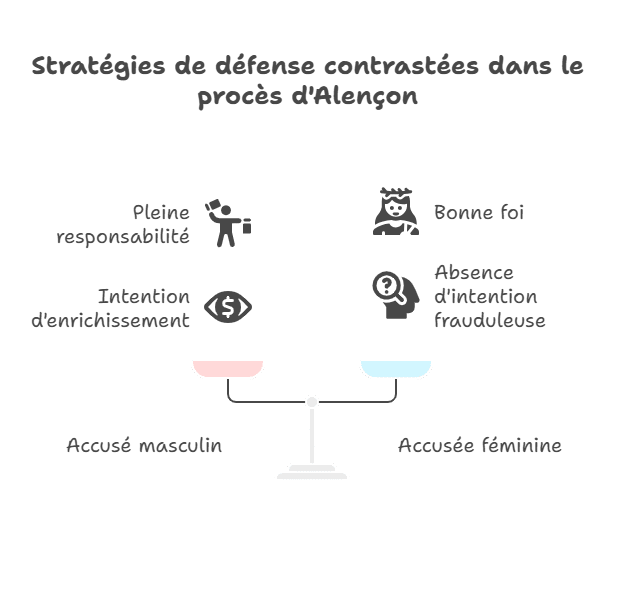


Trial Progress and Stakes: Parties’ Positions and Judicial Strategy
The trial currently taking place at the Alençon court presents contrasting strategies between the defense and the prosecution. From the outset, the defense lawyers requested the nullity of the proceedings, citing a lack of adversarial process and procedural flaws during the investigation. However, the court decided to join this nullity issue to the substantive case, ensuring the continuation of the proceedings.
The defendants themselves adopt divergent positions: the man fully admits the facts, recognizing a personal enrichment motive which he partially attributes to a flaw in the reimbursement system. Conversely, the woman defends herself by arguing a lack of fraudulent intent, emphasizing her good faith and concern for patient well-being.
Ongoing debates will shed light on the evidence accumulated by justice, the testimonies, and the actual implications of the fraud. The Alençon prosecution emphasizes the importance of this unprecedented process to reaffirm the principles of integrity and transparency in financial management.
- ⚖️ Defense claims procedural flaws
- 📝 Partial acknowledgment of facts by the principal accused
- 💬 Nuanced position of the co-defendant
- 📅 Scheduled for two days, with expected continuation
| Element | Defendants’ Position | Defense Arguments | Prosecutor’s Response |
|---|---|---|---|
| Procedure | Accepted with reservations | Request for annulment due to procedural flaws | Proceeding maintained and examined thoroughly |
| Responsibility | Man: full responsibility Woman: in good faith |
Minimization of complicity for the woman | Charges continue |
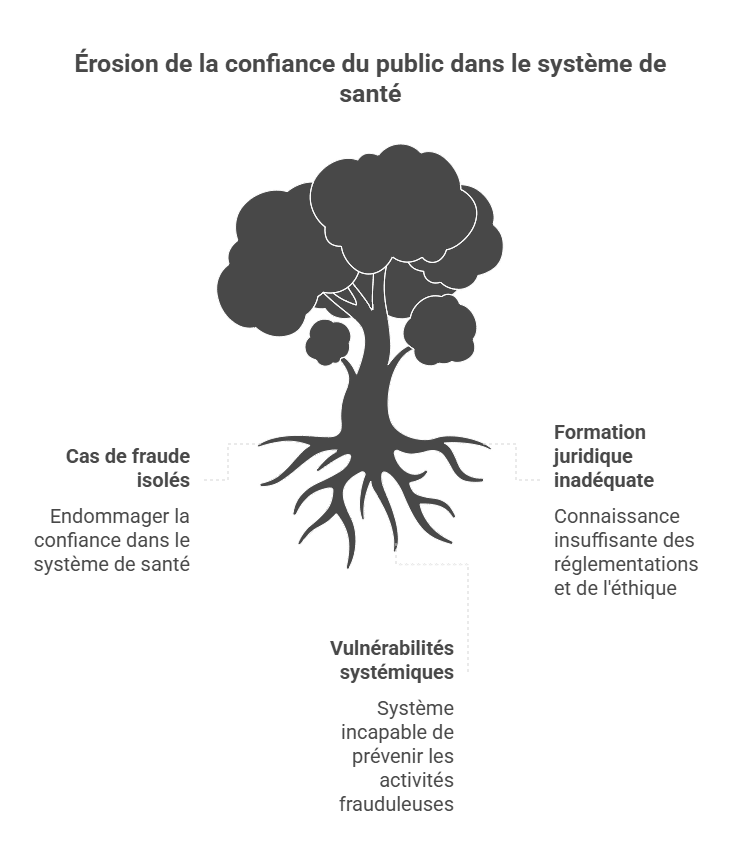
Institutional and Medical Community Reactions
The Alençon case has elicited strong reactions from healthcare actors and oversight agencies.
On the side of CPAM of Orne, the leadership praised internal detection systems’ responsiveness and emphasized that “these isolated cases should not overshadow the integrity of the vast majority of professionals”.
The Alençon Public Prosecutor’s Office stressed the importance of the process: “This case sends a clear message: fraud against social agencies is not mere administrative irregularity but serious criminal offenses that affect national solidarity.”
The National Nursing Order expressed concern about behaviors that “undermine public trust in an essential profession within the healthcare system”. Calls to strengthen legal and ethical training for self-employed nurses have been reiterated.
These institutional reactions show that this case goes beyond the protagonists: it questions the entire system’s ability to maintain its credibility.
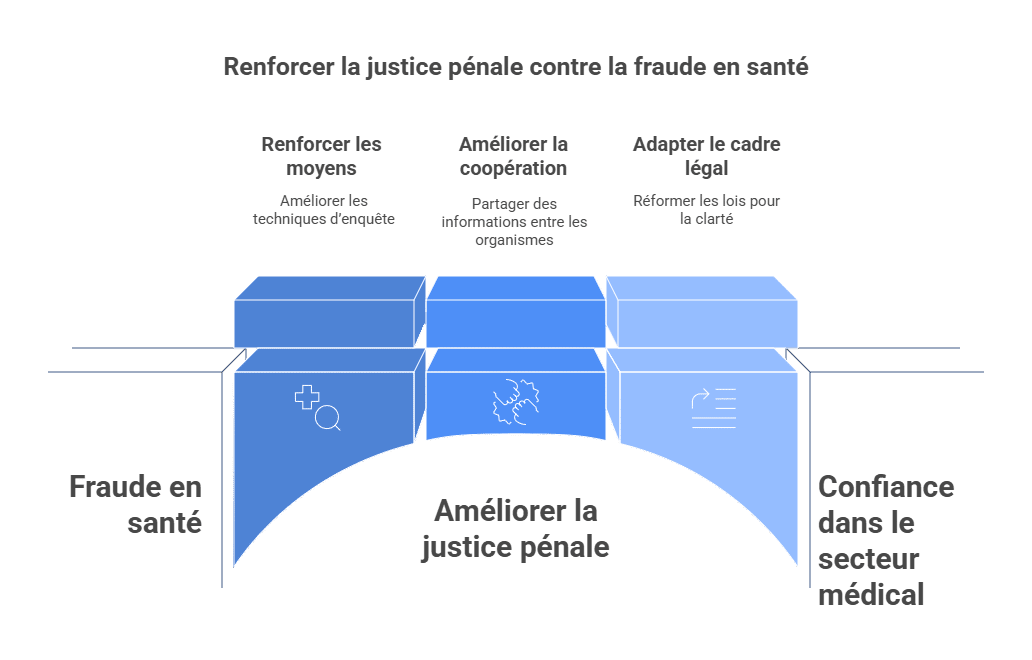
Perspectives and Challenges for Criminal Justice in Combating Health Sector Fraud
This emblematic case of fraud in Health Insurance fits into a broader dynamic of redefining the role of criminal justice in combating misconduct in the healthcare sector. It reveals the strengths and limitations of current procedures as well as possible avenues for improvement.
A key issue is clearly the need for increased means to investigate sometimes highly technical schemes involving multiple actors and voluminous documents. Collaboration between judicial services and social organizations is crucial, as illustrated by the coordination between the Alençon Prosecutor’s Office and the Caen GIR, which enabled significant progress in this case.
Finally, this judicial episode deepens reflection on adapting the legal and institutional framework to enhance prevention without hindering medical activity. Transparency, training, and appropriate sanctions remain the pillars of effective action against fraud, ensuring system sustainability and citizen trust.
- 🔎 Strengthening investigative tools and techniques
- 🤝 Improved inter-institutional cooperation
- 📜 Legislative and regulatory reforms
- 🛡️ Protecting trust in the medical sector
| Challenge | Proposed Solution | Expected Impact |
|---|---|---|
| Complexity of fraud schemes | Enhanced technological tools, judicial training | Better detection and prosecution |
| Inter-institutional coordination | Information sharing and stronger collaborations | Optimized investigations |
| Regulatory framework | Legislative reforms for clarity and severity | Increased prevention |
International Comparison: How Other Countries Fight Medical Fraud
Fraud in healthcare systems is not unique to France. Other European countries have implemented specific systems:
-
🇩🇪 Germany: extensive use of predictive analysis tools and real-time cross-referencing of billing data, enabling rapid anomaly detection.
-
🇬🇧 United Kingdom: existence of a Counter Fraud Authority dedicated to the NHS, with investigative powers close to those of police services.
-
🇳🇱 Netherlands: very heavy administrative sanctions and close cooperation between private insurers and public authorities.
France tends to approach these models by developing automated and interconnected systems, but still needs to strengthen exchanges between jurisdictions, CPAM, and mutual health organizations. This comparison underscores that fighting fraud is now a European issue, requiring coordination and innovation.
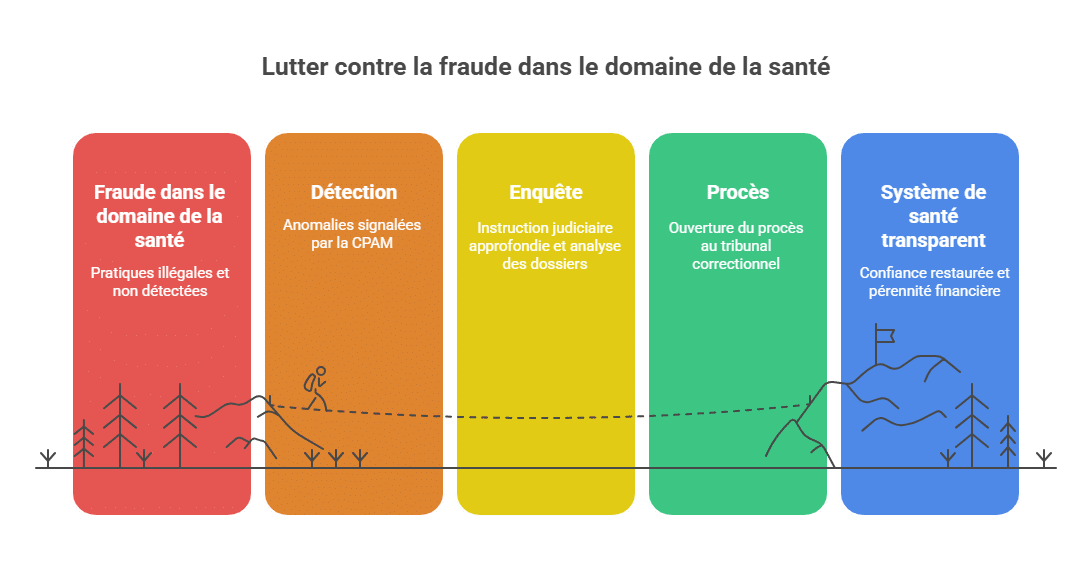
Chronology of the Alençon Case
| Date | Main Event |
|---|---|
| 2016 | Presumed start of fraudulent practices |
| Sept. 2021 | CPAM report in Alençon after detecting anomalies |
| 2022 | End of illegal activities and initiation of judicial proceedings |
| 2023 | In-depth judicial investigation (84 kg of files analyzed) |
| Oct. 2025 | Start of trial at the Alençon criminal court |
Lessons and Reform Proposals
This case highlights several areas for improvement to reinforce the fight against healthcare fraud:
-
💻 Modernization of control tools: increased use of artificial intelligence to identify suspicious patterns.
-
🧠 Enhanced legal training for professionals to better understand their obligations.
-
🏛️ Targeted legislative reforms to clarify sanctions and speed up procedures.
-
🤝 Strengthening inter-institutional cooperation, especially between CNAM, mutuals, and criminal courts.
-
🌐 European coordination for handling cross-border cases and harmonizing sanctions.
These avenues, combined with clear communication to insured persons and professionals, are essential to restore trust and ensure the financial sustainability of the French healthcare system.
Conclusion
The Alençon trial goes far beyond a simple criminal case: it reveals the systemic flaws of a reimbursement mechanism based on trust and good faith of healthcare professionals. In the face of increasingly sophisticated frauds, criminal justice and social organizations must combine legal rigor, technological modernization, and enhanced cooperation to preserve the integrity of the healthcare system.
This case also marks a turning point in the public perception of medical fraud: it reminds us that every diverted euro weakens national solidarity. Future reforms must reconcile effectiveness of control and protection of medical activity, to guarantee the sustainability of a model based on mutual trust between caregivers, insured persons, and institutions.
FAQ: Key Questions about the Infirmiers’ Fraud Case in Alençon
A couple of self-employed nurses practicing in Alençon, aged 63 and 55, prosecuted for Fraud against Health Insurance.
Their fraudulent system spanned over six years, from 2016 to 2022.
More than one million euros have been embezzled from social agencies and mutuals.
Up to seven years in prison and a €750,000 fine if convicted.
Through collaboration between the Alençon Public Prosecutor’s Office and the Caen Interministerial Research Group, examining a large file of 84 kg.
For further information, consult detailed articles on France Actu Normandy, Alençon Maville, and specific analyses on Aide BTS Assurance.
Source: france3-regions.francetvinfo.fr
- 🔍 Use of digital tools for anomaly detection
- 📘 Ongoing training programs and ethics codes
- ⚠️ Rapid reporting by funds and mutual health organizations
- 🛑 Random checks and surprise visits
It is essential that these measures are complemented by close cooperation between different institutions, including insurance funds, judicial authorities, and professional organizations. This coordination aims to optimize the fight against fraud, protecting the integrity of the healthcare system.
| Preventive Measure | Method | Purpose |
|---|---|---|
| Automated detection | Automated billing analysis systems | Rapid anomaly identification |
| Professional awareness | Training and codes of conduct | Limiting fraudulent behaviors |
| Surprise controls | On-site visits and audits | Verification of compliance |

Economic and Social Impacts of a Massive Fraud in Health Insurance
The financial magnitude of the one million euros diverted in this case raises concerns about the economic and social consequences of such fraud. The dilution of funds directly affects the financial health of social security funds, endangering their capacity to finance care for many insured persons.
Economically, these misconducts increase the risk of exceeding allocated budgets, often leading to corrective measures such as higher contributions or restrictions on certain services. Over time, this can impair access to care for parts of the population.
Socially, the case engenders a sense of distrust towards the nursing profession, vital in the care pathway. The public image of caregivers, often valued, is damaged by isolated but highly publicized behavior. This spotlight calls for vigilance to preserve reputation and confidence in the health sector.
- 📉 Major budget impact for Health Insurance
- 🔄 Need for financial recovery measures
- 🤝 Loss of trust in healthcare professionals
- ⚠️ Risks for access and quality of care
| Consequences | Description | Scale |
|---|---|---|
| Financial pressure | Reduction of resources available for all insured persons | National |
| Public image of nurses | Damage to social trust | Local and national |
| Access to care | Risks of restrictions or reimbursement cuts | Potential international scope |
Trial Progress and Stakes: Parties’ Positions and Judicial Strategy
The trial currently taking place at the Alençon court presents contrasting strategies between the defense and the prosecution. From the outset, the defense lawyers requested the nullity of the proceedings, citing a lack of adversarial process and procedural flaws during the investigation. However, the court decided to join this nullity issue to the substantive case, ensuring the continuation of the proceedings.
The defendants themselves adopt divergent positions: the man fully admits the facts, recognizing a personal enrichment motive which he partially attributes to a flaw in the reimbursement system. Conversely, the woman defends herself by arguing a lack of fraudulent intent, emphasizing her good faith and concern for patient well-being.
Ongoing debates will shed light on the evidence accumulated by justice, the testimonies, and the actual implications of the fraud. The Alençon prosecution emphasizes the importance of this unprecedented process to reaffirm the principles of integrity and transparency in financial management.
- ⚖️ Defense claims procedural flaws
- 📝 Partial acknowledgment of facts by the principal accused
- 💬 Nuanced position of the co-defendant
- 📅 Scheduled for two days, with expected continuation
| Element | Defendants’ Position | Defense Arguments | Prosecutor’s Response |
|---|---|---|---|
| Procedure | Accepted with reservations | Request for annulment due to procedural flaws | Proceeding maintained and examined thoroughly |
| Responsibility | Man: full responsibility Woman: in good faith |
Minimization of complicity for the woman | Charges continue |
Institutional and Medical Community Reactions
The Alençon case has elicited strong reactions from healthcare actors and oversight agencies.
On the side of CPAM of Orne, the leadership praised internal detection systems’ responsiveness and emphasized that “these isolated cases should not overshadow the integrity of the vast majority of professionals”.
The Alençon Public Prosecutor’s Office stressed the importance of the process: “This case sends a clear message: fraud against social agencies is not mere administrative irregularity but serious criminal offenses that affect national solidarity.”
The National Nursing Order expressed concern about behaviors that “undermine public trust in an essential profession within the healthcare system”. Calls to strengthen legal and ethical training for self-employed nurses have been reiterated.
These institutional reactions show that this case goes beyond the protagonists: it questions the entire system’s ability to maintain its credibility.
Perspectives and Challenges for Criminal Justice in Combating Health Sector Fraud
This emblematic case of fraud in Health Insurance fits into a broader dynamic of redefining the role of criminal justice in combating misconduct in the healthcare sector. It reveals the strengths and limitations of current procedures as well as possible avenues for improvement.
A key issue is clearly the need for increased means to investigate sometimes highly technical schemes involving multiple actors and voluminous documents. Collaboration between judicial services and social organizations is crucial, as illustrated by the coordination between the Alençon Prosecutor’s Office and the Caen GIR, which enabled significant progress in this case.
Finally, this judicial episode deepens reflection on adapting the legal and institutional framework to enhance prevention without hindering medical activity. Transparency, training, and appropriate sanctions remain the pillars of effective action against fraud, ensuring system sustainability and citizen trust.
- 🔎 Strengthening investigative tools and techniques
- 🤝 Improved inter-institutional cooperation
- 📜 Legislative and regulatory reforms
- 🛡️ Protecting trust in the medical sector
| Challenge | Proposed Solution | Expected Impact |
|---|---|---|
| Complexity of fraud schemes | Enhanced technological tools, judicial training | Better detection and prosecution |
| Inter-institutional coordination | Information sharing and stronger collaborations | Optimized investigations |
| Regulatory framework | Legislative reforms for clarity and severity | Increased prevention |
International Comparison: How Other Countries Fight Medical Fraud
Fraud in healthcare systems is not unique to France. Other European countries have implemented specific systems:
-
🇩🇪 Germany: extensive use of predictive analysis tools and real-time cross-referencing of billing data, enabling rapid anomaly detection.
-
🇬🇧 United Kingdom: existence of a Counter Fraud Authority dedicated to the NHS, with investigative powers close to those of police services.
-
🇳🇱 Netherlands: very heavy administrative sanctions and close cooperation between private insurers and public authorities.
France tends to approach these models by developing automated and interconnected systems, but still needs to strengthen exchanges between jurisdictions, CPAM, and mutual health organizations. This comparison underscores that fighting fraud is now a European issue, requiring coordination and innovation.
Chronology of the Alençon Case
| Date | Main Event |
|---|---|
| 2016 | Presumed start of fraudulent practices |
| Sept. 2021 | CPAM report in Alençon after detecting anomalies |
| 2022 | End of illegal activities and initiation of judicial proceedings |
| 2023 | In-depth judicial investigation (84 kg of files analyzed) |
| Oct. 2025 | Start of trial at the Alençon criminal court |
Lessons and Reform Proposals
This case highlights several areas for improvement to reinforce the fight against healthcare fraud:
-
💻 Modernization of control tools: increased use of artificial intelligence to identify suspicious patterns.
-
🧠 Enhanced legal training for professionals to better understand their obligations.
-
🏛️ Targeted legislative reforms to clarify sanctions and speed up procedures.
-
🤝 Strengthening inter-institutional cooperation, especially between CNAM, mutuals, and criminal courts.
-
🌐 European coordination for handling cross-border cases and harmonizing sanctions.
These avenues, combined with clear communication to insured persons and professionals, are essential to restore trust and ensure the financial sustainability of the French healthcare system.
Conclusion
The Alençon trial goes far beyond a simple criminal case: it reveals the systemic flaws of a reimbursement mechanism based on trust and good faith of healthcare professionals. In the face of increasingly sophisticated frauds, criminal justice and social organizations must combine legal rigor, technological modernization, and enhanced cooperation to preserve the integrity of the healthcare system.
This case also marks a turning point in the public perception of medical fraud: it reminds us that every diverted euro weakens national solidarity. Future reforms must reconcile effectiveness of control and protection of medical activity, to guarantee the sustainability of a model based on mutual trust between caregivers, insured persons, and institutions.
FAQ: Key Questions about the Infirmiers’ Fraud Case in Alençon
- 🧐 Who are the defendants in this case?
A couple of self-employed nurses practicing in Alençon, aged 63 and 55, prosecuted for Fraud against Health Insurance. - 📅 What is the duration of the fraud?
Their fraudulent system spanned over six years, from 2016 to 2022. - 💶 What is the amount diverted?
More than one million euros have been embezzled from social agencies and mutuals. - ⚖️ What sanctions do they face?
Up to seven years in prison and a €750,000 fine if convicted. - 🔍 How was the investigation conducted?
Through collaboration between the Alençon Public Prosecutor’s Office and the Caen Interministerial Research Group, examining a large file of 84 kg.
For further information, consult detailed articles on France Actu Normandy, Alençon Maville, and specific analyses on Aide BTS Assurance.
Source: france3-regions.francetvinfo.fr
- ⚖️ Defense claims procedural flaws
- 📝 Partial acknowledgment of facts by the principal accused
- 💬 Nuanced position of the co-defendant
- 📅 Scheduled for two days, with expected continuation
| Element | Defendants’ Position | Defense Arguments | Prosecutor’s Response |
|---|---|---|---|
| Procedure | Accepted with reservations | Request for annulment due to procedural flaws | Proceeding maintained and examined thoroughly |
| Responsibility | Man: full responsibility Woman: in good faith |
Minimization of complicity for the woman | Charges continue |
Institutional and Medical Community Reactions
The Alençon case has elicited strong reactions from healthcare actors and oversight agencies.
On the side of CPAM of Orne, the leadership praised internal detection systems’ responsiveness and emphasized that “these isolated cases should not overshadow the integrity of the vast majority of professionals”.
The Alençon Public Prosecutor’s Office stressed the importance of the process: “This case sends a clear message: fraud against social agencies is not mere administrative irregularity but serious criminal offenses that affect national solidarity.”
The National Nursing Order expressed concern about behaviors that “undermine public trust in an essential profession within the healthcare system”. Calls to strengthen legal and ethical training for self-employed nurses have been reiterated.
These institutional reactions show that this case goes beyond the protagonists: it questions the entire system’s ability to maintain its credibility.
Perspectives and Challenges for Criminal Justice in Combating Health Sector Fraud
This emblematic case of fraud in Health Insurance fits into a broader dynamic of redefining the role of criminal justice in combating misconduct in the healthcare sector. It reveals the strengths and limitations of current procedures as well as possible avenues for improvement.
A key issue is clearly the need for increased means to investigate sometimes highly technical schemes involving multiple actors and voluminous documents. Collaboration between judicial services and social organizations is crucial, as illustrated by the coordination between the Alençon Prosecutor’s Office and the Caen GIR, which enabled significant progress in this case.
Finally, this judicial episode deepens reflection on adapting the legal and institutional framework to enhance prevention without hindering medical activity. Transparency, training, and appropriate sanctions remain the pillars of effective action against fraud, ensuring system sustainability and citizen trust.
- 🔎 Strengthening investigative tools and techniques
- 🤝 Improved inter-institutional cooperation
- 📜 Legislative and regulatory reforms
- 🛡️ Protecting trust in the medical sector
| Challenge | Proposed Solution | Expected Impact |
|---|---|---|
| Complexity of fraud schemes | Enhanced technological tools, judicial training | Better detection and prosecution |
| Inter-institutional coordination | Information sharing and stronger collaborations | Optimized investigations |
| Regulatory framework | Legislative reforms for clarity and severity | Increased prevention |
International Comparison: How Other Countries Fight Medical Fraud
Fraud in healthcare systems is not unique to France. Other European countries have implemented specific systems:
-
🇩🇪 Germany: extensive use of predictive analysis tools and real-time cross-referencing of billing data, enabling rapid anomaly detection.
-
🇬🇧 United Kingdom: existence of a Counter Fraud Authority dedicated to the NHS, with investigative powers close to those of police services.
-
🇳🇱 Netherlands: very heavy administrative sanctions and close cooperation between private insurers and public authorities.
France tends to approach these models by developing automated and interconnected systems, but still needs to strengthen exchanges between jurisdictions, CPAM, and mutual health organizations. This comparison underscores that fighting fraud is now a European issue, requiring coordination and innovation.
Chronology of the Alençon Case
| Date | Main Event |
|---|---|
| 2016 | Presumed start of fraudulent practices |
| Sept. 2021 | CPAM report in Alençon after detecting anomalies |
| 2022 | End of illegal activities and initiation of judicial proceedings |
| 2023 | In-depth judicial investigation (84 kg of files analyzed) |
| Oct. 2025 | Start of trial at the Alençon criminal court |
Lessons and Reform Proposals
This case highlights several areas for improvement to reinforce the fight against healthcare fraud:
-
💻 Modernization of control tools: increased use of artificial intelligence to identify suspicious patterns.
-
🧠 Enhanced legal training for professionals to better understand their obligations.
-
🏛️ Targeted legislative reforms to clarify sanctions and speed up procedures.
-
🤝 Strengthening inter-institutional cooperation, especially between CNAM, mutuals, and criminal courts.
-
🌐 European coordination for handling cross-border cases and harmonizing sanctions.
These avenues, combined with clear communication to insured persons and professionals, are essential to restore trust and ensure the financial sustainability of the French healthcare system.
Conclusion
The Alençon trial goes far beyond a simple criminal case: it reveals the systemic flaws of a reimbursement mechanism based on trust and good faith of healthcare professionals. In the face of increasingly sophisticated frauds, criminal justice and social organizations must combine legal rigor, technological modernization, and enhanced cooperation to preserve the integrity of the healthcare system.
This case also marks a turning point in the public perception of medical fraud: it reminds us that every diverted euro weakens national solidarity. Future reforms must reconcile effectiveness of control and protection of medical activity, to guarantee the sustainability of a model based on mutual trust between caregivers, insured persons, and institutions.
FAQ: Key Questions about the Infirmiers’ Fraud Case in Alençon
- 🧐 Who are the defendants in this case?
A couple of self-employed nurses practicing in Alençon, aged 63 and 55, prosecuted for Fraud against Health Insurance. - 📅 What is the duration of the fraud?
Their fraudulent system spanned over six years, from 2016 to 2022. - 💶 What is the amount diverted?
More than one million euros have been embezzled from social agencies and mutuals. - ⚖️ What sanctions do they face?
Up to seven years in prison and a €750,000 fine if convicted. - 🔍 How was the investigation conducted?
Through collaboration between the Alençon Public Prosecutor’s Office and the Caen Interministerial Research Group, examining a large file of 84 kg.
For further information, consult detailed articles on France Actu Normandy, Alençon Maville, and specific analyses on Aide BTS Assurance.
Source: france3-regions.francetvinfo.fr
- 🔍 Use of digital tools for anomaly detection
- 📘 Ongoing training programs and ethics codes
- ⚠️ Rapid reporting by funds and mutual health organizations
- 🛑 Random checks and surprise visits
It is essential that these measures are complemented by close cooperation between different institutions, including insurance funds, judicial authorities, and professional organizations. This coordination aims to optimize the fight against fraud, protecting the integrity of the healthcare system.
| Preventive Measure | Method | Purpose |
|---|---|---|
| Automated detection | Automated billing analysis systems | Rapid anomaly identification |
| Professional awareness | Training and codes of conduct | Limiting fraudulent behaviors |
| Surprise controls | On-site visits and audits | Verification of compliance |
Economic and Social Impacts of a Massive Fraud in Health Insurance
The financial magnitude of the one million euros diverted in this case raises concerns about the economic and social consequences of such fraud. The dilution of funds directly affects the financial health of social security funds, endangering their capacity to finance care for many insured persons.
Economically, these misconducts increase the risk of exceeding allocated budgets, often leading to corrective measures such as higher contributions or restrictions on certain services. Over time, this can impair access to care for parts of the population.
Socially, the case engenders a sense of distrust towards the nursing profession, vital in the care pathway. The public image of caregivers, often valued, is damaged by isolated but highly publicized behavior. This spotlight calls for vigilance to preserve reputation and confidence in the health sector.
- 📉 Major budget impact for Health Insurance
- 🔄 Need for financial recovery measures
- 🤝 Loss of trust in healthcare professionals
- ⚠️ Risks for access and quality of care
| Consequences | Description | Scale |
|---|---|---|
| Financial pressure | Reduction of resources available for all insured persons | National |
| Public image of nurses | Damage to social trust | Local and national |
| Access to care | Risks of restrictions or reimbursement cuts | Potential international scope |
Trial Progress and Stakes: Parties’ Positions and Judicial Strategy
The trial currently taking place at the Alençon court presents contrasting strategies between the defense and the prosecution. From the outset, the defense lawyers requested the nullity of the proceedings, citing a lack of adversarial process and procedural flaws during the investigation. However, the court decided to join this nullity issue to the substantive case, ensuring the continuation of the proceedings.
The defendants themselves adopt divergent positions: the man fully admits the facts, recognizing a personal enrichment motive which he partially attributes to a flaw in the reimbursement system. Conversely, the woman defends herself by arguing a lack of fraudulent intent, emphasizing her good faith and concern for patient well-being.
Ongoing debates will shed light on the evidence accumulated by justice, the testimonies, and the actual implications of the fraud. The Alençon prosecution emphasizes the importance of this unprecedented process to reaffirm the principles of integrity and transparency in financial management.
- ⚖️ Defense claims procedural flaws
- 📝 Partial acknowledgment of facts by the principal accused
- 💬 Nuanced position of the co-defendant
- 📅 Scheduled for two days, with expected continuation
| Element | Defendants’ Position | Defense Arguments | Prosecutor’s Response |
|---|---|---|---|
| Procedure | Accepted with reservations | Request for annulment due to procedural flaws | Proceeding maintained and examined thoroughly |
| Responsibility | Man: full responsibility Woman: in good faith |
Minimization of complicity for the woman | Charges continue |
Institutional and Medical Community Reactions
The Alençon case has elicited strong reactions from healthcare actors and oversight agencies.
On the side of CPAM of Orne, the leadership praised internal detection systems’ responsiveness and emphasized that “these isolated cases should not overshadow the integrity of the vast majority of professionals”.
The Alençon Public Prosecutor’s Office stressed the importance of the process: “This case sends a clear message: fraud against social agencies is not mere administrative irregularity but serious criminal offenses that affect national solidarity.”
The National Nursing Order expressed concern about behaviors that “undermine public trust in an essential profession within the healthcare system”. Calls to strengthen legal and ethical training for self-employed nurses have been reiterated.
These institutional reactions show that this case goes beyond the protagonists: it questions the entire system’s ability to maintain its credibility.
Perspectives and Challenges for Criminal Justice in Combating Health Sector Fraud
This emblematic case of fraud in Health Insurance fits into a broader dynamic of redefining the role of criminal justice in combating misconduct in the healthcare sector. It reveals the strengths and limitations of current procedures as well as possible avenues for improvement.
A key issue is clearly the need for increased means to investigate sometimes highly technical schemes involving multiple actors and voluminous documents. Collaboration between judicial services and social organizations is crucial, as illustrated by the coordination between the Alençon Prosecutor’s Office and the Caen GIR, which enabled significant progress in this case.
Finally, this judicial episode deepens reflection on adapting the legal and institutional framework to enhance prevention without hindering medical activity. Transparency, training, and appropriate sanctions remain the pillars of effective action against fraud, ensuring system sustainability and citizen trust.
- 🔎 Strengthening investigative tools and techniques
- 🤝 Improved inter-institutional cooperation
- 📜 Legislative and regulatory reforms
- 🛡️ Protecting trust in the medical sector
| Challenge | Proposed Solution | Expected Impact |
|---|---|---|
| Complexity of fraud schemes | Enhanced technological tools, judicial training | Better detection and prosecution |
| Inter-institutional coordination | Information sharing and stronger collaborations | Optimized investigations |
| Regulatory framework | Legislative reforms for clarity and severity | Increased prevention |
International Comparison: How Other Countries Fight Medical Fraud
Fraud in healthcare systems is not unique to France. Other European countries have implemented specific systems:
-
🇩🇪 Germany: extensive use of predictive analysis tools and real-time cross-referencing of billing data, enabling rapid anomaly detection.
-
🇬🇧 United Kingdom: existence of a Counter Fraud Authority dedicated to the NHS, with investigative powers close to those of police services.
-
🇳🇱 Netherlands: very heavy administrative sanctions and close cooperation between private insurers and public authorities.
France tends to approach these models by developing automated and interconnected systems, but still needs to strengthen exchanges between jurisdictions, CPAM, and mutual health organizations. This comparison underscores that fighting fraud is now a European issue, requiring coordination and innovation.
Chronology of the Alençon Case
| Date | Main Event |
|---|---|
| 2016 | Presumed start of fraudulent practices |
| Sept. 2021 | CPAM report in Alençon after detecting anomalies |
| 2022 | End of illegal activities and initiation of judicial proceedings |
| 2023 | In-depth judicial investigation (84 kg of files analyzed) |
| Oct. 2025 | Start of trial at the Alençon criminal court |
Lessons and Reform Proposals
This case highlights several areas for improvement to reinforce the fight against healthcare fraud:
-
💻 Modernization of control tools: increased use of artificial intelligence to identify suspicious patterns.
-
🧠 Enhanced legal training for professionals to better understand their obligations.
-
🏛️ Targeted legislative reforms to clarify sanctions and speed up procedures.
-
🤝 Strengthening inter-institutional cooperation, especially between CNAM, mutuals, and criminal courts.
-
🌐 European coordination for handling cross-border cases and harmonizing sanctions.
These avenues, combined with clear communication to insured persons and professionals, are essential to restore trust and ensure the financial sustainability of the French healthcare system.
Conclusion
The Alençon trial goes far beyond a simple criminal case: it reveals the systemic flaws of a reimbursement mechanism based on trust and good faith of healthcare professionals. In the face of increasingly sophisticated frauds, criminal justice and social organizations must combine legal rigor, technological modernization, and enhanced cooperation to preserve the integrity of the healthcare system.
This case also marks a turning point in the public perception of medical fraud: it reminds us that every diverted euro weakens national solidarity. Future reforms must reconcile effectiveness of control and protection of medical activity, to guarantee the sustainability of a model based on mutual trust between caregivers, insured persons, and institutions.
FAQ: Key Questions about the Infirmiers’ Fraud Case in Alençon
- 🧐 Who are the defendants in this case?
A couple of self-employed nurses practicing in Alençon, aged 63 and 55, prosecuted for Fraud against Health Insurance. - 📅 What is the duration of the fraud?
Their fraudulent system spanned over six years, from 2016 to 2022. - 💶 What is the amount diverted?
More than one million euros have been embezzled from social agencies and mutuals. - ⚖️ What sanctions do they face?
Up to seven years in prison and a €750,000 fine if convicted. - 🔍 How was the investigation conducted?
Through collaboration between the Alençon Public Prosecutor’s Office and the Caen Interministerial Research Group, examining a large file of 84 kg.
For further information, consult detailed articles on France Actu Normandy, Alençon Maville, and specific analyses on Aide BTS Assurance.
Source: france3-regions.francetvinfo.fr
- 📉 Major budget impact for Health Insurance
- 🔄 Need for financial recovery measures
- 🤝 Loss of trust in healthcare professionals
- ⚠️ Risks for access and quality of care
| Consequences | Description | Scale |
|---|---|---|
| Financial pressure | Reduction of resources available for all insured persons | National |
| Public image of nurses | Damage to social trust | Local and national |
| Access to care | Risks of restrictions or reimbursement cuts | Potential international scope |
Trial Progress and Stakes: Parties’ Positions and Judicial Strategy
The trial currently taking place at the Alençon court presents contrasting strategies between the defense and the prosecution. From the outset, the defense lawyers requested the nullity of the proceedings, citing a lack of adversarial process and procedural flaws during the investigation. However, the court decided to join this nullity issue to the substantive case, ensuring the continuation of the proceedings.
The defendants themselves adopt divergent positions: the man fully admits the facts, recognizing a personal enrichment motive which he partially attributes to a flaw in the reimbursement system. Conversely, the woman defends herself by arguing a lack of fraudulent intent, emphasizing her good faith and concern for patient well-being.
Ongoing debates will shed light on the evidence accumulated by justice, the testimonies, and the actual implications of the fraud. The Alençon prosecution emphasizes the importance of this unprecedented process to reaffirm the principles of integrity and transparency in financial management.
- ⚖️ Defense claims procedural flaws
- 📝 Partial acknowledgment of facts by the principal accused
- 💬 Nuanced position of the co-defendant
- 📅 Scheduled for two days, with expected continuation
| Element | Defendants’ Position | Defense Arguments | Prosecutor’s Response |
|---|---|---|---|
| Procedure | Accepted with reservations | Request for annulment due to procedural flaws | Proceeding maintained and examined thoroughly |
| Responsibility | Man: full responsibility Woman: in good faith |
Minimization of complicity for the woman | Charges continue |
Institutional and Medical Community Reactions
The Alençon case has elicited strong reactions from healthcare actors and oversight agencies.
On the side of CPAM of Orne, the leadership praised internal detection systems’ responsiveness and emphasized that “these isolated cases should not overshadow the integrity of the vast majority of professionals”.
The Alençon Public Prosecutor’s Office stressed the importance of the process: “This case sends a clear message: fraud against social agencies is not mere administrative irregularity but serious criminal offenses that affect national solidarity.”
The National Nursing Order expressed concern about behaviors that “undermine public trust in an essential profession within the healthcare system”. Calls to strengthen legal and ethical training for self-employed nurses have been reiterated.
These institutional reactions show that this case goes beyond the protagonists: it questions the entire system’s ability to maintain its credibility.
Perspectives and Challenges for Criminal Justice in Combating Health Sector Fraud
This emblematic case of fraud in Health Insurance fits into a broader dynamic of redefining the role of criminal justice in combating misconduct in the healthcare sector. It reveals the strengths and limitations of current procedures as well as possible avenues for improvement.
A key issue is clearly the need for increased means to investigate sometimes highly technical schemes involving multiple actors and voluminous documents. Collaboration between judicial services and social organizations is crucial, as illustrated by the coordination between the Alençon Prosecutor’s Office and the Caen GIR, which enabled significant progress in this case.
Finally, this judicial episode deepens reflection on adapting the legal and institutional framework to enhance prevention without hindering medical activity. Transparency, training, and appropriate sanctions remain the pillars of effective action against fraud, ensuring system sustainability and citizen trust.
- 🔎 Strengthening investigative tools and techniques
- 🤝 Improved inter-institutional cooperation
- 📜 Legislative and regulatory reforms
- 🛡️ Protecting trust in the medical sector
| Challenge | Proposed Solution | Expected Impact |
|---|---|---|
| Complexity of fraud schemes | Enhanced technological tools, judicial training | Better detection and prosecution |
| Inter-institutional coordination | Information sharing and stronger collaborations | Optimized investigations |
| Regulatory framework | Legislative reforms for clarity and severity | Increased prevention |
International Comparison: How Other Countries Fight Medical Fraud
Fraud in healthcare systems is not unique to France. Other European countries have implemented specific systems:
-
🇩🇪 Germany: extensive use of predictive analysis tools and real-time cross-referencing of billing data, enabling rapid anomaly detection.
-
🇬🇧 United Kingdom: existence of a Counter Fraud Authority dedicated to the NHS, with investigative powers close to those of police services.
-
🇳🇱 Netherlands: very heavy administrative sanctions and close cooperation between private insurers and public authorities.
France tends to approach these models by developing automated and interconnected systems, but still needs to strengthen exchanges between jurisdictions, CPAM, and mutual health organizations. This comparison underscores that fighting fraud is now a European issue, requiring coordination and innovation.
Chronology of the Alençon Case
| Date | Main Event |
|---|---|
| 2016 | Presumed start of fraudulent practices |
| Sept. 2021 | CPAM report in Alençon after detecting anomalies |
| 2022 | End of illegal activities and initiation of judicial proceedings |
| 2023 | In-depth judicial investigation (84 kg of files analyzed) |
| Oct. 2025 | Start of trial at the Alençon criminal court |
Lessons and Reform Proposals
This case highlights several areas for improvement to reinforce the fight against healthcare fraud:
-
💻 Modernization of control tools: increased use of artificial intelligence to identify suspicious patterns.
-
🧠 Enhanced legal training for professionals to better understand their obligations.
-
🏛️ Targeted legislative reforms to clarify sanctions and speed up procedures.
-
🤝 Strengthening inter-institutional cooperation, especially between CNAM, mutuals, and criminal courts.
-
🌐 European coordination for handling cross-border cases and harmonizing sanctions.
These avenues, combined with clear communication to insured persons and professionals, are essential to restore trust and ensure the financial sustainability of the French healthcare system.
Conclusion
The Alençon trial goes far beyond a simple criminal case: it reveals the systemic flaws of a reimbursement mechanism based on trust and good faith of healthcare professionals. In the face of increasingly sophisticated frauds, criminal justice and social organizations must combine legal rigor, technological modernization, and enhanced cooperation to preserve the integrity of the healthcare system.
This case also marks a turning point in the public perception of medical fraud: it reminds us that every diverted euro weakens national solidarity. Future reforms must reconcile effectiveness of control and protection of medical activity, to guarantee the sustainability of a model based on mutual trust between caregivers, insured persons, and institutions.
FAQ: Key Questions about the Infirmiers’ Fraud Case in Alençon
- 🧐 Who are the defendants in this case?
A couple of self-employed nurses practicing in Alençon, aged 63 and 55, prosecuted for Fraud against Health Insurance. - 📅 What is the duration of the fraud?
Their fraudulent system spanned over six years, from 2016 to 2022. - 💶 What is the amount diverted?
More than one million euros have been embezzled from social agencies and mutuals. - ⚖️ What sanctions do they face?
Up to seven years in prison and a €750,000 fine if convicted. - 🔍 How was the investigation conducted?
Through collaboration between the Alençon Public Prosecutor’s Office and the Caen Interministerial Research Group, examining a large file of 84 kg.
For further information, consult detailed articles on France Actu Normandy, Alençon Maville, and specific analyses on Aide BTS Assurance.
Source: france3-regions.francetvinfo.fr
- 🔍 Use of digital tools for anomaly detection
- 📘 Ongoing training programs and ethics codes
- ⚠️ Rapid reporting by funds and mutual health organizations
- 🛑 Random checks and surprise visits
It is essential that these measures are complemented by close cooperation between different institutions, including insurance funds, judicial authorities, and professional organizations. This coordination aims to optimize the fight against fraud, protecting the integrity of the healthcare system.
| Preventive Measure | Method | Purpose |
|---|---|---|
| Automated detection | Automated billing analysis systems | Rapid anomaly identification |
| Professional awareness | Training and codes of conduct | Limiting fraudulent behaviors |
| Surprise controls | On-site visits and audits | Verification of compliance |
Economic and Social Impacts of a Massive Fraud in Health Insurance
The financial magnitude of the one million euros diverted in this case raises concerns about the economic and social consequences of such fraud. The dilution of funds directly affects the financial health of social security funds, endangering their capacity to finance care for many insured persons.
Economically, these misconducts increase the risk of exceeding allocated budgets, often leading to corrective measures such as higher contributions or restrictions on certain services. Over time, this can impair access to care for parts of the population.
Socially, the case engenders a sense of distrust towards the nursing profession, vital in the care pathway. The public image of caregivers, often valued, is damaged by isolated but highly publicized behavior. This spotlight calls for vigilance to preserve reputation and confidence in the health sector.
- 📉 Major budget impact for Health Insurance
- 🔄 Need for financial recovery measures
- 🤝 Loss of trust in healthcare professionals
- ⚠️ Risks for access and quality of care
| Consequences | Description | Scale |
|---|---|---|
| Financial pressure | Reduction of resources available for all insured persons | National |
| Public image of nurses | Damage to social trust | Local and national |
| Access to care | Risks of restrictions or reimbursement cuts | Potential international scope |
Trial Progress and Stakes: Parties’ Positions and Judicial Strategy
The trial currently taking place at the Alençon court presents contrasting strategies between the defense and the prosecution. From the outset, the defense lawyers requested the nullity of the proceedings, citing a lack of adversarial process and procedural flaws during the investigation. However, the court decided to join this nullity issue to the substantive case, ensuring the continuation of the proceedings.
The defendants themselves adopt divergent positions: the man fully admits the facts, recognizing a personal enrichment motive which he partially attributes to a flaw in the reimbursement system. Conversely, the woman defends herself by arguing a lack of fraudulent intent, emphasizing her good faith and concern for patient well-being.
Ongoing debates will shed light on the evidence accumulated by justice, the testimonies, and the actual implications of the fraud. The Alençon prosecution emphasizes the importance of this unprecedented process to reaffirm the principles of integrity and transparency in financial management.
- ⚖️ Defense claims procedural flaws
- 📝 Partial acknowledgment of facts by the principal accused
- 💬 Nuanced position of the co-defendant
- 📅 Scheduled for two days, with expected continuation
| Element | Defendants’ Position | Defense Arguments | Prosecutor’s Response |
|---|---|---|---|
| Procedure | Accepted with reservations | Request for annulment due to procedural flaws | Proceeding maintained and examined thoroughly |
| Responsibility | Man: full responsibility Woman: in good faith |
Minimization of complicity for the woman | Charges continue |
Institutional and Medical Community Reactions
The Alençon case has elicited strong reactions from healthcare actors and oversight agencies.
On the side of CPAM of Orne, the leadership praised internal detection systems’ responsiveness and emphasized that “these isolated cases should not overshadow the integrity of the vast majority of professionals”.
The Alençon Public Prosecutor’s Office stressed the importance of the process: “This case sends a clear message: fraud against social agencies is not mere administrative irregularity but serious criminal offenses that affect national solidarity.”
The National Nursing Order expressed concern about behaviors that “undermine public trust in an essential profession within the healthcare system”. Calls to strengthen legal and ethical training for self-employed nurses have been reiterated.
These institutional reactions show that this case goes beyond the protagonists: it questions the entire system’s ability to maintain its credibility.
Perspectives and Challenges for Criminal Justice in Combating Health Sector Fraud
This emblematic case of fraud in Health Insurance fits into a broader dynamic of redefining the role of criminal justice in combating misconduct in the healthcare sector. It reveals the strengths and limitations of current procedures as well as possible avenues for improvement.
A key issue is clearly the need for increased means to investigate sometimes highly technical schemes involving multiple actors and voluminous documents. Collaboration between judicial services and social organizations is crucial, as illustrated by the coordination between the Alençon Prosecutor’s Office and the Caen GIR, which enabled significant progress in this case.
Finally, this judicial episode deepens reflection on adapting the legal and institutional framework to enhance prevention without hindering medical activity. Transparency, training, and appropriate sanctions remain the pillars of effective action against fraud, ensuring system sustainability and citizen trust.
- 🔎 Strengthening investigative tools and techniques
- 🤝 Improved inter-institutional cooperation
- 📜 Legislative and regulatory reforms
- 🛡️ Protecting trust in the medical sector
| Challenge | Proposed Solution | Expected Impact |
|---|---|---|
| Complexity of fraud schemes | Enhanced technological tools, judicial training | Better detection and prosecution |
| Inter-institutional coordination | Information sharing and stronger collaborations | Optimized investigations |
| Regulatory framework | Legislative reforms for clarity and severity | Increased prevention |
International Comparison: How Other Countries Fight Medical Fraud
Fraud in healthcare systems is not unique to France. Other European countries have implemented specific systems:
-
🇩🇪 Germany: extensive use of predictive analysis tools and real-time cross-referencing of billing data, enabling rapid anomaly detection.
-
🇬🇧 United Kingdom: existence of a Counter Fraud Authority dedicated to the NHS, with investigative powers close to those of police services.
-
🇳🇱 Netherlands: very heavy administrative sanctions and close cooperation between private insurers and public authorities.
France tends to approach these models by developing automated and interconnected systems, but still needs to strengthen exchanges between jurisdictions, CPAM, and mutual health organizations. This comparison underscores that fighting fraud is now a European issue, requiring coordination and innovation.
Chronology of the Alençon Case
| Date | Main Event |
|---|---|
| 2016 | Presumed start of fraudulent practices |
| Sept. 2021 | CPAM report in Alençon after detecting anomalies |
| 2022 | End of illegal activities and initiation of judicial proceedings |
| 2023 | In-depth judicial investigation (84 kg of files analyzed) |
| Oct. 2025 | Start of trial at the Alençon criminal court |
Lessons and Reform Proposals
This case highlights several areas for improvement to reinforce the fight against healthcare fraud:
-
💻 Modernization of control tools: increased use of artificial intelligence to identify suspicious patterns.
-
🧠 Enhanced legal training for professionals to better understand their obligations.
-
🏛️ Targeted legislative reforms to clarify sanctions and speed up procedures.
-
🤝 Strengthening inter-institutional cooperation, especially between CNAM, mutuals, and criminal courts.
-
🌐 European coordination for handling cross-border cases and harmonizing sanctions.
These avenues, combined with clear communication to insured persons and professionals, are essential to restore trust and ensure the financial sustainability of the French healthcare system.
Conclusion
The Alençon trial goes far beyond a simple criminal case: it reveals the systemic flaws of a reimbursement mechanism based on trust and good faith of healthcare professionals. In the face of increasingly sophisticated frauds, criminal justice and social organizations must combine legal rigor, technological modernization, and enhanced cooperation to preserve the integrity of the healthcare system.
This case also marks a turning point in the public perception of medical fraud: it reminds us that every diverted euro weakens national solidarity. Future reforms must reconcile effectiveness of control and protection of medical activity, to guarantee the sustainability of a model based on mutual trust between caregivers, insured persons, and institutions.
FAQ: Key Questions about the Infirmiers’ Fraud Case in Alençon
- 🧐 Who are the defendants in this case?
A couple of self-employed nurses practicing in Alençon, aged 63 and 55, prosecuted for Fraud against Health Insurance. - 📅 What is the duration of the fraud?
Their fraudulent system spanned over six years, from 2016 to 2022. - 💶 What is the amount diverted?
More than one million euros have been embezzled from social agencies and mutuals. - ⚖️ What sanctions do they face?
Up to seven years in prison and a €750,000 fine if convicted. - 🔍 How was the investigation conducted?
Through collaboration between the Alençon Public Prosecutor’s Office and the Caen Interministerial Research Group, examining a large file of 84 kg.
For further information, consult detailed articles on France Actu Normandy, Alençon Maville, and specific analyses on Aide BTS Assurance.
Source: france3-regions.francetvinfo.fr
- ⚖️ Defense claims procedural flaws
- 📝 Partial acknowledgment of facts by the principal accused
- 💬 Nuanced position of the co-defendant
- 📅 Scheduled for two days, with expected continuation
| Element | Defendants’ Position | Defense Arguments | Prosecutor’s Response |
|---|---|---|---|
| Procedure | Accepted with reservations | Request for annulment due to procedural flaws | Proceeding maintained and examined thoroughly |
| Responsibility | Man: full responsibility Woman: in good faith |
Minimization of complicity for the woman | Charges continue |
Institutional and Medical Community Reactions
The Alençon case has elicited strong reactions from healthcare actors and oversight agencies.
On the side of CPAM of Orne, the leadership praised internal detection systems’ responsiveness and emphasized that “these isolated cases should not overshadow the integrity of the vast majority of professionals”.
The Alençon Public Prosecutor’s Office stressed the importance of the process: “This case sends a clear message: fraud against social agencies is not mere administrative irregularity but serious criminal offenses that affect national solidarity.”
The National Nursing Order expressed concern about behaviors that “undermine public trust in an essential profession within the healthcare system”. Calls to strengthen legal and ethical training for self-employed nurses have been reiterated.
These institutional reactions show that this case goes beyond the protagonists: it questions the entire system’s ability to maintain its credibility.
Perspectives and Challenges for Criminal Justice in Combating Health Sector Fraud
This emblematic case of fraud in Health Insurance fits into a broader dynamic of redefining the role of criminal justice in combating misconduct in the healthcare sector. It reveals the strengths and limitations of current procedures as well as possible avenues for improvement.
A key issue is clearly the need for increased means to investigate sometimes highly technical schemes involving multiple actors and voluminous documents. Collaboration between judicial services and social organizations is crucial, as illustrated by the coordination between the Alençon Prosecutor’s Office and the Caen GIR, which enabled significant progress in this case.
Finally, this judicial episode deepens reflection on adapting the legal and institutional framework to enhance prevention without hindering medical activity. Transparency, training, and appropriate sanctions remain the pillars of effective action against fraud, ensuring system sustainability and citizen trust.
- 🔎 Strengthening investigative tools and techniques
- 🤝 Improved inter-institutional cooperation
- 📜 Legislative and regulatory reforms
- 🛡️ Protecting trust in the medical sector
| Challenge | Proposed Solution | Expected Impact |
|---|---|---|
| Complexity of fraud schemes | Enhanced technological tools, judicial training | Better detection and prosecution |
| Inter-institutional coordination | Information sharing and stronger collaborations | Optimized investigations |
| Regulatory framework | Legislative reforms for clarity and severity | Increased prevention |
International Comparison: How Other Countries Fight Medical Fraud
Fraud in healthcare systems is not unique to France. Other European countries have implemented specific systems:
-
🇩🇪 Germany: extensive use of predictive analysis tools and real-time cross-referencing of billing data, enabling rapid anomaly detection.
-
🇬🇧 United Kingdom: existence of a Counter Fraud Authority dedicated to the NHS, with investigative powers close to those of police services.
-
🇳🇱 Netherlands: very heavy administrative sanctions and close cooperation between private insurers and public authorities.
France tends to approach these models by developing automated and interconnected systems, but still needs to strengthen exchanges between jurisdictions, CPAM, and mutual health organizations. This comparison underscores that fighting fraud is now a European issue, requiring coordination and innovation.
Chronology of the Alençon Case
| Date | Main Event |
|---|---|
| 2016 | Presumed start of fraudulent practices |
| Sept. 2021 | CPAM report in Alençon after detecting anomalies |
| 2022 | End of illegal activities and initiation of judicial proceedings |
| 2023 | In-depth judicial investigation (84 kg of files analyzed) |
| Oct. 2025 | Start of trial at the Alençon criminal court |
Lessons and Reform Proposals
This case highlights several areas for improvement to reinforce the fight against healthcare fraud:
-
💻 Modernization of control tools: increased use of artificial intelligence to identify suspicious patterns.
-
🧠 Enhanced legal training for professionals to better understand their obligations.
-
🏛️ Targeted legislative reforms to clarify sanctions and speed up procedures.
-
🤝 Strengthening inter-institutional cooperation, especially between CNAM, mutuals, and criminal courts.
-
🌐 European coordination for handling cross-border cases and harmonizing sanctions.
These avenues, combined with clear communication to insured persons and professionals, are essential to restore trust and ensure the financial sustainability of the French healthcare system.
Conclusion
The Alençon trial goes far beyond a simple criminal case: it reveals the systemic flaws of a reimbursement mechanism based on trust and good faith of healthcare professionals. In the face of increasingly sophisticated frauds, criminal justice and social organizations must combine legal rigor, technological modernization, and enhanced cooperation to preserve the integrity of the healthcare system.
This case also marks a turning point in the public perception of medical fraud: it reminds us that every diverted euro weakens national solidarity. Future reforms must reconcile effectiveness of control and protection of medical activity, to guarantee the sustainability of a model based on mutual trust between caregivers, insured persons, and institutions.
FAQ: Key Questions about the Infirmiers’ Fraud Case in Alençon
- 🧐 Who are the defendants in this case?
A couple of self-employed nurses practicing in Alençon, aged 63 and 55, prosecuted for Fraud against Health Insurance. - 📅 What is the duration of the fraud?
Their fraudulent system spanned over six years, from 2016 to 2022. - 💶 What is the amount diverted?
More than one million euros have been embezzled from social agencies and mutuals. - ⚖️ What sanctions do they face?
Up to seven years in prison and a €750,000 fine if convicted. - 🔍 How was the investigation conducted?
Through collaboration between the Alençon Public Prosecutor’s Office and the Caen Interministerial Research Group, examining a large file of 84 kg.
For further information, consult detailed articles on France Actu Normandy, Alençon Maville, and specific analyses on Aide BTS Assurance.
Source: france3-regions.francetvinfo.fr
- 📉 Major budget impact for Health Insurance
- 🔄 Need for financial recovery measures
- 🤝 Loss of trust in healthcare professionals
- ⚠️ Risks for access and quality of care
| Consequences | Description | Scale |
|---|---|---|
| Financial pressure | Reduction of resources available for all insured persons | National |
| Public image of nurses | Damage to social trust | Local and national |
| Access to care | Risks of restrictions or reimbursement cuts | Potential international scope |
Trial Progress and Stakes: Parties’ Positions and Judicial Strategy
The trial currently taking place at the Alençon court presents contrasting strategies between the defense and the prosecution. From the outset, the defense lawyers requested the nullity of the proceedings, citing a lack of adversarial process and procedural flaws during the investigation. However, the court decided to join this nullity issue to the substantive case, ensuring the continuation of the proceedings.
The defendants themselves adopt divergent positions: the man fully admits the facts, recognizing a personal enrichment motive which he partially attributes to a flaw in the reimbursement system. Conversely, the woman defends herself by arguing a lack of fraudulent intent, emphasizing her good faith and concern for patient well-being.
Ongoing debates will shed light on the evidence accumulated by justice, the testimonies, and the actual implications of the fraud. The Alençon prosecution emphasizes the importance of this unprecedented process to reaffirm the principles of integrity and transparency in financial management.
- ⚖️ Defense claims procedural flaws
- 📝 Partial acknowledgment of facts by the principal accused
- 💬 Nuanced position of the co-defendant
- 📅 Scheduled for two days, with expected continuation
| Element | Defendants’ Position | Defense Arguments | Prosecutor’s Response |
|---|---|---|---|
| Procedure | Accepted with reservations | Request for annulment due to procedural flaws | Proceeding maintained and examined thoroughly |
| Responsibility | Man: full responsibility Woman: in good faith |
Minimization of complicity for the woman | Charges continue |
Institutional and Medical Community Reactions
The Alençon case has elicited strong reactions from healthcare actors and oversight agencies.
On the side of CPAM of Orne, the leadership praised internal detection systems’ responsiveness and emphasized that “these isolated cases should not overshadow the integrity of the vast majority of professionals”.
The Alençon Public Prosecutor’s Office stressed the importance of the process: “This case sends a clear message: fraud against social agencies is not mere administrative irregularity but serious criminal offenses that affect national solidarity.”
The National Nursing Order expressed concern about behaviors that “undermine public trust in an essential profession within the healthcare system”. Calls to strengthen legal and ethical training for self-employed nurses have been reiterated.
These institutional reactions show that this case goes beyond the protagonists: it questions the entire system’s ability to maintain its credibility.
Perspectives and Challenges for Criminal Justice in Combating Health Sector Fraud
This emblematic case of fraud in Health Insurance fits into a broader dynamic of redefining the role of criminal justice in combating misconduct in the healthcare sector. It reveals the strengths and limitations of current procedures as well as possible avenues for improvement.
A key issue is clearly the need for increased means to investigate sometimes highly technical schemes involving multiple actors and voluminous documents. Collaboration between judicial services and social organizations is crucial, as illustrated by the coordination between the Alençon Prosecutor’s Office and the Caen GIR, which enabled significant progress in this case.
Finally, this judicial episode deepens reflection on adapting the legal and institutional framework to enhance prevention without hindering medical activity. Transparency, training, and appropriate sanctions remain the pillars of effective action against fraud, ensuring system sustainability and citizen trust.
- 🔎 Strengthening investigative tools and techniques
- 🤝 Improved inter-institutional cooperation
- 📜 Legislative and regulatory reforms
- 🛡️ Protecting trust in the medical sector
| Challenge | Proposed Solution | Expected Impact |
|---|---|---|
| Complexity of fraud schemes | Enhanced technological tools, judicial training | Better detection and prosecution |
| Inter-institutional coordination | Information sharing and stronger collaborations | Optimized investigations |
| Regulatory framework | Legislative reforms for clarity and severity | Increased prevention |
International Comparison: How Other Countries Fight Medical Fraud
Fraud in healthcare systems is not unique to France. Other European countries have implemented specific systems:
-
🇩🇪 Germany: extensive use of predictive analysis tools and real-time cross-referencing of billing data, enabling rapid anomaly detection.
-
🇬🇧 United Kingdom: existence of a Counter Fraud Authority dedicated to the NHS, with investigative powers close to those of police services.
-
🇳🇱 Netherlands: very heavy administrative sanctions and close cooperation between private insurers and public authorities.
France tends to approach these models by developing automated and interconnected systems, but still needs to strengthen exchanges between jurisdictions, CPAM, and mutual health organizations. This comparison underscores that fighting fraud is now a European issue, requiring coordination and innovation.
Chronology of the Alençon Case
| Date | Main Event |
|---|---|
| 2016 | Presumed start of fraudulent practices |
| Sept. 2021 | CPAM report in Alençon after detecting anomalies |
| 2022 | End of illegal activities and initiation of judicial proceedings |
| 2023 | In-depth judicial investigation (84 kg of files analyzed) |
| Oct. 2025 | Start of trial at the Alençon criminal court |
Lessons and Reform Proposals
This case highlights several areas for improvement to reinforce the fight against healthcare fraud:
-
💻 Modernization of control tools: increased use of artificial intelligence to identify suspicious patterns.
-
🧠 Enhanced legal training for professionals to better understand their obligations.
-
🏛️ Targeted legislative reforms to clarify sanctions and speed up procedures.
-
🤝 Strengthening inter-institutional cooperation, especially between CNAM, mutuals, and criminal courts.
-
🌐 European coordination for handling cross-border cases and harmonizing sanctions.
These avenues, combined with clear communication to insured persons and professionals, are essential to restore trust and ensure the financial sustainability of the French healthcare system.
Conclusion
The Alençon trial goes far beyond a simple criminal case: it reveals the systemic flaws of a reimbursement mechanism based on trust and good faith of healthcare professionals. In the face of increasingly sophisticated frauds, criminal justice and social organizations must combine legal rigor, technological modernization, and enhanced cooperation to preserve the integrity of the healthcare system.
This case also marks a turning point in the public perception of medical fraud: it reminds us that every diverted euro weakens national solidarity. Future reforms must reconcile effectiveness of control and protection of medical activity, to guarantee the sustainability of a model based on mutual trust between caregivers, insured persons, and institutions.
FAQ: Key Questions about the Infirmiers’ Fraud Case in Alençon
- 🧐 Who are the defendants in this case?
A couple of self-employed nurses practicing in Alençon, aged 63 and 55, prosecuted for Fraud against Health Insurance. - 📅 What is the duration of the fraud?
Their fraudulent system spanned over six years, from 2016 to 2022. - 💶 What is the amount diverted?
More than one million euros have been embezzled from social agencies and mutuals. - ⚖️ What sanctions do they face?
Up to seven years in prison and a €750,000 fine if convicted. - 🔍 How was the investigation conducted?
Through collaboration between the Alençon Public Prosecutor’s Office and the Caen Interministerial Research Group, examining a large file of 84 kg.
For further information, consult detailed articles on France Actu Normandy, Alençon Maville, and specific analyses on Aide BTS Assurance.
Source: france3-regions.francetvinfo.fr
- 🔍 Use of digital tools for anomaly detection
- 📘 Ongoing training programs and ethics codes
- ⚠️ Rapid reporting by funds and mutual health organizations
- 🛑 Random checks and surprise visits
It is essential that these measures are complemented by close cooperation between different institutions, including insurance funds, judicial authorities, and professional organizations. This coordination aims to optimize the fight against fraud, protecting the integrity of the healthcare system.
| Preventive Measure | Method | Purpose |
|---|---|---|
| Automated detection | Automated billing analysis systems | Rapid anomaly identification |
| Professional awareness | Training and codes of conduct | Limiting fraudulent behaviors |
| Surprise controls | On-site visits and audits | Verification of compliance |
Economic and Social Impacts of a Massive Fraud in Health Insurance
The financial magnitude of the one million euros diverted in this case raises concerns about the economic and social consequences of such fraud. The dilution of funds directly affects the financial health of social security funds, endangering their capacity to finance care for many insured persons.
Economically, these misconducts increase the risk of exceeding allocated budgets, often leading to corrective measures such as higher contributions or restrictions on certain services. Over time, this can impair access to care for parts of the population.
Socially, the case engenders a sense of distrust towards the nursing profession, vital in the care pathway. The public image of caregivers, often valued, is damaged by isolated but highly publicized behavior. This spotlight calls for vigilance to preserve reputation and confidence in the health sector.
- 📉 Major budget impact for Health Insurance
- 🔄 Need for financial recovery measures
- 🤝 Loss of trust in healthcare professionals
- ⚠️ Risks for access and quality of care
| Consequences | Description | Scale |
|---|---|---|
| Financial pressure | Reduction of resources available for all insured persons | National |
| Public image of nurses | Damage to social trust | Local and national |
| Access to care | Risks of restrictions or reimbursement cuts | Potential international scope |
Trial Progress and Stakes: Parties’ Positions and Judicial Strategy
The trial currently taking place at the Alençon court presents contrasting strategies between the defense and the prosecution. From the outset, the defense lawyers requested the nullity of the proceedings, citing a lack of adversarial process and procedural flaws during the investigation. However, the court decided to join this nullity issue to the substantive case, ensuring the continuation of the proceedings.
The defendants themselves adopt divergent positions: the man fully admits the facts, recognizing a personal enrichment motive which he partially attributes to a flaw in the reimbursement system. Conversely, the woman defends herself by arguing a lack of fraudulent intent, emphasizing her good faith and concern for patient well-being.
Ongoing debates will shed light on the evidence accumulated by justice, the testimonies, and the actual implications of the fraud. The Alençon prosecution emphasizes the importance of this unprecedented process to reaffirm the principles of integrity and transparency in financial management.
- ⚖️ Defense claims procedural flaws
- 📝 Partial acknowledgment of facts by the principal accused
- 💬 Nuanced position of the co-defendant
- 📅 Scheduled for two days, with expected continuation
| Element | Defendants’ Position | Defense Arguments | Prosecutor’s Response |
|---|---|---|---|
| Procedure | Accepted with reservations | Request for annulment due to procedural flaws | Proceeding maintained and examined thoroughly |
| Responsibility | Man: full responsibility Woman: in good faith |
Minimization of complicity for the woman | Charges continue |
Institutional and Medical Community Reactions
The Alençon case has elicited strong reactions from healthcare actors and oversight agencies.
On the side of CPAM of Orne, the leadership praised internal detection systems’ responsiveness and emphasized that “these isolated cases should not overshadow the integrity of the vast majority of professionals”.
The Alençon Public Prosecutor’s Office stressed the importance of the process: “This case sends a clear message: fraud against social agencies is not mere administrative irregularity but serious criminal offenses that affect national solidarity.”
The National Nursing Order expressed concern about behaviors that “undermine public trust in an essential profession within the healthcare system”. Calls to strengthen legal and ethical training for self-employed nurses have been reiterated.
These institutional reactions show that this case goes beyond the protagonists: it questions the entire system’s ability to maintain its credibility.
Perspectives and Challenges for Criminal Justice in Combating Health Sector Fraud
This emblematic case of fraud in Health Insurance fits into a broader dynamic of redefining the role of criminal justice in combating misconduct in the healthcare sector. It reveals the strengths and limitations of current procedures as well as possible avenues for improvement.
A key issue is clearly the need for increased means to investigate sometimes highly technical schemes involving multiple actors and voluminous documents. Collaboration between judicial services and social organizations is crucial, as illustrated by the coordination between the Alençon Prosecutor’s Office and the Caen GIR, which enabled significant progress in this case.
Finally, this judicial episode deepens reflection on adapting the legal and institutional framework to enhance prevention without hindering medical activity. Transparency, training, and appropriate sanctions remain the pillars of effective action against fraud, ensuring system sustainability and citizen trust.
- 🔎 Strengthening investigative tools and techniques
- 🤝 Improved inter-institutional cooperation
- 📜 Legislative and regulatory reforms
- 🛡️ Protecting trust in the medical sector
| Challenge | Proposed Solution | Expected Impact |
|---|---|---|
| Complexity of fraud schemes | Enhanced technological tools, judicial training | Better detection and prosecution |
| Inter-institutional coordination | Information sharing and stronger collaborations | Optimized investigations |
| Regulatory framework | Legislative reforms for clarity and severity | Increased prevention |
International Comparison: How Other Countries Fight Medical Fraud
Fraud in healthcare systems is not unique to France. Other European countries have implemented specific systems:
-
🇩🇪 Germany: extensive use of predictive analysis tools and real-time cross-referencing of billing data, enabling rapid anomaly detection.
-
🇬🇧 United Kingdom: existence of a Counter Fraud Authority dedicated to the NHS, with investigative powers close to those of police services.
-
🇳🇱 Netherlands: very heavy administrative sanctions and close cooperation between private insurers and public authorities.
France tends to approach these models by developing automated and interconnected systems, but still needs to strengthen exchanges between jurisdictions, CPAM, and mutual health organizations. This comparison underscores that fighting fraud is now a European issue, requiring coordination and innovation.
Chronology of the Alençon Case
| Date | Main Event |
|---|---|
| 2016 | Presumed start of fraudulent practices |
| Sept. 2021 | CPAM report in Alençon after detecting anomalies |
| 2022 | End of illegal activities and initiation of judicial proceedings |
| 2023 | In-depth judicial investigation (84 kg of files analyzed) |
| Oct. 2025 | Start of trial at the Alençon criminal court |
Lessons and Reform Proposals
This case highlights several areas for improvement to reinforce the fight against healthcare fraud:
-
💻 Modernization of control tools: increased use of artificial intelligence to identify suspicious patterns.
-
🧠 Enhanced legal training for professionals to better understand their obligations.
-
🏛️ Targeted legislative reforms to clarify sanctions and speed up procedures.
-
🤝 Strengthening inter-institutional cooperation, especially between CNAM, mutuals, and criminal courts.
-
🌐 European coordination for handling cross-border cases and harmonizing sanctions.
These avenues, combined with clear communication to insured persons and professionals, are essential to restore trust and ensure the financial sustainability of the French healthcare system.
Conclusion
The Alençon trial goes far beyond a simple criminal case: it reveals the systemic flaws of a reimbursement mechanism based on trust and good faith of healthcare professionals. In the face of increasingly sophisticated frauds, criminal justice and social organizations must combine legal rigor, technological modernization, and enhanced cooperation to preserve the integrity of the healthcare system.
This case also marks a turning point in the public perception of medical fraud: it reminds us that every diverted euro weakens national solidarity. Future reforms must reconcile effectiveness of control and protection of medical activity, to guarantee the sustainability of a model based on mutual trust between caregivers, insured persons, and institutions.
FAQ: Key Questions about the Infirmiers’ Fraud Case in Alençon
- 🧐 Who are the defendants in this case?
A couple of self-employed nurses practicing in Alençon, aged 63 and 55, prosecuted for Fraud against Health Insurance. - 📅 What is the duration of the fraud?
Their fraudulent system spanned over six years, from 2016 to 2022. - 💶 What is the amount diverted?
More than one million euros have been embezzled from social agencies and mutuals. - ⚖️ What sanctions do they face?
Up to seven years in prison and a €750,000 fine if convicted. - 🔍 How was the investigation conducted?
Through collaboration between the Alençon Public Prosecutor’s Office and the Caen Interministerial Research Group, examining a large file of 84 kg.
For further information, consult detailed articles on France Actu Normandy, Alençon Maville, and specific analyses on Aide BTS Assurance.
Source: france3-regions.francetvinfo.fr
In summary
| 📝 Section | 📄 Key Content |
|---|---|
| 📍 An Exceptional Trial in Alençon | A legal case of unprecedented scale involving two self-employed nurses accused of a Fraud against Health Insurance worth over one million euros. |
| 🧠 National Context of Fraud | Fraud against Health Insurance accounts for between 300 and 400 million euros detected annually in France. It takes various forms: false acts, overbilling, embezzlement. |
| 🕵️ Investigation and Fraud Mechanisms | The nurses used fictitious acts, overbilling, and inflation of mileage expenses over a period of 6 years, exploiting flaws in the reimbursement system. |
| 👩⚕️ Profile and Role of the Nurses | Professionals central to the care pathway, benefiting from significant autonomy. Their status requires great rigor in declarations and billing. |
| ⚖️ Legal Aspects | Charges for fraud (art. 313-1) and money laundering (art. 324-1). Penalties include up to 7 years in prison and €750,000 fine. Similar case law reinforces severity. |
| 🛡️ Control and Prevention Measures | Automated detection, random checks, ethical training, and cooperation between CPAM, justice, and supplementary organizations to prevent new frauds. |
| 📉 Economic and Social Impacts | Fraud of one million euros causes financial pressure on funds, loss of trust in the profession, and risks to access to care. |
| ⚔️ Trial Progress | A two-day trial with divergent positions between the two defendants. The defense raises procedural questions; the prosecution maintains the charges. |
| 🗣️ Institutional Reactions | CPAM, prosecutors, and the Nursing Order reaffirm the severity of the case and the need to strengthen controls and legal training of professionals. |
| 🌍 Perspectives and Challenges | The need to modernize control tools, enhance inter-institutional cooperation, and draw inspiration from European models (Germany, UK, Netherlands). |
| 🕓 Chronology | From 2016 (start of fraud) to October 2025 (trial), with reporting in 2021 and an in-depth investigation (84 kg of files). |
| 📜 Lessons and Reforms | Call for a structural transformation: AI, legislative reforms, increased cooperation, and reinforced education to sustainably secure the system. |
An extraordinary trial has opened at the Alençon criminal court, highlighting a fraud of unprecedented magnitude targeting the Health Insurance. Two self-employed nurses, now separated, are accused of setting up a sophisticated fraudulent system that diverted over one million euros between 2016 and 2022. This case, revealed by a report from CPAM, illustrates the structural vulnerabilities of the French reimbursement system, while raising questions regarding the responsibilities of healthcare professionals and the authorities’ capacity to effectively detect and sanction such fraud. Through analysis of the facts, the legal framework, and institutional reactions, this article details the mechanisms of the fraud, the trial proceedings, and the national and European issues it raises.
- An exceptional trial in Alençon: presentation of the major fraud case
- Investigation and mechanisms of Health Insurance fraud
- Profiles and roles of nurses within the French healthcare system
- Legal Aspects: criminal law and associated sanctions
- Control and fraud prevention measures in healthcare
- Economic and social impacts of a massive Health Insurance scam
- Judicial process: proceedings and parties’ positions
- Perspectives and challenges for criminal justice in healthcare fraud
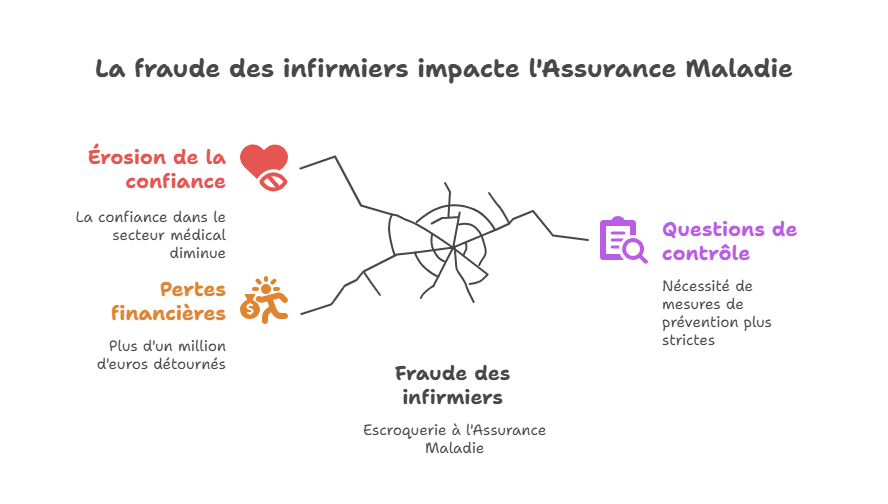
An extraordinary trial in Alençon: presentation of the major fraud case
An extraordinary judicial event is currently taking place at the Alençon criminal court, highlighting a case of fraud of a rare scale against Health Insurance. Two self-employed nurses, a now separated couple, are prosecuted for squandering more than one million euros through a fraudulent system that affects not only the primary health insurance fund (CPAM) of Orne but also several partner health mutuals. This trial thus addresses a major challenge for justice in the fight against social institutions’ fraud.
The case was revealed following a report by the Alençon CPAM in September 2021 after detecting significant anomalies in the couple’s declarations. Despite the complexity of the mechanisms used, the investigation was based on an impressive body of documentation: approximately 84 kilograms of files meticulously analyzed by the Alençon Public Prosecutor’s Office in collaboration with the Interministerial Research Group (GIR) of Caen. From 2016 to 2022, illegal activities persisted, involving fictitious acts, overbilling, and abusive increases of declared mileage expenses.
The fact that two healthcare professionals are at the origin of such fraud raises particular concerns, given that society relies heavily on trust in the medical profession. Health Insurance, a cornerstone of funding healthcare for the French population, is thus compromised by these maneuvers. The situation raises fundamental questions about control measures and abuse prevention in the medical field.
It should be noted that the trial of these nurses, aged 63 and 55 respectively, spans two days, reflecting the scale and complexity of the case. Among the charges, the prosecutors have retained fraud and money laundering; this demonstrates a determined effort by the justice system to combat these offenses.
- 📚 Volume of investigation: 84 kg of documents analyzed
- 📅 Fraud period: 2016-2022
- 💶 Diverted sum: over 1 million euros
- ⚖️ Charges: fraud and money laundering
| Key Element | Associated Data | Impact |
|---|---|---|
| Duration of fraud | 6 years (2016–2022) | Allows significant accumulation of sums |
| Size of investigation dossier | 84 kilograms of documents | Reflects considerable complexity |
| Amount diverted | Over one million euros | Serious impact on public finances |
| Number of accused | 2 nurses | Rare case in the medical sector |
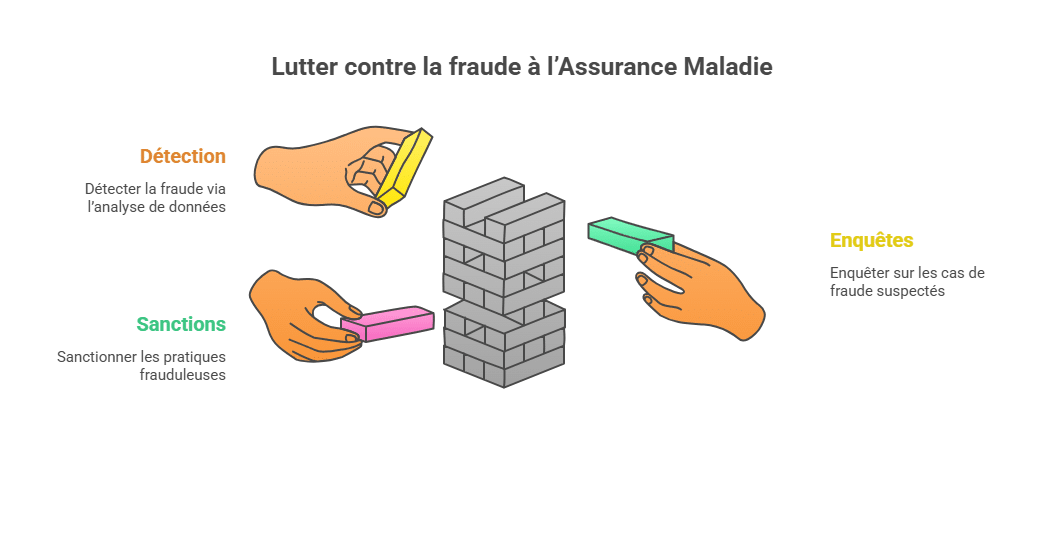
National Context of Fraud in France’s Health Insurance
Fraud against Health Insurance represents a major financial and political challenge for the French state. Each year, the National Health Insurance Fund (CNAM) detects between 300 and 400 million euros worth of frauds, involving all actors (health professionals, insured persons, facilities, pharmacies). Although substantial, this amount only covers part of the actual fraud, much of which remains difficult to identify.
The fight against these practices has intensified over the past decade, with the creation of specialized anti-fraud units, increased use of data analysis, and targeted campaigns on high-risk professions. Self-employed nurses are among the professions under close surveillance, as their frequent acts and recurring billing constitute a significant volume of public expenditure.
The main types of fraud include:
-
Billing for fictitious acts, never performed;
-
Overbilling, involving inflating the cost of services;
-
Misappropriation of Vitale cards ;
-
Falsified prescriptions ;
-
Trafficking in reimbursed medicines.
This national context helps better understand why the Alençon trial is so significant: it illustrates both the sophistication of fraud schemes and the determination of judicial and health authorities to impose strict sanctions.
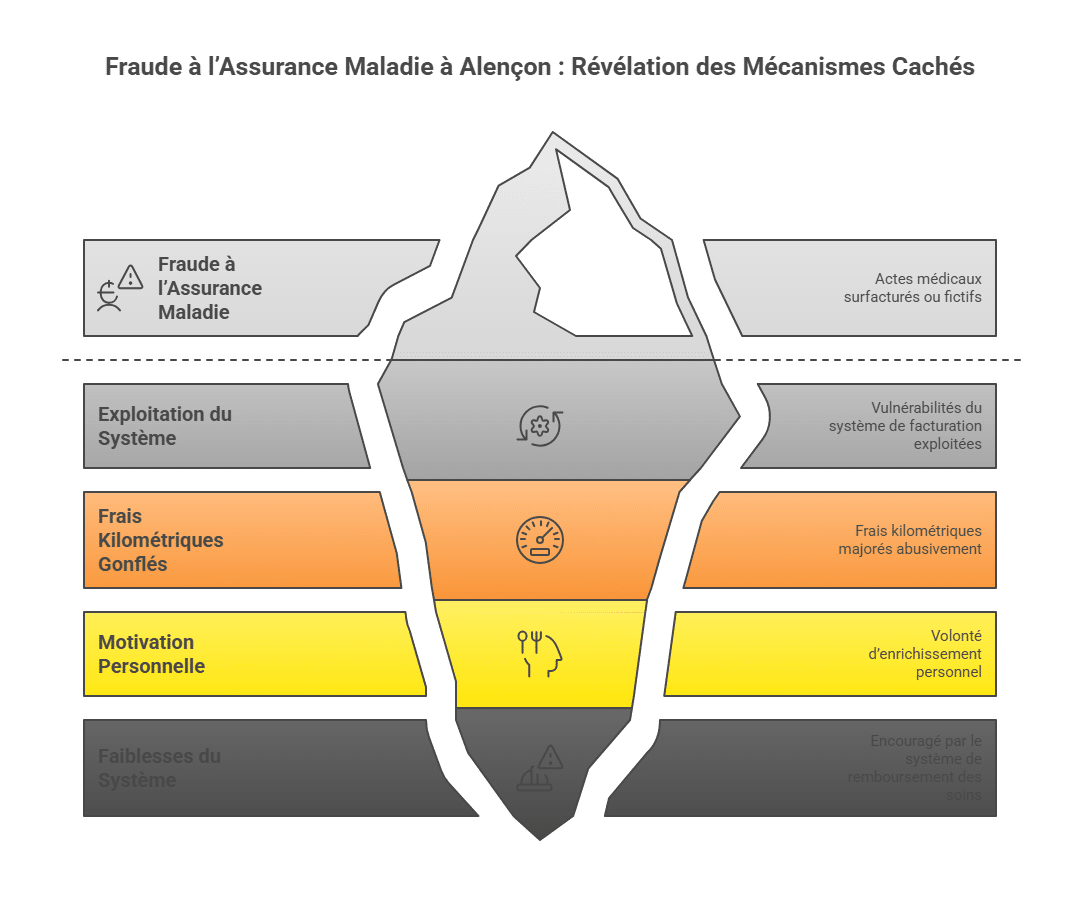
Investigation and Detailed Fraud Mechanisms in Alençon’s Health Insurance Fraud
The precise functioning of the fraud system implemented by the two nurses involves a cunning but strictly illegal modus operandi. Investigations have uncovered several techniques aimed at artificially inflating reimbursements for medical care provided.
Among these practices, fictitious acts and overbilling appear as major means of inflating illicit receipts. Indeed, the healthcare providers allegedly declared acts that were never performed, or repeatedly increased the prices of services, misleading the Health Insurance and mutual health organizations.
Overbilling was particularly observed in services such as injections, dressings, or nursing visits, where billing was found to be excessively high in some cases. The automated billing and reimbursement system, despite its efficiency, revealed vulnerabilities exploited by these unscrupulous professionals.
Another crucial element was the inflation of mileage costs. The kilometers billed far exceeded actual trips, allowing for artificial increases in reimbursements. This practice was thoroughly documented by CPAM, triggering an in-depth investigation.
- 🩺 Surreptitious or fictitious medical acts
- 🚗 Abusively inflated mileage expenses
- 📊 Exploitation of billing system vulnerabilities
- 📅 Extended period facilitating accumulation
The fraudulent system didn’t target only public health insurance. Several health mutuals involved in reimbursements also suffered significant financial damage. These, generally partners in supplementary health, saw suspicious reimbursement requests multiply, leading to substantial losses.
One of the defendants admitted the facts during the hearing, acknowledging an intent to personal enrichment. He stated that he was “encouraged by the very system of care reimbursements,” highlighting a broader issue regarding the organization and internal controls implemented by paying organizations.
| Type of Fraud | Mechanism | Consequences |
|---|---|---|
| Fictitious acts | Billing for care not performed | Significant financial losses for Health Insurance |
| Overbilling | Excessive increase in billed rates | Distortion of healthcare expenditures |
| Inflated mileage expenses | Billing for nonexistent or exaggerated trips | Undue increases in reimbursements |

Profile of Nurses and Their Place in the French Healthcare System
The protagonists of this case are a couple of self-employed nurses practicing in Orne. The choice of this profession is far from trivial: nurses play a central role in the care chain, especially in the daily monitoring of patients needing home care. Their intervention is largely reimbursed by Health Insurance, making them essential links in the health system.
The self-employed status grants these caregivers relative independence in managing their activities but also increased responsibility for accuracy in declarations and transparency of acts performed. This explains why the detection of a fraudulent system in this sector is particularly serious, undermining public trust.
According to evidence collected during the trial, while the man fully admitted to setting up the fraud, including modifying prescriptions and overbilling, his ex-partner adopted a more nuanced stance. She claims to have acted in good faith, following her partner’s advice. This dissociation of responsibilities highlights the complexity of cases involving multiple actors in fraud.
- 🏥 Daily home interventions
- 📋 Autonomous management of prescriptions and declarations
- 🛡️ Fundamental role in the care pathway
- ⚖️ Significant responsibilities regarding the law and ethics
The specificity of the self-employed nurse profession makes it a sensitive field, often subject to thorough controls. It is noteworthy that the infractions detected in this case have increased calls for stricter oversight to prevent collaboration from being diverted from appropriate care and reimbursement processes.
| Professional Aspect | Particularities | Risks in case of fraud |
|---|---|---|
| Independence of practice | Autonomous management of billed acts | Opportunities for illegal overbilling |
| Role with patients | Frequent follow-up, interdependence of care | Risk of damaging public trust |
| Professional controls | Verification visits and audits | Potential corrective and judicial measures |
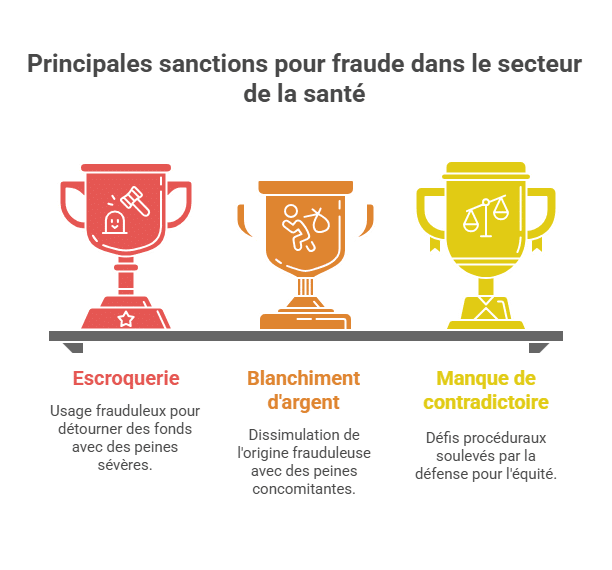
Legal Aspects: Criminal Law and Sanctions Related to Healthcare Fraud
At the heart of this trial in Alençon lies the implementation of criminal law to punish acts qualified as fraud and money laundering. Based on evidence gathered during the investigation, the two nurses face harsh penalties, potentially up to seven years in prison and a fine of €750,000.
The judicial system is thus engaged in a determined effort to send a strong message against this type of offense that harms social organizations and indirectly all insured persons. The nature of these offenses requires a rigorous procedure, in which the rights of the defense also face crucial issues.
At the start of the debates, defense lawyers sought to recalibrate the justice system by requesting the annulment of the proceedings, citing a lack of adversarial process. This nullity claim was joined to the merits, a procedural point that adds to the legal complexity of the case.
- ⚖️ Offenses: fraud and money laundering
- ⏳ Maximum sentence duration: 7 years in prison
- 💰 Potentially high fines: up to €750,000
- 📑 Complex judicial procedure including appeals
The use of health law reminds us of how tightly legal regulations govern medical practice and associated remunerations. The legal principles also establish an essential ethical framework to ensure a balance between patient care and system financial sustainability.
| Offense | Legal Qualification | Sanction Faced |
|---|---|---|
| Fraud | Fraudulent use to divert funds | 7 years in prison + fines up to €750,000 |
| Money laundering | Action to conceal the criminal origin | Penalties concurrent with fraud |
Legal Framework and Applicable Texts
The case legally relies on several legal foundations:
-
Article 313-1 of the Penal Code: defines fraud as “the act, either by the use of a false name or false quality, or by abuse of a true quality, or through fraudulent maneuvers, to deceive a natural or legal person and thereby induce them to transfer funds”.
-
Article 324-1 of the Penal Code: punishes money laundering, i.e., facilitating the false justification of the origin of goods or income of a crime or misdemeanor’s perpetrator.
-
Articles L.114-13 and following of the Social Security Code: regulate social fraud and allow CPAM to initiate civil proceedings to seek reparation.
Penalties can reach up to 7 years in prison and €750,000 fine, or more in cases of aggravating circumstances (e.g., organized gang).
Case law shows that several similar cases have been heavily sanctioned in recent years: in 2022, a nurse from Bouches-du-Rhône was sentenced to 5 years of imprisonment and a €300,000 fine for comparable practices. This severity reflects a strict stance adopted by criminal courts in cases of social fraud.
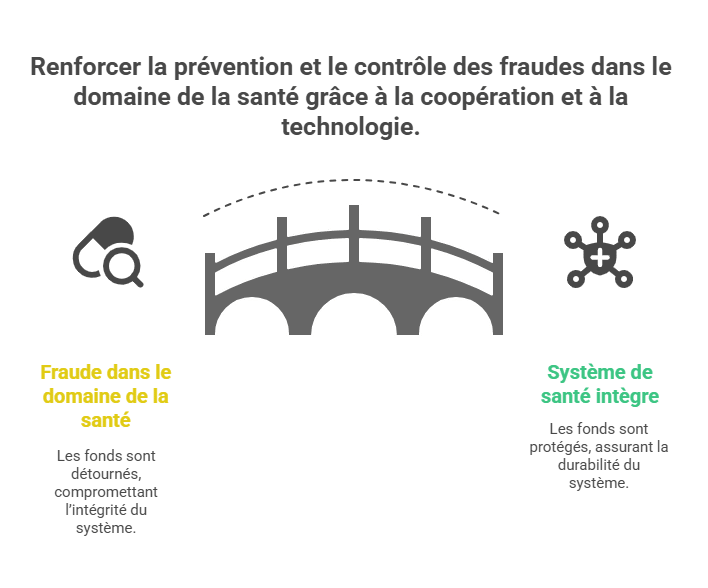
Control and Prevention Measures for Healthcare Fraud
In the face of cases like that of Alençon, justice, social agencies such as Health Insurance, and administrative authorities are increasing efforts to strengthen fraud prevention and control. Monitoring systems now rely on several strategic axes aimed at limiting the risk of diversion.
First, the implementation of enhanced audit systems using advanced IT tools allows for the quick detection of anomalies in declarations. These techniques cross-reference billing data, usual activity patterns, and profiles of healthcare providers. Thus, an automatic data analysis triggered a report in Alençon.
Next, training and awareness-raising among professionals are key levers to prevent fraudulent behavior. Many calls are made to reinforce ethics and individual responsibility among nurses and other healthcare actors.
- 🔎 Strengthening investigative tools and techniques
- 🤝 Improved inter-institutional cooperation
- 📜 Legislative and regulatory reforms
- 🛡️ Protecting trust in the medical sector
| Challenge | Proposed Solution | Expected Impact |
|---|---|---|
| Complexity of fraud schemes | Enhanced technological tools, judicial training | Better detection and prosecution |
| Inter-institutional coordination | Information sharing and stronger collaborations | Optimized investigations |
| Regulatory framework | Legislative reforms for clarity and severity | Increased prevention |
International Comparison: How Other Countries Fight Medical Fraud
Fraud in healthcare systems is not unique to France. Other European countries have implemented specific systems:
-
🇩🇪 Germany: extensive use of predictive analysis tools and real-time cross-referencing of billing data, enabling rapid anomaly detection.
-
🇬🇧 United Kingdom: existence of a Counter Fraud Authority dedicated to the NHS, with investigative powers close to those of police services.
-
🇳🇱 Netherlands: very heavy administrative sanctions and close cooperation between private insurers and public authorities.
France tends to approach these models by developing automated and interconnected systems, but still needs to strengthen exchanges between jurisdictions, CPAM, and mutual health organizations. This comparison underscores that fighting fraud is now a European issue, requiring coordination and innovation.
Chronology of the Alençon Case
| Date | Main Event |
|---|---|
| 2016 | Presumed start of fraudulent practices |
| Sept. 2021 | CPAM report in Alençon after detecting anomalies |
| 2022 | End of illegal activities and initiation of judicial proceedings |
| 2023 | In-depth judicial investigation (84 kg of files analyzed) |
| Oct. 2025 | Start of trial at the Alençon criminal court |
Lessons and Reform Proposals
This case highlights several areas for improvement to reinforce the fight against healthcare fraud:
-
💻 Modernization of control tools: increased use of artificial intelligence to identify suspicious patterns.
-
🧠 Enhanced legal training for professionals to better understand their obligations.
-
🏛️ Targeted legislative reforms to clarify sanctions and speed up procedures.
-
🤝 Strengthening inter-institutional cooperation, especially between CNAM, mutuals, and criminal courts.
-
🌐 European coordination for handling cross-border cases and harmonizing sanctions.
These avenues, combined with clear communication to insured persons and professionals, are essential to restore trust and ensure the financial sustainability of the French healthcare system.
Conclusion
The Alençon trial goes far beyond a simple criminal case: it reveals the systemic flaws of a reimbursement mechanism based on trust and good faith of healthcare professionals. In the face of increasingly sophisticated frauds, criminal justice and social organizations must combine legal rigor, technological modernization, and enhanced cooperation to preserve the integrity of the healthcare system.
This case also marks a turning point in the public perception of medical fraud: it reminds us that every diverted euro weakens national solidarity. Future reforms must reconcile effectiveness of control and protection of medical activity, to guarantee the sustainability of a model based on mutual trust between caregivers, insured persons, and institutions.
FAQ: Key Questions about the Infirmiers’ Fraud Case in Alençon
- 🧐 Who are the defendants in this case?
A couple of self-employed nurses practicing in Alençon, aged 63 and 55, prosecuted for Fraud against Health Insurance. - 📅 What is the duration of the fraud?
Their fraudulent system spanned over six years, from 2016 to 2022. - 💶 What is the amount diverted?
More than one million euros have been embezzled from social agencies and mutuals. - ⚖️ What sanctions do they face?
Up to seven years in prison and a €750,000 fine if convicted. - 🔍 How was the investigation conducted?
Through collaboration between the Alençon Public Prosecutor’s Office and the Caen Interministerial Research Group, examining a large file of 84 kg.
For further information, consult detailed articles on France Actu Normandy, Alençon Maville, and specific analyses on Aide BTS Assurance.
Source: france3-regions.francetvinfo.fr
- ⚖️ Defense claims procedural flaws
- 📝 Partial acknowledgment of facts by the principal accused
- 💬 Nuanced position of the co-defendant
- 📅 Scheduled for two days, with expected continuation
| Element | Defendants’ Position | Defense Arguments | Prosecutor’s Response |
|---|---|---|---|
| Procedure | Accepted with reservations | Request for annulment due to procedural flaws | Proceeding maintained and examined thoroughly |
| Responsibility | Man: full responsibility Woman: in good faith |
Minimization of complicity for the woman | Charges continue |
Institutional and Medical Community Reactions
The Alençon case has elicited strong reactions from healthcare actors and oversight agencies.
On the side of CPAM of Orne, the leadership praised internal detection systems’ responsiveness and emphasized that “these isolated cases should not overshadow the integrity of the vast majority of professionals”.
The Alençon Public Prosecutor’s Office stressed the importance of the process: “This case sends a clear message: fraud against social agencies is not mere administrative irregularity but serious criminal offenses that affect national solidarity.”
The National Nursing Order expressed concern about behaviors that “undermine public trust in an essential profession within the healthcare system”. Calls to strengthen legal and ethical training for self-employed nurses have been reiterated.
These institutional reactions show that this case goes beyond the protagonists: it questions the entire system’s ability to maintain its credibility.
Perspectives and Challenges for Criminal Justice in Combating Health Sector Fraud
This emblematic case of fraud in Health Insurance fits into a broader dynamic of redefining the role of criminal justice in combating misconduct in the healthcare sector. It reveals the strengths and limitations of current procedures as well as possible avenues for improvement.
A key issue is clearly the need for increased means to investigate sometimes highly technical schemes involving multiple actors and voluminous documents. Collaboration between judicial services and social organizations is crucial, as illustrated by the coordination between the Alençon Prosecutor’s Office and the Caen GIR, which enabled significant progress in this case.
Finally, this judicial episode deepens reflection on adapting the legal and institutional framework to enhance prevention without hindering medical activity. Transparency, training, and appropriate sanctions remain the pillars of effective action against fraud, ensuring system sustainability and citizen trust.
- 🔎 Strengthening investigative tools and techniques
- 🤝 Improved inter-institutional cooperation
- 📜 Legislative and regulatory reforms
- 🛡️ Protecting trust in the medical sector
| Challenge | Proposed Solution | Expected Impact |
|---|---|---|
| Complexity of fraud schemes | Enhanced technological tools, judicial training | Better detection and prosecution |
| Inter-institutional coordination | Information sharing and stronger collaborations | Optimized investigations |
| Regulatory framework | Legislative reforms for clarity and severity | Increased prevention |
International Comparison: How Other Countries Fight Medical Fraud
Fraud in healthcare systems is not unique to France. Other European countries have implemented specific systems:
-
🇩🇪 Germany: extensive use of predictive analysis tools and real-time cross-referencing of billing data, enabling rapid anomaly detection.
-
🇬🇧 United Kingdom: existence of a Counter Fraud Authority dedicated to the NHS, with investigative powers close to those of police services.
-
🇳🇱 Netherlands: very heavy administrative sanctions and close cooperation between private insurers and public authorities.
France tends to approach these models by developing automated and interconnected systems, but still needs to strengthen exchanges between jurisdictions, CPAM, and mutual health organizations. This comparison underscores that fighting fraud is now a European issue, requiring coordination and innovation.
Chronology of the Alençon Case
| Date | Main Event |
|---|---|
| 2016 | Presumed start of fraudulent practices |
| Sept. 2021 | CPAM report in Alençon after detecting anomalies |
| 2022 | End of illegal activities and initiation of judicial proceedings |
| 2023 | In-depth judicial investigation (84 kg of files analyzed) |
| Oct. 2025 | Start of trial at the Alençon criminal court |
Lessons and Reform Proposals
This case highlights several areas for improvement to reinforce the fight against healthcare fraud:
-
💻 Modernization of control tools: increased use of artificial intelligence to identify suspicious patterns.
-
🧠 Enhanced legal training for professionals to better understand their obligations.
-
🏛️ Targeted legislative reforms to clarify sanctions and speed up procedures.
-
🤝 Strengthening inter-institutional cooperation, especially between CNAM, mutuals, and criminal courts.
-
🌐 European coordination for handling cross-border cases and harmonizing sanctions.
These avenues, combined with clear communication to insured persons and professionals, are essential to restore trust and ensure the financial sustainability of the French healthcare system.
Conclusion
The Alençon trial goes far beyond a simple criminal case: it reveals the systemic flaws of a reimbursement mechanism based on trust and good faith of healthcare professionals. In the face of increasingly sophisticated frauds, criminal justice and social organizations must combine legal rigor, technological modernization, and enhanced cooperation to preserve the integrity of the healthcare system.
This case also marks a turning point in the public perception of medical fraud: it reminds us that every diverted euro weakens national solidarity. Future reforms must reconcile effectiveness of control and protection of medical activity, to guarantee the sustainability of a model based on mutual trust between caregivers, insured persons, and institutions.
FAQ: Key Questions about the Infirmiers’ Fraud Case in Alençon
- 🧐 Who are the defendants in this case?
A couple of self-employed nurses practicing in Alençon, aged 63 and 55, prosecuted for Fraud against Health Insurance. - 📅 What is the duration of the fraud?
Their fraudulent system spanned over six years, from 2016 to 2022. - 💶 What is the amount diverted?
More than one million euros have been embezzled from social agencies and mutuals. - ⚖️ What sanctions do they face?
Up to seven years in prison and a €750,000 fine if convicted. - 🔍 How was the investigation conducted?
Through collaboration between the Alençon Public Prosecutor’s Office and the Caen Interministerial Research Group, examining a large file of 84 kg.
For further information, consult detailed articles on France Actu Normandy, Alençon Maville, and specific analyses on Aide BTS Assurance.
Source: france3-regions.francetvinfo.fr
- 📉 Major budget impact for Health Insurance
- 🔄 Need for financial recovery measures
- 🤝 Loss of trust in healthcare professionals
- ⚠️ Risks for access and quality of care
| Consequences | Description | Scale |
|---|---|---|
| Financial pressure | Reduction of resources available for all insured persons | National |
| Public image of nurses | Damage to social trust | Local and national |
| Access to care | Risks of restrictions or reimbursement cuts | Potential international scope |
Trial Progress and Stakes: Parties’ Positions and Judicial Strategy
The trial currently taking place at the Alençon court presents contrasting strategies between the defense and the prosecution. From the outset, the defense lawyers requested the nullity of the proceedings, citing a lack of adversarial process and procedural flaws during the investigation. However, the court decided to join this nullity issue to the substantive case, ensuring the continuation of the proceedings.
The defendants themselves adopt divergent positions: the man fully admits the facts, recognizing a personal enrichment motive which he partially attributes to a flaw in the reimbursement system. Conversely, the woman defends herself by arguing a lack of fraudulent intent, emphasizing her good faith and concern for patient well-being.
Ongoing debates will shed light on the evidence accumulated by justice, the testimonies, and the actual implications of the fraud. The Alençon prosecution emphasizes the importance of this unprecedented process to reaffirm the principles of integrity and transparency in financial management.
- ⚖️ Defense claims procedural flaws
- 📝 Partial acknowledgment of facts by the principal accused
- 💬 Nuanced position of the co-defendant
- 📅 Scheduled for two days, with expected continuation
| Element | Defendants’ Position | Defense Arguments | Prosecutor’s Response |
|---|---|---|---|
| Procedure | Accepted with reservations | Request for annulment due to procedural flaws | Proceeding maintained and examined thoroughly |
| Responsibility | Man: full responsibility Woman: in good faith |
Minimization of complicity for the woman | Charges continue |
Institutional and Medical Community Reactions
The Alençon case has elicited strong reactions from healthcare actors and oversight agencies.
On the side of CPAM of Orne, the leadership praised internal detection systems’ responsiveness and emphasized that “these isolated cases should not overshadow the integrity of the vast majority of professionals”.
The Alençon Public Prosecutor’s Office stressed the importance of the process: “This case sends a clear message: fraud against social agencies is not mere administrative irregularity but serious criminal offenses that affect national solidarity.”
The National Nursing Order expressed concern about behaviors that “undermine public trust in an essential profession within the healthcare system”. Calls to strengthen legal and ethical training for self-employed nurses have been reiterated.
These institutional reactions show that this case goes beyond the protagonists: it questions the entire system’s ability to maintain its credibility.
Perspectives and Challenges for Criminal Justice in Combating Health Sector Fraud
This emblematic case of fraud in Health Insurance fits into a broader dynamic of redefining the role of criminal justice in combating misconduct in the healthcare sector. It reveals the strengths and limitations of current procedures as well as possible avenues for improvement.
A key issue is clearly the need for increased means to investigate sometimes highly technical schemes involving multiple actors and voluminous documents. Collaboration between judicial services and social organizations is crucial, as illustrated by the coordination between the Alençon Prosecutor’s Office and the Caen GIR, which enabled significant progress in this case.
Finally, this judicial episode deepens reflection on adapting the legal and institutional framework to enhance prevention without hindering medical activity. Transparency, training, and appropriate sanctions remain the pillars of effective action against fraud, ensuring system sustainability and citizen trust.
- 🔎 Strengthening investigative tools and techniques
- 🤝 Improved inter-institutional cooperation
- 📜 Legislative and regulatory reforms
- 🛡️ Protecting trust in the medical sector
| Challenge | Proposed Solution | Expected Impact |
|---|---|---|
| Complexity of fraud schemes | Enhanced technological tools, judicial training | Better detection and prosecution |
| Inter-institutional coordination | Information sharing and stronger collaborations | Optimized investigations |
| Regulatory framework | Legislative reforms for clarity and severity | Increased prevention |
International Comparison: How Other Countries Fight Medical Fraud
Fraud in healthcare systems is not unique to France. Other European countries have implemented specific systems:
-
🇩🇪 Germany: extensive use of predictive analysis tools and real-time cross-referencing of billing data, enabling rapid anomaly detection.
-
🇬🇧 United Kingdom: existence of a Counter Fraud Authority dedicated to the NHS, with investigative powers close to those of police services.
-
🇳🇱 Netherlands: very heavy administrative sanctions and close cooperation between private insurers and public authorities.
France tends to approach these models by developing automated and interconnected systems, but still needs to strengthen exchanges between jurisdictions, CPAM, and mutual health organizations. This comparison underscores that fighting fraud is now a European issue, requiring coordination and innovation.
Chronology of the Alençon Case
| Date | Main Event |
|---|---|
| 2016 | Presumed start of fraudulent practices |
| Sept. 2021 | CPAM report in Alençon after detecting anomalies |
| 2022 | End of illegal activities and initiation of judicial proceedings |
| 2023 | In-depth judicial investigation (84 kg of files analyzed) |
| Oct. 2025 | Start of trial at the Alençon criminal court |
Lessons and Reform Proposals
This case highlights several areas for improvement to reinforce the fight against healthcare fraud:
-
💻 Modernization of control tools: increased use of artificial intelligence to identify suspicious patterns.
-
🧠 Enhanced legal training for professionals to better understand their obligations.
-
🏛️ Targeted legislative reforms to clarify sanctions and speed up procedures.
-
🤝 Strengthening inter-institutional cooperation, especially between CNAM, mutuals, and criminal courts.
-
🌐 European coordination for handling cross-border cases and harmonizing sanctions.
These avenues, combined with clear communication to insured persons and professionals, are essential to restore trust and ensure the financial sustainability of the French healthcare system.
Conclusion
The Alençon trial goes far beyond a simple criminal case: it reveals the systemic flaws of a reimbursement mechanism based on trust and good faith of healthcare professionals. In the face of increasingly sophisticated frauds, criminal justice and social organizations must combine legal rigor, technological modernization, and enhanced cooperation to preserve the integrity of the healthcare system.
This case also marks a turning point in the public perception of medical fraud: it reminds us that every diverted euro weakens national solidarity. Future reforms must reconcile effectiveness of control and protection of medical activity, to guarantee the sustainability of a model based on mutual trust between caregivers, insured persons, and institutions.
FAQ: Key Questions about the Infirmiers’ Fraud Case in Alençon
- 🧐 Who are the defendants in this case?
A couple of self-employed nurses practicing in Alençon, aged 63 and 55, prosecuted for Fraud against Health Insurance. - 📅 What is the duration of the fraud?
Their fraudulent system spanned over six years, from 2016 to 2022. - 💶 What is the amount diverted?
More than one million euros have been embezzled from social agencies and mutuals. - ⚖️ What sanctions do they face?
Up to seven years in prison and a €750,000 fine if convicted. - 🔍 How was the investigation conducted?
Through collaboration between the Alençon Public Prosecutor’s Office and the Caen Interministerial Research Group, examining a large file of 84 kg.
For further information, consult detailed articles on France Actu Normandy, Alençon Maville, and specific analyses on Aide BTS Assurance.
Source: france3-regions.francetvinfo.fr
- 🔍 Use of digital tools for anomaly detection
- 📘 Ongoing training programs and ethics codes
- ⚠️ Rapid reporting by funds and mutual health organizations
- 🛑 Random checks and surprise visits
It is essential that these measures are complemented by close cooperation between different institutions, including insurance funds, judicial authorities, and professional organizations. This coordination aims to optimize the fight against fraud, protecting the integrity of the healthcare system.
| Preventive Measure | Method | Purpose |
|---|---|---|
| Automated detection | Automated billing analysis systems | Rapid anomaly identification |
| Professional awareness | Training and codes of conduct | Limiting fraudulent behaviors |
| Surprise controls | On-site visits and audits | Verification of compliance |
Economic and Social Impacts of a Massive Fraud in Health Insurance
The financial magnitude of the one million euros diverted in this case raises concerns about the economic and social consequences of such fraud. The dilution of funds directly affects the financial health of social security funds, endangering their capacity to finance care for many insured persons.
Economically, these misconducts increase the risk of exceeding allocated budgets, often leading to corrective measures such as higher contributions or restrictions on certain services. Over time, this can impair access to care for parts of the population.
Socially, the case engenders a sense of distrust towards the nursing profession, vital in the care pathway. The public image of caregivers, often valued, is damaged by isolated but highly publicized behavior. This spotlight calls for vigilance to preserve reputation and confidence in the health sector.
- 📉 Major budget impact for Health Insurance
- 🔄 Need for financial recovery measures
- 🤝 Loss of trust in healthcare professionals
- ⚠️ Risks for access and quality of care
| Consequences | Description | Scale |
|---|---|---|
| Financial pressure | Reduction of resources available for all insured persons | National |
| Public image of nurses | Damage to social trust | Local and national |
| Access to care | Risks of restrictions or reimbursement cuts | Potential international scope |
Trial Progress and Stakes: Parties’ Positions and Judicial Strategy
The trial currently taking place at the Alençon court presents contrasting strategies between the defense and the prosecution. From the outset, the defense lawyers requested the nullity of the proceedings, citing a lack of adversarial process and procedural flaws during the investigation. However, the court decided to join this nullity issue to the substantive case, ensuring the continuation of the proceedings.
The defendants themselves adopt divergent positions: the man fully admits the facts, recognizing a personal enrichment motive which he partially attributes to a flaw in the reimbursement system. Conversely, the woman defends herself by arguing a lack of fraudulent intent, emphasizing her good faith and concern for patient well-being.
Ongoing debates will shed light on the evidence accumulated by justice, the testimonies, and the actual implications of the fraud. The Alençon prosecution emphasizes the importance of this unprecedented process to reaffirm the principles of integrity and transparency in financial management.
- ⚖️ Defense claims procedural flaws
- 📝 Partial acknowledgment of facts by the principal accused
- 💬 Nuanced position of the co-defendant
- 📅 Scheduled for two days, with expected continuation
| Element | Defendants’ Position | Defense Arguments | Prosecutor’s Response |
|---|---|---|---|
| Procedure | Accepted with reservations | Request for annulment due to procedural flaws | Proceeding maintained and examined thoroughly |
| Responsibility | Man: full responsibility Woman: in good faith |
Minimization of complicity for the woman | Charges continue |
Institutional and Medical Community Reactions
The Alençon case has elicited strong reactions from healthcare actors and oversight agencies.
On the side of CPAM of Orne, the leadership praised internal detection systems’ responsiveness and emphasized that “these isolated cases should not overshadow the integrity of the vast majority of professionals”.
The Alençon Public Prosecutor’s Office stressed the importance of the process: “This case sends a clear message: fraud against social agencies is not mere administrative irregularity but serious criminal offenses that affect national solidarity.”
The National Nursing Order expressed concern about behaviors that “undermine public trust in an essential profession within the healthcare system”. Calls to strengthen legal and ethical training for self-employed nurses have been reiterated.
These institutional reactions show that this case goes beyond the protagonists: it questions the entire system’s ability to maintain its credibility.
Perspectives and Challenges for Criminal Justice in Combating Health Sector Fraud
This emblematic case of fraud in Health Insurance fits into a broader dynamic of redefining the role of criminal justice in combating misconduct in the healthcare sector. It reveals the strengths and limitations of current procedures as well as possible avenues for improvement.
A key issue is clearly the need for increased means to investigate sometimes highly technical schemes involving multiple actors and voluminous documents. Collaboration between judicial services and social organizations is crucial, as illustrated by the coordination between the Alençon Prosecutor’s Office and the Caen GIR, which enabled significant progress in this case.
Finally, this judicial episode deepens reflection on adapting the legal and institutional framework to enhance prevention without hindering medical activity. Transparency, training, and appropriate sanctions remain the pillars of effective action against fraud, ensuring system sustainability and citizen trust.
- 🔎 Strengthening investigative tools and techniques
- 🤝 Improved inter-institutional cooperation
- 📜 Legislative and regulatory reforms
- 🛡️ Protecting trust in the medical sector
| Challenge | Proposed Solution | Expected Impact |
|---|---|---|
| Complexity of fraud schemes | Enhanced technological tools, judicial training | Better detection and prosecution |
| Inter-institutional coordination | Information sharing and stronger collaborations | Optimized investigations |
| Regulatory framework | Legislative reforms for clarity and severity | Increased prevention |
International Comparison: How Other Countries Fight Medical Fraud
Fraud in healthcare systems is not unique to France. Other European countries have implemented specific systems:
-
🇩🇪 Germany: extensive use of predictive analysis tools and real-time cross-referencing of billing data, enabling rapid anomaly detection.
-
🇬🇧 United Kingdom: existence of a Counter Fraud Authority dedicated to the NHS, with investigative powers close to those of police services.
-
🇳🇱 Netherlands: very heavy administrative sanctions and close cooperation between private insurers and public authorities.
France tends to approach these models by developing automated and interconnected systems, but still needs to strengthen exchanges between jurisdictions, CPAM, and mutual health organizations. This comparison underscores that fighting fraud is now a European issue, requiring coordination and innovation.
Chronology of the Alençon Case
| Date | Main Event |
|---|---|
| 2016 | Presumed start of fraudulent practices |
| Sept. 2021 | CPAM report in Alençon after detecting anomalies |
| 2022 | End of illegal activities and initiation of judicial proceedings |
| 2023 | In-depth judicial investigation (84 kg of files analyzed) |
| Oct. 2025 | Start of trial at the Alençon criminal court |
Lessons and Reform Proposals
This case highlights several areas for improvement to reinforce the fight against healthcare fraud:
-
💻 Modernization of control tools: increased use of artificial intelligence to identify suspicious patterns.
-
🧠 Enhanced legal training for professionals to better understand their obligations.
-
🏛️ Targeted legislative reforms to clarify sanctions and speed up procedures.
-
🤝 Strengthening inter-institutional cooperation, especially between CNAM, mutuals, and criminal courts.
-
🌐 European coordination for handling cross-border cases and harmonizing sanctions.
These avenues, combined with clear communication to insured persons and professionals, are essential to restore trust and ensure the financial sustainability of the French healthcare system.
Conclusion
The Alençon trial goes far beyond a simple criminal case: it reveals the systemic flaws of a reimbursement mechanism based on trust and good faith of healthcare professionals. In the face of increasingly sophisticated frauds, criminal justice and social organizations must combine legal rigor, technological modernization, and enhanced cooperation to preserve the integrity of the healthcare system.
This case also marks a turning point in the public perception of medical fraud: it reminds us that every diverted euro weakens national solidarity. Future reforms must reconcile effectiveness of control and protection of medical activity, to guarantee the sustainability of a model based on mutual trust between caregivers, insured persons, and institutions.


FAQ: Key Questions about the Infirmiers’ Fraud Case in Alençon
- 🧐 Who are the defendants in this case?
A couple of self-employed nurses practicing in Alençon, aged 63 and 55, prosecuted for Fraud against Health Insurance. - 📅 What is the duration of the fraud?
Their fraudulent system spanned over six years, from 2016 to 2022. - 💶 What is the amount diverted?
More than one million euros have been embezzled from social agencies and mutuals. - ⚖️ What sanctions do they face?
Up to seven years in prison and a €750,000 fine if convicted. - 🔍 How was the investigation conducted?
Through collaboration between the Alençon Public Prosecutor’s Office and the Caen Interministerial Research Group, examining a large file of 84 kg.
For further information, consult detailed articles on France Actu Normandy, Alençon Maville, and specific analyses on Aide BTS Assurance.
Source: france3-regions.francetvinfo.fr

Entraîne-toi avec nos Quiz de révision
Fini les lectures passives. Pour retenir les notions clés du BTS Assurance, teste-toi ! Inscris-toi pour recevoir 1 quiz par jour directement dans ta boîte mail.


