


In summary
| 🧩 Key Skill | 📖 Essential Description |
|---|---|
| 🗣️ Communication Skills | Knowing how to explain technical concepts clearly and actively listen to clients’ needs. |
| 🤝 Customer Relationship | Developing a relationship of trust and handling claims with professionalism and empathy. |
| 💓 Emotional Intelligence and Empathy | Being able to understand clients’ emotions and respond kindly to strengthen loyalty. |
| 📘 Technical Mastery of Insurance Products | Having a deep knowledge of guarantees, exclusions, and contractual conditions. |
| ⚖️ Legal and Regulatory Framework Knowledge | Knowing the laws and obligations of the sector (Hamon law, GDPR, Insurance Code) to ensure compliance. |
| 💼 Sales Skills | Identifying clients’ needs and proposing tailored solutions while practicing ethical sales practices. |
| 🧮 Analysis and Synthesis Skills | Being able to assess risks and present clear conclusions to support decision-making. |
| 🔄 Adaptability | Knowing how to adjust methods and manage unforeseen situations in response to market and client changes. |
| ⏰ Stress Management and Prioritization | Managing urgent situations and organizing work to maintain service quality. |
| 💻 Computer Skills | Using specialized software, databases, and AI tools to improve efficiency. |
| 🎓 Continuing Education and Professional Monitoring | Regularly training oneself and anticipating innovations to stay competitive in a dynamic sector. |
| 📊 Accounting and Finance | Understanding financial principles to ensure profitability and analyze economic data. |
| 🧩 Problem Solving | Knowing how to analyze situations quickly and find suitable solutions. |
| 📋 Precision and Attention to Detail | Verifying the consistency of files and spotting anomalies or errors before validation. |
| 🌱 Ethical Sense and Social Responsibility | Acting with integrity and transparency while incorporating a sustainable and responsible approach. |
The insurance professions are not limited to contract management or financial analysis. Besides mastering essential technical skills, professionals in this sector must demonstrate empathy, precision, and adaptability to meet their clients’ needs.
In other words, a combination of skills is necessary to succeed in the insurance world. But what are these essential aptitudes? Discover our selection of 10 skills required to become a good insurer.
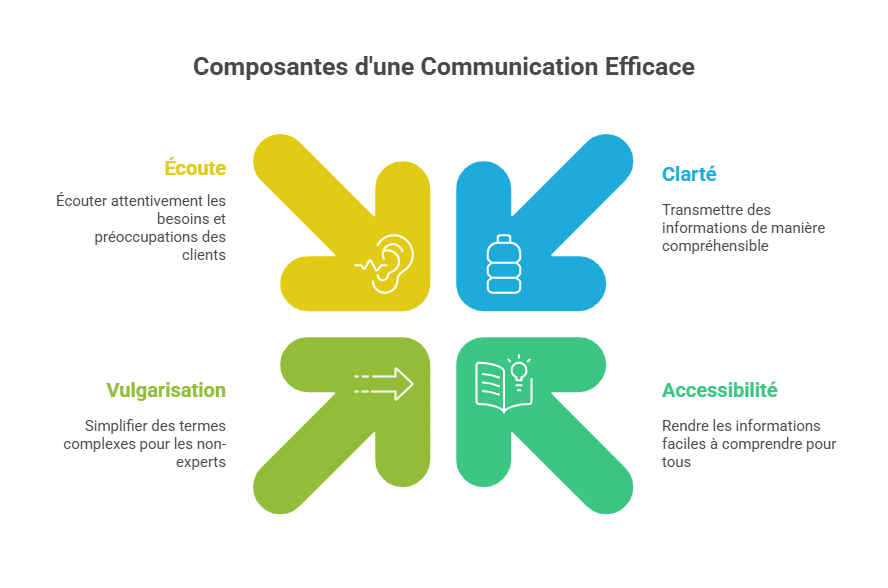
Communication Skills
It’s crucial to know how to convey often complex information in a clear and accessible way.
Knowing how to simplify technical terms, such as guarantees, deductibles, or exclusions, is essential for explaining to clients who may not be familiar with insurance jargon.
Communication is not just about speaking: listening attentively is equally important. Clients seek a good listener to express their needs or concerns.
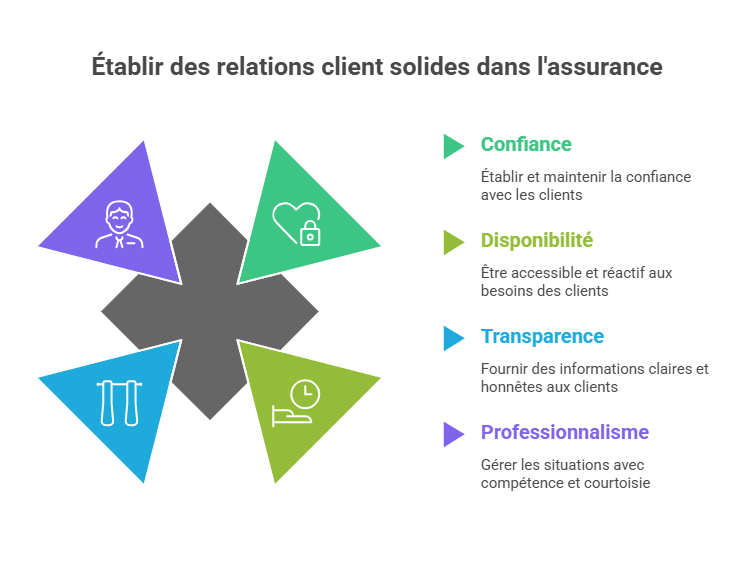
Customer Relationship
Customer relationship is at the heart of insurance professions and a example of skills to include on your CV. You need to succeed in establishing and maintaining a relationship of trust with your clients to ensure their loyalty. In a sector where clients primarily seek security and transparency, good interpersonal skills often make the difference.
Managing customer relationships also requires a proactive approach. It’s essential to remain available, respond quickly to requests, and handle delicate situations, such as complaints or claims, with professionalism.
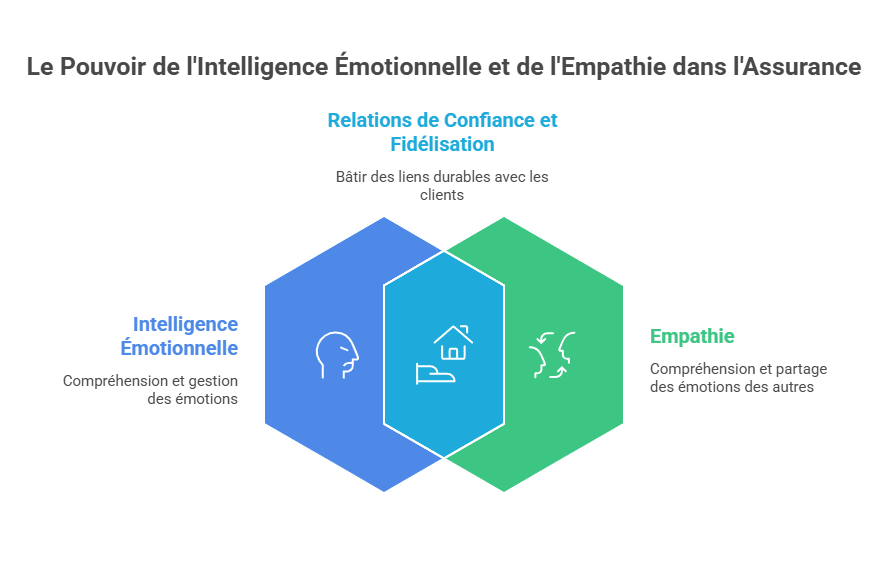
Emotional Intelligence and Empathy
In the insurance world, emotional intelligence is an essential quality for understanding and supporting clients during often difficult moments. A good insurer must be capable of recognizing emotions in their interlocutors and responding with kindness to de-escalate tensions.
This skill fosters a long-term trust relationship and improves client loyalty.
During an insurance claim, for example, a professional capable of remaining calm and being attentive makes all the difference in service perception.
Finally, knowing how to manage one’s own emotions helps prevent impulsive reactions and ensures professional communication even under pressure.
| 🤝 Key Aspect | 💡 Impact on the Profession |
|---|---|
| Recognition of Emotions | Better understanding of the client |
| Empathy and Kindness | Enhanced loyalty |
| Managing Emotional Stress | Improved service quality |
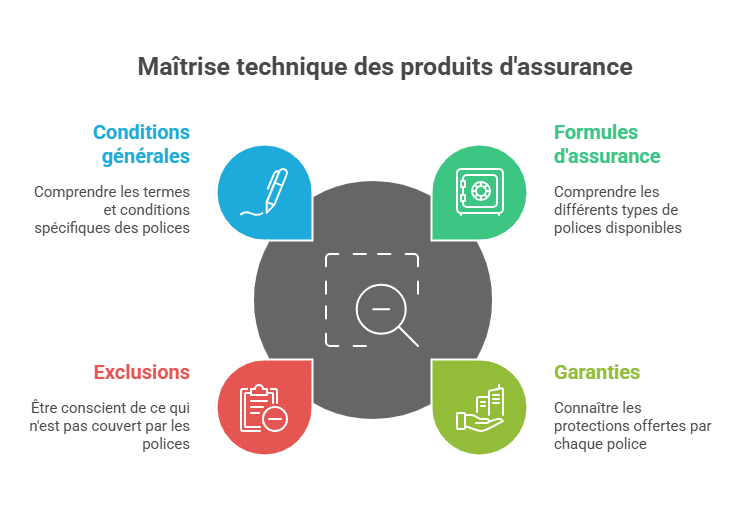
Technical mastery of insurance products
While it may seem obvious, you must have an in-depth knowledge of the various plans, guarantees, exclusions, and general or specific conditions that make up the offers you present to clients.
This technical expertise is essential for giving effective advice and answering questions accurately. Good technical mastery also allows you to explain a contract clearly, by simplifying some concepts.
Knowledge of Legal and Regulatory Framework
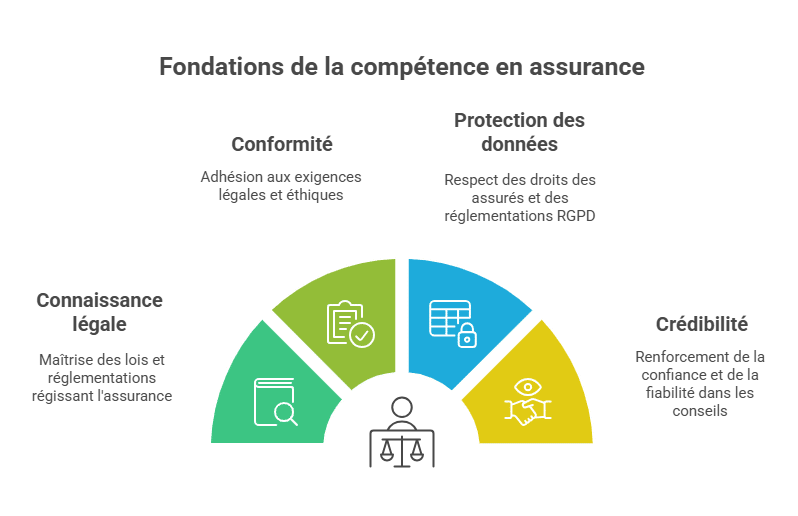
An insurance professional must possess a solid knowledge of the laws governing their activity. This mastery ensures a compliant service with the requirements of the Insurance Code and recent reforms, such as the Hamon law or the Bourquin law.
It is essential to understand the legal obligations, the rights of insureds, and rules related to personal data protection (GDPR).
Thanks to this skill, the advisor can avoid disputes, inform clients clearly, and enhance the credibility of their advice.
| ⚖️ Law / Reform | 📘 Main Objective |
|---|---|
| Hamon Law | Facilitate the termination of insurance contracts |
| Bourquin Law | Provide more freedom in choosing mortgage insurance |
| GDPR | Strengthen personal data protection |
| Insurance Code | Regulate commercial and legal practices |
Sales Aptitude
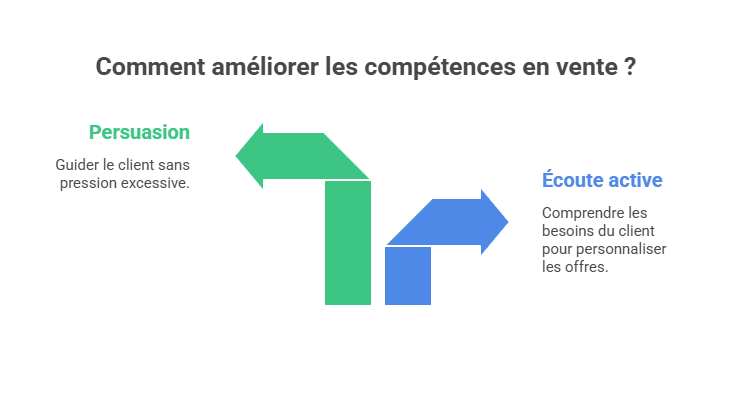
Having sales skills is not just about convincing a client to subscribe to a contract. You must succeed in identifying their needs and offering tailored solutions.
Good sales ability primarily relies on active listening. It helps you understand the client’s expectations to personalize offers and highlight relevant advantages. Persuasion also plays a key role, by guiding the client without exerting excessive pressure.
Analysis and Synthesis Skills
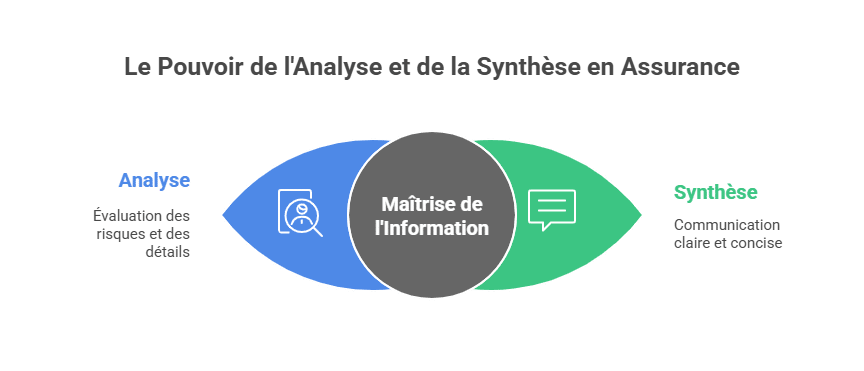
Analysis is essential for evaluating risks and identifying opportunities or gaps in insurance contracts. This skill is especially useful when assessing claims or determining the feasibility of guarantees.
Synthesis involves presenting information clearly and concisely, both for clients and internal teams. The ability to juggle detail and overview is a valuable asset.
Adaptability
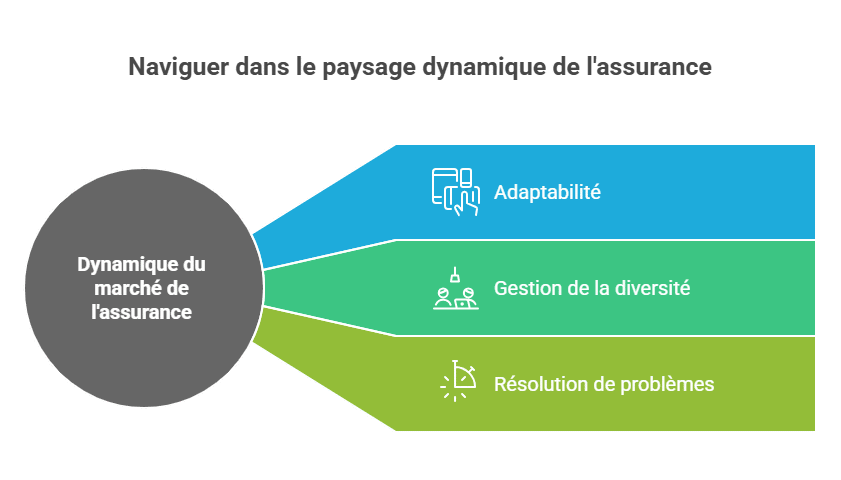
Situations and client needs evolve quickly in the insurance field. It’s important to adjust methods, priorities, and approaches based on market changes or regulatory updates.
Practicing this profession also involves facing a great variety of cases daily. You must be able to switch rapidly between tasks and manage unforeseen events.
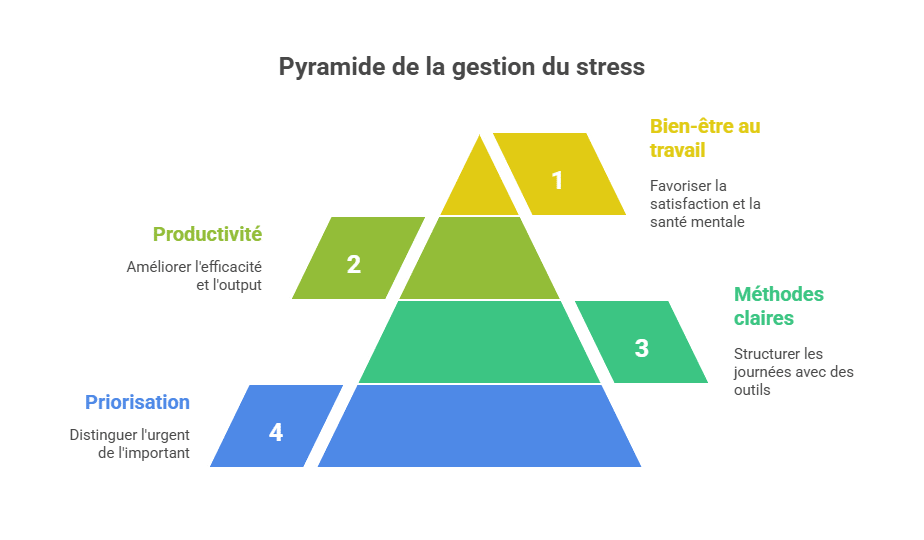
Stress Management and Prioritization
The insurance profession requires a high level of responsiveness and organizational skills to handle the diversity of daily tasks. It’s necessary to know how to manage stress caused by deadlines, emergencies, or dissatisfied clients, while maintaining service quality.
Good time management relies on prioritization: distinguishing what is urgent from what is important.
Effective professionals develop clear methods, such as using shared agendas or CRM software, to structure their days.
This skill boosts productivity and well-being at work, both essential for longevity in this demanding sector.
| 🕓 Management Method | ✅ Main Benefit |
|---|---|
| Priority List | Clear task overview |
| Delegation | Stress reduction |
| CRM and Digital Tools | Optimized organization |
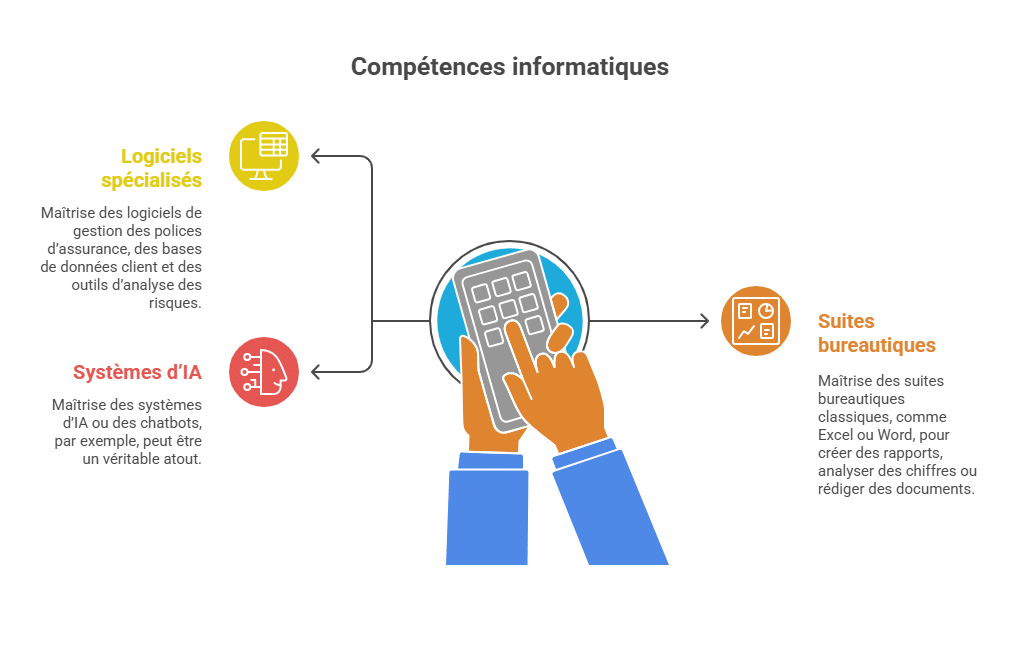
Mastery of Computer Tools and Specialized Software
Among the technical skills required, one must be able to operate insurance policy management software, client databases, and risk analysis tools.
Additionally, proficiency with traditional office suites like Excel or Word remains necessary for creating reports, analyzing figures, or drafting documents. With the democratization of AI, knowing how to master AI systems or chatbots can also be a real asset.
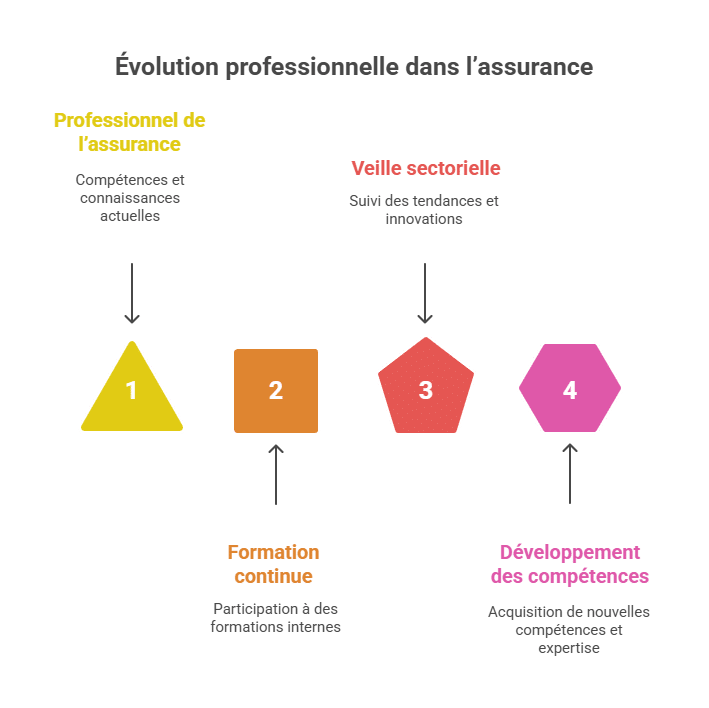
Continuing Education and Professional Monitoring
The insurance sector is in a state of constant evolution, subject to technological, economic, and regulatory changes.
To remain effective, it’s crucial to train regularly and engage in a proactive monitoring of sector trends.
Participating in internal training, taking specialized MOOCs, or attending webinars helps to develop skills and improve the advice quality given to clients.
The most effective insurers are those who anticipate market shifts and adapt quickly to innovations.
| 📈 Training Type | 🎯 Benefit for the Professional |
|---|---|
| Continuing Education | Updating knowledge |
| Webinars or MOOCs | Acquiring new skills |
| Sector Monitoring | Anticipating market trends |
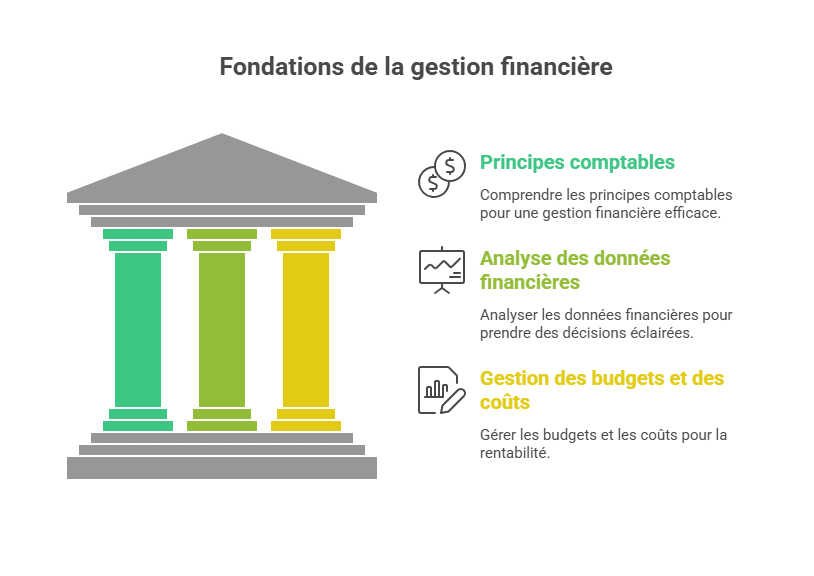
Accounting and Finance
A solid understanding of accounting and financial principles is essential. This enables you to manage the economic aspects of contracts, assess financial risks, and ensure solutions’ profitability.
You need to know how to analyze financial data (premiums, claims, investment results) and understand budgets and costs associated with the insurance products you offer.
Problem-solving
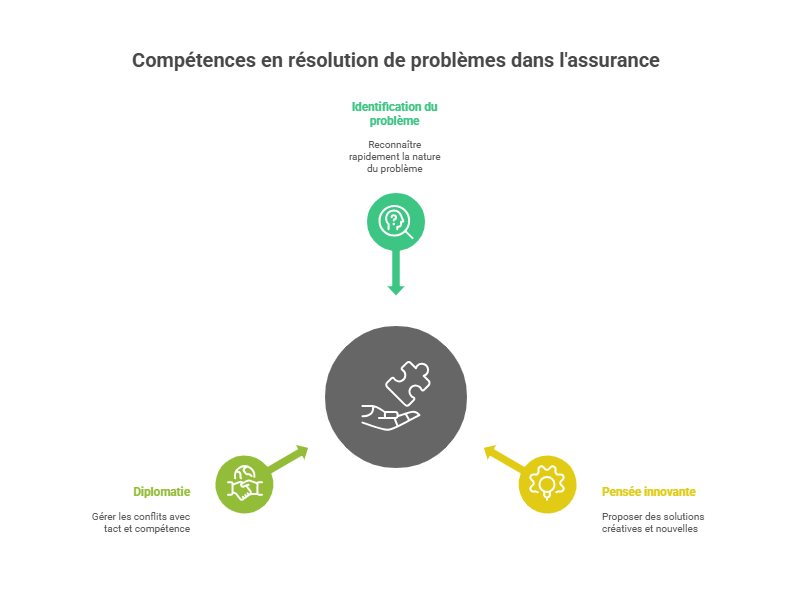
Insurance professionals face complex situations daily that require quick and effective decisions. Unexpected events are common, so it’s crucial to analyze these situations to find applicable solutions.
This skill relies on quickly identifying the problem’s nature, thinking innovatively to propose solutions, and demonstrating diplomacy in conflicts, especially when a client is dissatisfied.
Rigor and Attention to Detail
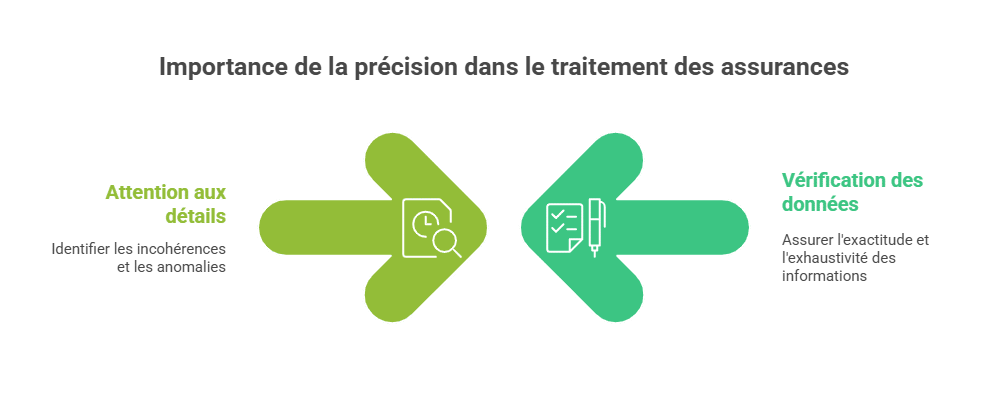
Accuracy is crucial at every step. A simple error, such as omission or incorrect data, can have significant consequences, both for the insured and the insurer.
It’s necessary to verify that all elements of a file are correct and complete before validation. Attention to detail also helps identify inconsistencies or anomalies in documents, such as an imprecise declaration or a suspicious claim.
Ethical Sense and Social Responsibility
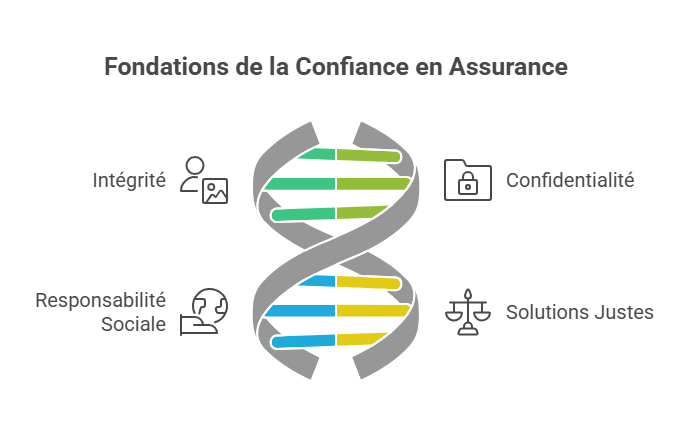
The insurance sector is based on mutual trust between insurer and insured. That’s why ethical behavior and exemplary social responsibility are essential.
A good professional acts with integrity, respects the confidentiality of data, and adopts a transparent approach in all their actions.
Ethics also involve the willingness to offer fair solutions, without taking advantage of the client’s lack of knowledge.
Moreover, insurance companies are increasingly committed to policies of sustainable development and social inclusion, which enhances the brand and builds public trust.
| 🌱 Ethical Value | 💬 Concrete Application |
|---|---|
| Integrity | Clear and honest communication |
| Confidentiality | Protection of client data |
| Social Responsibility | Environmental actions and promoting diversity |
🧾 Conclusion: A Demanding but Human Profession
Working in insurance requires much more than technical knowledge or sales skills. It is a profession that fundamentally relies on active listening and genuine empathy toward clients.
Each insurer must be able to analyze needs, assess risks, and find fair solutions while respecting an demanding legal framework.
Effective professionals stand out because of their rigor, adaptability, and intellectual curiosity, which enable them to grow in a constantly changing sector.
Finally, ethics and social responsibility remain the foundation of a sustainable and respected career. Being a good insurer is first and foremost about placing humans at the center of the relationship.
❓ FAQ – Skills Needed to Work in Insurance
1. What are the most important skills for success in insurance?
Key skills include clear communication, customer relations, rigor, and technical mastery of insurance products.
A good professional also knows how to actively listen and translate complex notions into simple explanations for clients.
2. Is a specific diploma required to work in insurance?
Yes, most positions require a BTS Insurance, a professional license in insurance, or a Master’s in finance or law.
These training programs develop the technical and relational skills needed for success in the profession.
3. Why is empathy essential in this sector?
Empathy allows understanding the client’s emotions and responding appropriately, especially in sensitive situations like claims.
This skill builds trust and long-term client loyalty.
4. What computer tools are used in insurance?
Professionals use policy management software, CRM for client follow-up, and databases for pricing and claims.
Mastering these tools improves productivity and service quality.
5. How to advance in an insurance career?
Progression involves continuous training, versatility, and taking initiatives.
A consultant can quickly become team leader, branch manager, or even independent broker, depending on their ambition and experience.
6. What is the role of ethics in insurance careers?
Ethics plays a central role because trust is the foundation of the insurer and insured relationship.
Respecting confidentiality, acting with integrity, and promoting social responsibility are vital to maintaining credibility.

Entraîne-toi avec nos Quiz de révision
Fini les lectures passives. Pour retenir les notions clés du BTS Assurance, teste-toi ! Inscris-toi pour recevoir 1 quiz par jour directement dans ta boîte mail.


