


Summary
| 📌 Section | 📝 Description |
|---|---|
| 🏥 Importance of Oral Health | Dental health is essential to prevent diseases and limit costly treatments. Good oral hygiene reduces risks. |
| 🦷 What is dental prophylaxis? | Set of preventive care aimed at protecting teeth against cavities and periodontal diseases. |
| 🎯 Goals of prophylaxis | Remove plaque, strengthen enamel, protect teeth, and educate about dental hygiene. |
| 🛠️ Main procedures | Scaling, fluoride application, fissure sealing, polishing, and root surface decontamination. |
| 🔍 Importance of prophylaxis | Prevent cavities, gingivitis, and other dental infections. Limits bad breath. |
| 💰 Reimbursement by Health Insurance | Some care is partially reimbursed, notably tartar removal and fissure sealing (for children). |
| 🏦 Reimbursement by complementary health insurance | Coverage varies by contract: basic (out-of-pocket), intermediate (preventive package), premium (100% reimbursed). |
| 🧐 How to benefit from reimbursement? | See a contracted dentist, request a quote, and send the treatment sheet to Health Insurance and the mutual insurance. |
| 📌 Conclusion | Dental prophylaxis is essential to avoid costly treatments. Check your health plan for better coverage. |
Oral health is a vital element of overall well-being. Good hygiene helps to prevent diseases and avoid heavy long-term treatments. Dental prophylaxis, covering various preventive measures, plays a key role in this process. However, these procedures incur costs, and it is important to know to what extent they are reimbursed by Health Insurance and mutual insurers. This article guides you through the different options for financial coverage of preventive care.
🦷 What is dental prophylaxis?
Dental prophylaxis is a preventive approach aimed at maintaining oral health by reducing the risks of diseases such as cavities, gingivitis, and periodontal infections. It relies on a set of regular treatments and good hygiene practices, provided by a dentist or performed at home.
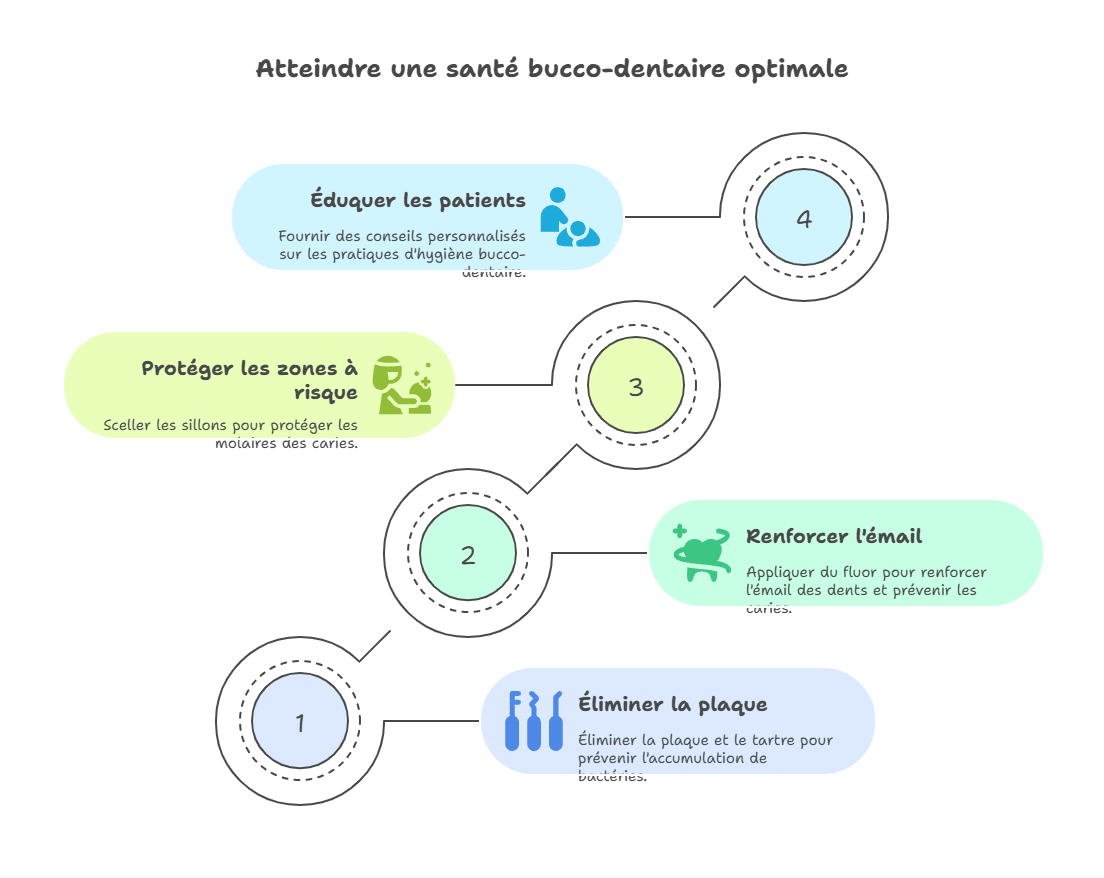
The main objectives of dental prophylaxis are:
- Eliminate dental plaque and tartar to prevent the accumulation of bacteria responsible for oral diseases.
- Reinforce enamel through fluoride application, thereby limiting demineralization and cavity formation.
- Protect at-risk areas by sealing the molar fissures, particularly vulnerable to cavities.
- Educate patients on good oral hygiene practices, including brushing, flossing, and using suitable mouth rinses.
🦷 Main procedures of dental prophylaxis
Here are essential treatments included in dental prophylaxis:
- Complete scaling: removes plaque and tartar accumulated on teeth and beneath the gums. A tartar removal every six months is recommended.
- Fluoride application: helps strengthen dental enamel and prevent cavities, especially in children and high-risk adults.
- Fissure sealing: involves covering molar fissures with a protective resin, preventing bacteria from settling there.
- Root surface decontamination: a treatment for those with advanced periodontal disease, allowing deep cleaning of tooth roots.
- Teeth polishing: smooths the tooth surface after scaling to delay plaque reappearance.
🦷 Why is it essential?
Without dental prophylaxis, bacteria present in the mouth can cause diseases such as:
- Dental caries, resulting from acid attacks by bacteria on enamel.
- Gingivitis, inflammation of the gums caused by plaque buildup.
- Periodontitis, more serious infections affecting supporting tissues of teeth, possibly leading to tooth loss.
- Bad breath, often caused by inadequate oral hygiene or bacterial infections.
💡 Tip: For good prevention, it is recommended to see a dentist at least once a year and adopt a strict hygiene routine with toothbrushing at least twice a day and using dental floss.
Dental prophylaxis includes all preventive measures aimed at avoiding the appearance of oral diseases. It encompasses several essential procedures:
- Complete scaling to eliminate dental plaque.
- Application of fluoride to strengthen enamel.
- Fissure sealing to prevent dental cavities.
- Personalized advice to adopt better oral hygiene.
These treatments help to reduce risks of cavities, gingivitis, and periodontal diseases.
💰 Reimbursement by Health Insurance
Reimbursement of dental prophylaxis by Health Insurance depends on several criteria, including patient’s age, the procedure performed, and coverage modalities. Some preventive procedures are partially reimbursed, while others are not covered at all.
The goal of these reimbursements is to encourage good oral hygiene and to prevent dental diseases, especially among young patients. However, preventive care is not always well covered, leading patients to turn to supplementary insurances to limit costs.
📊 Breakdown of reimbursements
| Prophylaxis procedure | Age group | Reimbursement base | Coverage rate | Sect. Reimbursement |
|---|---|---|---|---|
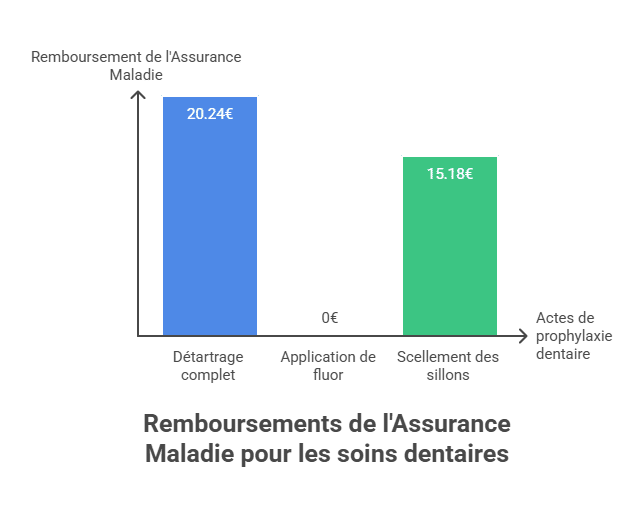
| Complete scaling | All ages | 28.92 € | 70 % | 20.24 € |
| Fluoride application | Not reimbursed | 0 € | 0 % | 0 € |
| Fissure sealing | 6 to 14 years | 21.69 € | 70 % | 15.18 € |
⚠️ Important to know
- Scaling: It is recommended at least once a year and is partially reimbursed. However, if additional treatments are performed (polishing, gum treatment), extra costs may apply.
- Fissure sealing: Very effective against cavities, this procedure is covered only up to 14 years old and only for permanent molars. After this age, it becomes fully at the patient’s expense.
- Fluoride application: Considered a non-priority preventive treatment, it is not reimbursed by Health Insurance, although strongly recommended to strengthen enamel.
💡 Tip: To limit costs, it is recommended to see a contracted dentist, check your coverage with your mutual insurance, and request a quote before any non-reimbursed procedure.
Health Insurance covers some dental prophylaxis procedures, but modalities vary depending on the procedures performed.
| Prophylaxis procedure | Age group | Reimbursement base | Coverage rate | Sect. Reimbursement |
| Complete scaling | All ages | 28.92 € | 70 % | 20.24 € |
| Fluoride application | Not reimbursed | 0 € | 0 % | 0 € |
| Fissure sealing | 6 to 14 years | 21.69 € | 70 % | 15.18 € |
⚠️ Important to know: Outside this age range, fissure sealing is at free price and not reimbursed.
🏦 Reimbursement by mutual insurance
Health mutuals play a crucial role in the supplementary coverage of dental prophylaxis care. Depending on the contract subscribed, they can cover partially or fully the remaining costs after the intervention of Health Insurance.
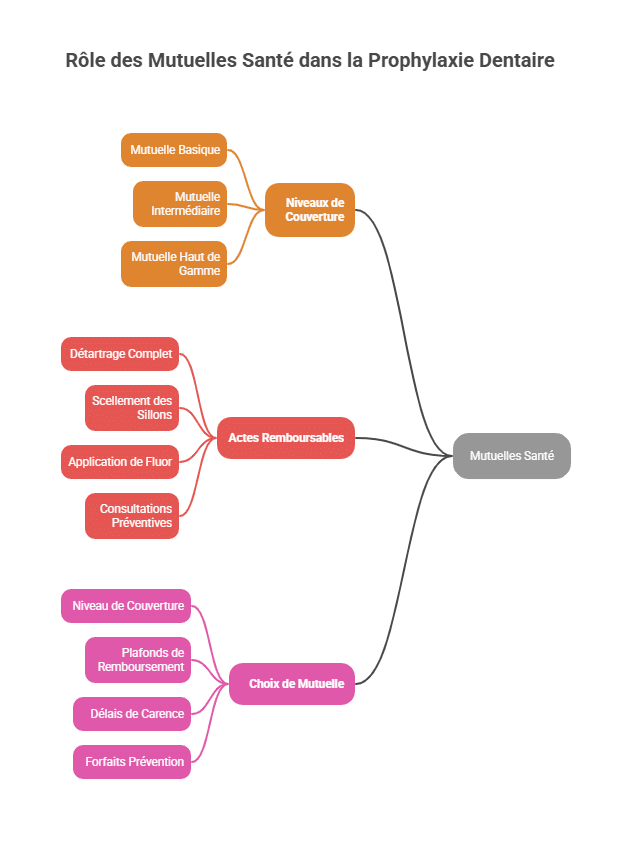
📊 Different levels of mutual coverage
| Type of mutual | Coverage |
| Basic mutual | Reimburses only the out-of-pocket |
| Intermediate mutual | Partial prevention package, depending on the contract |
| Premium mutual | Reimburses 100% of expenses incurred |
🏥 Which procedures can be reimbursed by a mutual?
- Complete scaling: Generally covered in addition to the reimbursement from Health Insurance.
- Fissure sealing: Some mutuals may reimburse beyond 14 years old depending on the coverage purchased.
- Fluoride application: Not covered by Social Security but may be reimbursed by some mutuals.
- Preventive consultations: Some plans include an annual package for preventive care not covered by Health Insurance.
🔍 How to choose your mutual insurance wisely?
Before subscribing to a mutual, it is recommended to compare offers considering the following criteria:
- The level of dental coverage: Check if the mutual reimburses preventive procedures not covered by Social Security.
- Reimbursement caps: Some mutuals impose annual maximum amounts for dental care.
- Waiting periods: Some plans require a delay before reimbursement for dental treatments.
- Prevention packages: Check if your mutual offers specific coverage for preventive care.
💡 Tip: Take the time to analyze your mutual contract and adjust your coverage to suit your specific dental needs to avoid unexpected expenses.
The health mutuals offer additional coverage depending on the contract subscribed.
| Type of mutual | Coverage |
| Basic mutual | Reimburses only the out-of-pocket |
| Intermediate mutual | Partial prevention package |
| Premium mutual | Reimburses 100% of expenses |
💡 Tip: Check your mutual contract to avoid bad surprises.
🧐 How to benefit from reimbursement?
Getting reimbursement for your dental prophylaxis procedures requires following certain administrative steps. Good planning and understanding of procedures help avoid surprises and maximize coverage.
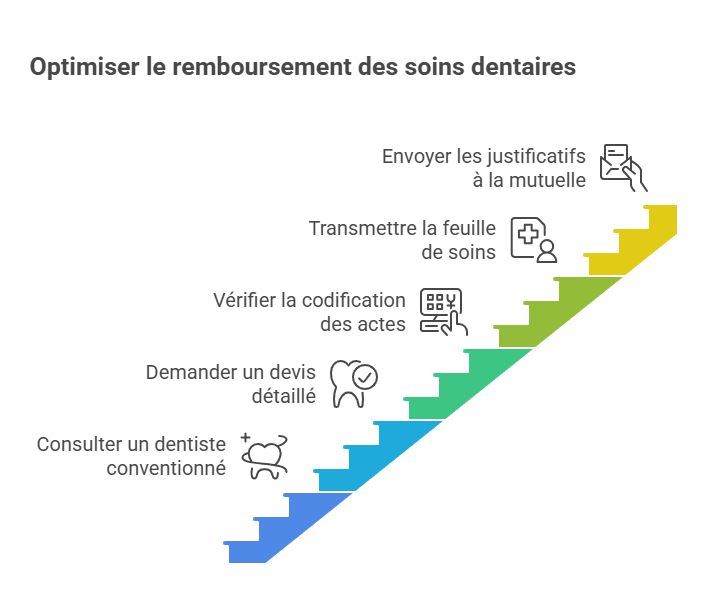
✅ Steps to optimize your reimbursement
- See a contracted dentist: Ensure your provider is contracted with Health Insurance to benefit from regulated prices and better coverage.
- Request a detailed quote: Before performing any non-reimbursed or partially covered procedures, ask for a precise estimate. This helps evaluate the out-of-pocket cost and anticipate the part covered by your mutual.
- Check the coding of procedures: Each dental treatment has a specific code used to establish reimbursements. Incorrect coding might lead to less favorable reimbursements.
- Send the treatment sheet: After the treatment, your dentist provides a treatment sheet (electronic or paper). If digital, it is sent directly to Health Insurance; if not, you must send it manually.
- Send supporting documents to your mutual: After Social Security reimbursement, you must transmit necessary documents to your supplementary health insurance to cover the remaining costs.
📄 Documents required for effective reimbursement
- Treatment sheet signed by the practitioner.
- Initial quote (if requested by mutual).
- Reimbursement statement from Health Insurance.
- Paid invoice from the dentist.
⏳ Reimbursement times
| Organization | Estimated time |
| Health Insurance | 5 to 10 days |
| Supplementary mutual | 10 to 30 days |
💡 Tip: Some mutuals offer online transmission, avoiding manual submission of documents and speeding up reimbursement.
To optimize the reimbursement of your dental prophylaxis procedures, follow these steps:
- See a contracted dentist to benefit from the basic price.
- Request a detailed quote before any intervention.
- Send the treatment sheet to Health Insurance and your mutual.
📌 Conclusion
Dental prophylaxis is essential to maintain good oral health and prevent diseases. Some procedures are reimbursed, others require a suitable mutual insurance. Remember to check your coverage to avoid excessive out-of-pocket expenses. 🦷✨
For further information

Entraîne-toi avec nos Quiz de révision
Fini les lectures passives. Pour retenir les notions clés du BTS Assurance, teste-toi ! Inscris-toi pour recevoir 1 quiz par jour directement dans ta boîte mail.


